
L-1 Visa Document Checklist 2026 (USCIS Requirements Guide)
L-1 Visa BasicsBusiness PlanUS Business Set-UpL-1 Visa FAQsL-1 Visa Costs and L-1 Visa FeesL-1 Visa RenewalL-1 Visa Change of EmployerL-1 Visa RequirementsL-1 Visa Process
Discuss an L-1 case with a lawyer
For companies transferring a manager, executive or specialist to the United States, including new office L-1A cases where the US company is still being set up. Offices in New York, London, Mumbai and Singapore.
Confidential. No obligation. We do not sell your information.
Quick Answer: An L-1 visa petition requires documents from three sources: the foreign company (incorporation records, financial statements, ownership evidence), the U.S. company (incorporation, business license, lease, organizational chart), and the transferring employee (proof of one year of qualifying foreign employment within the past three years, employer verification letters, and credentials).
For the consular interview, applicants must bring the Form I-797 approval notice, the DS-160 confirmation page, a valid passport, photos meeting consulate specifications, and a full copy of the I-129 petition package. Blanket L-1 petitions, new office filings, and L-2 dependents have additional document requirements detailed below.
For the consular interview, applicants must bring the Form I-797 approval notice, the DS-160 confirmation page, a valid passport, photos meeting consulate specifications, and a full copy of the I-129 petition package. Blanket L-1 petitions, new office filings, and L-2 dependents have additional document requirements detailed below.
Minimum L-1 document checklist: Most L-1 cases require Form I-129 with L Supplement, proof of the qualifying corporate relationship, evidence that both companies are doing business, proof of one year of qualifying employment abroad, a detailed U.S. job description, organizational charts, financial records, and, for consular processing, DS-160 confirmation, passport, I-797 approval notice, appointment confirmation, and a full petition copy.
L-1 Visa Documents Required: Quick Summary
| Document Category | Who Provides It | Examples |
|---|---|---|
| Company relationship | Employer | Ownership chart, share records, affiliate documents, corporate filings. |
| Foreign employment | Employee / foreign company | Verification letter, payroll records, tax records, job description. |
| U.S. role | U.S. company | Job description, organizational chart, business plan, office lease. |
| Interview documents | Applicant | DS-160 confirmation, passport, I-797 approval notice, appointment confirmation, full petition copy. |
L-1 Visa Document Checklist Table of Contents
- ► L-1 Visa Documents Required: Quick Summary
- ► What Are the Most Important L-1 Documents?
- ► Employer Petition Checklist
- ► Change of Status vs Consular Processing
- ► Interview and Visa Stamping Checklist
- ► L-1 Visa Documents in Indian Cases
- ► Blanket Petition Notes
- ► L-2 Spouse and Children Documents
- ► L-1 Fees Checklist
- ► Common Delays and Tips
- ► AI Readiness and USCIS (2026)
- ► Risks and Important notes
- ► Frequently Asked Questions
What Are the Most Important L-1 Documents?
The most important L-1 documents are:- Proof the companies are related
- Proof both businesses are actively operating
- Proof the employee worked abroad for one full year
- A detailed U.S. job description
- An organizational chart
- The DS-160 and interview documents for visa stamping
Get Your Personal Requirement Checklist
We'll send you a FREE checklist to see if you're eligible.Download Our L-1 Visa Checklists (PDF)
Enter your name and email to receive any of our L-1 checklists by email. These are the same checklists our attorneys use in real-world filings.
L-1 Visa Requirements
If you are searching for an L-1 visa document checklist, you usually need documents for two different stages:- Employer petition filed with USCIS
- Visa interview and stamping at a U.S. embassy or consulate, if applying outside the United States
Download the Full Checklist
What is an L-1 Visa?
The L-1 visa is a non-immigrant visa that allows an employer to transfer an employee holding a managerial or executive position or those employed in a specialized knowledge position to a qualifying organization in the U.S. Like other visa classifications, the L-1 visa process involves presenting supporting documents and a visa interview.There are three different types of L-1 visas:
L-1A. The L-1A is for employees who will work in a managerial or executive capacity at the qualifying organization in the U.S.
L-1B. The L-1B is granted to those who will be employed in a specialized knowledge position in the U.S.
L-2. The L-2 visa is for spouses and dependents of L-1 visa holders.
Who Prepares the L-1 Visa Document Checklist
Eligibility for the L-1 visa depends on a specific professional history: you must have worked continuously in a managerial, executive, or specialized knowledge capacity for at least one year within the three years immediately preceding your application. Your goal must be to assume a similar qualifying position in the United States.The process is initiated by your employer, who must file a petition on your behalf with the United States Citizenship and Immigration Services (USCIS) using Form I-129 along with the L Supplement.
Strategic Preparation: To help increase the chances of an approval, we have compiled a comprehensive checklist of the supporting documents required from the three key pillars of the application:
- The Foreign Employer (Proof of qualifying entity and operations)
- The Employee (Proof of tenure, role, and qualifications)
- The U.S. Company (Proof of setup, funding, and the proposed role)
The L-1 Visa Checklist Two-Step Process: Petition and Consular Processing
Most L-1 visa applications follow a mandatory two-step sequence to ensure both the employer eligibility and the employee admissibility are verified.NEW in 2026!
USCIS and DHS use automation, machine learning, and technology-assisted workflows in parts of immigration processing. A human officer remains responsible for adjudicating the L-1 petition. This 2026 guide explains how to make your L-1 petition "AI Ready".Step I: Visa Petition using Form I-129, With L Supplement
The first step is initiated by the employer in the United States. They must file Form I-129 (Petition for a Nonimmigrant Worker) along with the specific L Supplement. This filing is submitted to USCIS to establish the qualifying relationship between the U.S. and foreign entities.Step II: Consular Processing
Once the USCIS petition is approved, the employee must undergo Consular Processing at a U.S. Embassy or Consulate in their home country. This involves submitting the DS-160, paying the visa fees, and attending a face-to-face interview with a consular officer.
Note on Exceptions: Blanket L-1 petitions are a significant exception to this rule. They are often processed directly by the consulate, bypassing the individual USCIS petition phase for each employee.
[Ref: USCIS Policy Manual, Vol. 2, Part L; 9 FAM 402.12]
What Checklists do L-1 U.S. Government Visa Adjudication Officers Use?
In Step I (USCIS petition evidence):
Adjudicators use checklists and guidance found in the USCIS Policy Manual, Volume 2, Part L (Intracompany Transferees).In Step II (consular interview and visa issuance):
Consular officers use checklists and guidance from the Department of State guidance in 9 FAM 402.12 (Intracompany Transferees – L Visas).Part I – USCIS I-129 Petition Document Checklist
Use this section if your employer is preparing the petition. The L-1 petition evidence and supporting documents are organized into three primary sources, and the case file should be assembled with the L-1A evidence, L-1B evidence, or both clearly separated where multiple categories apply:USCIS Typically Expects Evidence From:
- The foreign company
- The U.S. company
- The employee being transferred
Your Petition Should Clearly Show:
- Qualifying Relationship: A clear legal link between the foreign and U.S. companies.
- Ongoing Operations: Evidence that both entities are actively doing business.
- Qualifying Employment: Proof of the employee’s tenure and role abroad.
- U.S. Capacity: Documentation that the U.S. role qualifies as managerial, executive, or specialized knowledge.
Foreign Company Documents
Provide copies of the following from the foreign company:
- Articles of incorporation
- Business license
- Stock certificates and audited accounts
- Financial statements and tax filings for the past 3 years
- Evidence of business activity such as contracts, bills of lading, letters of credit, invoices, or similar records
- Promotional materials such as brochures, product overviews, website pages, or marketing decks
- Organization chart showing headcount and where the employee fits in the company structure
- Corporate relationship evidence such as affiliate agreements, corporate filings, share registers, or ownership records
- Statement from an authorized representative explaining ownership and control
U.S. Company Documents
Provide copies of the following from the U.S. company:
- Articles of incorporation and bylaws
- Business license
- Long form Certificate of Good Standing
- Stock certificates and audited accounts
- Financial statements and promotional materials
- Business description and business plan
- Organization chart showing headcount and the transferee’s position
- Business location lease
- Bank statements or proof of initial investment
- Corporate tax returns (if any)
- Employer quarterly report Form 941 (if any)
Summary: Priority Documents to Highlight
| Selection | Summary: Priority Documents to Highlight |
|---|---|
| New Office | Business plan with 1-year hiring milestones, office lease, and evidence of funding. |
| L-1A Manager | Organizational chart showing subordinate roles and a breakdown of managerial vs. production duties. |
| L-1B Specialist | Examples of proprietary project artifacts, training manuals, or internal product documentation. |
| Consular Interview | DS-160 confirmation, I-797 approval copy, and a full copy of the USCIS petition package. |
L-1 Documents by Case Type
| Case Type | Extra Documents to Include |
|---|---|
| L-1A Manager | Organizational chart, subordinate roles, duty breakdown, reporting lines. |
| L-1A Executive | Evidence of senior decision-making authority, strategic control, and high-level reporting structure. |
| L-1B Specialized Knowledge | Proprietary tools, training records, project artifacts, product documentation, internal processes. |
| New Office | Lease, business plan, funding evidence, hiring milestones, early contracts or pipeline evidence. |
| Blanket L-1 | Form I-129S, blanket approval documents, consular packet, qualifying relationship documents. |
| L-2 Dependent | Marriage certificate, birth certificate, passport, DS-160 confirmation, principal L-1 approval evidence. |
New Office Extra Documents
If you are coming to the United States to set up a new office, you must include the following additional evidence as per the USCIS Policy Manual, Vol. 2, Part L:- Evidence of establishment: Proof of office lease, business permits, and early-stage contracts or client agreements.
- Comprehensive Business Plan: Must include hiring plans, operational milestones, and a financial breakdown of how the U.S. entity will support the role during the first year.
- VIBE Registration: Ensure your business is listed in the USCIS Validation Instrument for Business Enterprises (VIBE).
Employee Documents
In addition to standard interview items, the transferee must provide:- Proof of qualifying employment: Documentation of at least 1 year of continuous employment abroad within the past 3 years.
- Verification Letters: Official letters from the foreign employer verifying job title, specific duties, and exact dates of employment.
- Credentials: Evidence of qualifications, such as university degrees, training certificates, and specialist credentials relevant to the role.
- Capacity Evidence: Documentation supporting managerial, executive, or specialized knowledge capacity (specific to L-1A or L-1B).
Extra Documents for Offsite L-1B Work
If the L-1B specialized knowledge employee will be placed at a third-party client site, USCIS requires additional documentation to confirm the petitioning employer retains control of the work and that the role is not ordinary staff augmentation:- Statement explaining who supervises and controls the employee's work.
- Client or project documents showing why the company's specialized knowledge is needed.
- Evidence that the role is not ordinary staff augmentation.
- Reporting structure showing the employee remains controlled by the petitioning employer.
L-1 Change of Status vs Consular Processing Documents
| Situation | Documents Typically Needed |
|---|---|
| Outside the U.S. | I-129 approval, DS-160 confirmation, passport, photos, appointment letter, and full petition copy. |
| Inside the U.S. changing status | I-129 petition package, proof of current lawful status, I-94 record, and supporting employer/employee evidence. DS-160 and consular interview usually do not apply. |
| Canadian citizen | May follow special port-of-entry procedures depending on the case type. |
| Blanket L-1 | Form I-129S, blanket approval documents, DS-160 if applying at a consulate, and supporting employer/employee evidence. |
Step II – Documents for the Consular Interview
L-1 Visa Interview Documents Checklist (Visa Stamping)
Use this section as your L-1 stamping checklist and L-1 visa file checklist if you are attending a visa appointment at a U.S. Embassy or Consulate outside the United States. This is the stage often referred to as "L-1 visa stamping."Documents to Bring to the Consular Interview (9 FAM 402.12)
- Employer Support Letter: A letter to the consulate confirming the role and requesting visa issuance.
- Appointment & Forms: Visa appointment letter and DS-160 confirmation page (with barcode).
- Financials: DS-160 fee receipt (if applicable).
- Travel Documents: Current passport valid for at least six months beyond the intended period of stay, unless an exception applies, plus all old or expired passports.
- Photos: Two recent passport photos meeting specific U.S. Consulate requirements.
- Professional History: Your current resume or curriculum vitae (CV).
- Petition Evidence: A copy of the Form I-797 Approval Notice and the complete I-129 petition package filed with USCIS.
- U.S. Role Support: Evidence of your position in the U.S., including a detailed job description and an organizational chart.
- Prior U.S. immigration records: Copies of prior I-94 records, prior visa stamps, approval notices, and documents showing any previous lawful U.S. status.
Documents Often Requested at the Consular Window
- I-94 travel history and proof of any prior U.S. immigration status.
- Recent pay statements and tax records (W-2s or foreign equivalent).
Important Notes
- Reciprocity Fees: Depending on your nationality, an additional issuance fee may be required.
- Change of Status: If you are already in the U.S. and changing status via USCIS, the DS-160 and consular interview typically do not apply.
- Canadian Citizens: Special rules apply to Canadians, who are often exempt from visa stamping and specific issuance fees at the border.
L-1 Visa Documents in Indian Cases
Indian applicants make up one of the largest L-1 visa applicant populations worldwide, and U.S. consulates in India often request supplementary documentation beyond the standard L-1 checklist. The additional scrutiny typically focuses on the genuineness of the qualifying employment abroad, the legitimacy of the U.S. role, and the company's operational substance in both jurisdictions. The following bespoke documents are commonly helpful for L-1 cases processed at U.S. embassies and consulates in India.Additional Documents Commonly Helpful for Indian L-1 Applicants
- PF (Provident Fund) statements: EPFO passbook printouts or PF withdrawal records confirming continuous employment with the Indian entity for the qualifying one-year period.
- Form 16 and ITR filings: Income Tax Returns and Form 16 statements for the last three financial years, showing salary, employer name, and TDS deductions consistent with the petition.
- Salary slips: Monthly payslips for the past 12 to 24 months from the Indian employer, with consistent designations and reporting structure.
- Appointment letter and any promotion letters: Original appointment letter, internal transfer or promotion letters, and any letters confirming changes in role, title, or reporting line.
- Aadhaar and PAN card copies: Identity documents that match the names and details across all employment and immigration records.
- Company registration documents: Certificate of Incorporation, Memorandum and Articles of Association, GST registration, and ROC filings for the Indian entity.
- Shop and Establishment registration / professional tax records: Where applicable, to confirm the Indian employer is a registered, operational business.
- Audited financials of the Indian entity: Statutory audit reports and financial statements signed by a Chartered Accountant for the past three years.
- CA certificate on qualifying relationship: A Chartered Accountant's certificate confirming the ownership structure between the Indian and U.S. entities, with supporting share register extracts.
- Project allocation evidence: For L-1B applicants, documentation of the specific projects worked on in India, including client names where permissible, project deliverables, and the role played.
- Educational documents: Original degrees, mark sheets, and consolidated transcripts, particularly where the role requires specialised technical or professional knowledge.
- Passport with prior U.S. and other visa stamps: Including evidence of any prior travel and lawful return, which can be relevant where the applicant has visited the U.S. previously on B-1/B-2 or other categories.
Where to Apply for an L-1 Visa in India
Document preparation should be aligned with the specific consulate where the applicant will interview, as queues, supporting evidence expectations, and local procedures can vary. The links below provide consulate-specific guidance for each major Indian post:- U.S. Embassy New Delhi: How to apply for an L-1 visa in Delhi
- U.S. Consulate General Mumbai: How to apply for an L-1 visa in Mumbai
- U.S. Consulate General Chennai: How to apply for an L-1 visa in Chennai
- U.S. Consulate Hyderabad: How to apply for an L-1 visa in Hyderabad
- U.S. Consulate Kolkata: How to apply for an L-1 visa in Kolkata
Local representation: For applicants who prefer in-region legal support, see our L-1 visa lawyer in Mumbai page for India-based representation, or our L-1 visa lawyer in Singapore page for applicants based in or transiting through Southeast Asia.
Documentation Requirements in Blanket L-1 Cases
Foreign employers who regularly send employees abroad as transfers may opt to do a blanket petition. This allows them to apply for multiple employees for L-1 status under a single approved petition, rather than filing individual petitions with USCIS.Employer Eligibility Requirements (9 FAM 402.12-7)
To qualify, the employer must demonstrate the following:- The petitioner and each included entity are engaged in commercial trade or services.
- The petitioner has a U.S. office that has been doing business for one year or more.
- The petitioner has three or more domestic and foreign branches, subsidiaries, or affiliates.
- The petitioner must also meet ONE of these criteria:
- Obtained approval for at least 10 "L" managers, executives, or specialists in the previous 12 months.
- Have U.S. subsidiaries/affiliates with combined annual sales of at least $25 million.
- Have a U.S. workforce of at least 1,000 employees.
Note for Individual Petitions: If the criteria above are not met, the employer must file individual petitions and prove the qualifying relationship, the employee continuous 1-year foreign employment, and their capacity as a manager, executive, or specialist.
Special Provisions for Canadians
Canadians with an approved blanket petition may present Form I-129S and supporting documents directly to a U.S. Customs and Border Protection (CBP) Officer at certain ports of entry or pre-flight inspection stations in Canada.Blanket L-1 Document Checklist
For each individual applicant traveling under an approved blanket L-1 petition, the following documents are typically required at the consular stage:- Form I-129S: Blanket L applicants should bring the completed Form I-129S and supporting blanket petition documents, following the consulate's instructions.
- Blanket L fees: Some blanket L applicants may need to pay the fraud prevention and detection fee at the consular stage.
- Blanket approval notice: A copy of the approved blanket petition notice for the petitioning employer.
- Qualifying relationship evidence: Documentation confirming the relationship between the petitioner and the qualifying organization the employee is transferring from.
L-2 Spouse and Children Documents
Typical L-2 documents for dependents include:- Passport for each applicant (valid for at least 6 months).
- Marriage certificate for spouse.
- Birth certificates for children.
- DS-160 confirmation page for each applicant.
- Visa appointment letter and consulate-compliant photos.
- Copy of the principal L-1 approval notice and petition evidence.
- Proof of relationship and evidence of any name changes.
- Certified translations for any documents not in English.
L-1 Visa Document and Filing Fee Checklist
Depending on the filing route, employers and applicants may need proof of payment for USCIS filing fees, the fraud prevention and detection fee, premium processing if used, the DS-160/MRV fee, and any country-specific reciprocity fee. For a full breakdown of current amounts, see our guide to L-1 visa costs and fees.Common L-1 Delays and Tips
To avoid processing slowdowns, ensure you address these frequent issues:- Missing Documentation: Always bring a full copy of the petition package to the interview.
- Inconsistent Narratives: Ensure job duties match exactly between the petition documents and your verbal interview answers.
- Vague Org Charts: Organization charts must clearly show reporting lines and the specific roles of subordinates.
- Financial Weakness: Avoid using thin or outdated company financials; provide recent evidence of business activity.
- L-1B Specifics: Clearly define "specialized knowledge" with concrete proprietary examples rather than general industry terms.
AI Readiness and USCIS (2026)
Technology assisted review and what it means for an L-1 filing
In 2026, USCIS is using artificial intelligence and machine learning in parts of intake and electronic case workflows. A human officer is still the final adjudicator.American Immigration Council on USCIS and AI overview
AI Does Not Make the Final Decision on your Case
Some USCIS workflows include automation and machine learning that help organize and route large volumes of filings. One documented example is an “Evidence Classifier” concept used within USCIS electronic case management workflows to help tag or classify pages within a submission.This does not mean a case is decided by an algorithm. It does mean the way evidence is packaged can affect how quickly and accurately it is understood. See USCIS Policy Manual, Evidence.
How AI Influences Your L-1 Petition
USCIS utilizes an Evidence Classifier system that can help classify and tag pages in some electronic workflows. This technology has increased the practical importance of having a Petition that is well-organized for both human and AI review. If documents are poorly labeled or disorganized, the AI may mis-categorize key evidence, leading to delays or unnecessary scrutiny. See USCIS evidence policy.Key AI-driven functions include:
- Potential anomaly detection: Automated checks may surface inconsistencies across the current filing and prior USCIS records or linked identity data, which can lead to follow-up questions if the record does not reconcile cleanly.
- Potential narrative screening: DHS has documented USCIS use of machine learning text analytics to scan digitized narratives for common language patterns. Repetitive or heavily templated language may attract additional scrutiny where credibility or authenticity concerns arise, and this kind of follow-up review can contribute to processing delays.
- Potential pattern recognition: Modern fraud and identity screening systems can surface duplicate identities or duplicate case patterns as investigation leads. These are review signals only; an officer evaluates what they mean for eligibility and credibility.
Why This Matters in Practice:
Your L-1 visa petition needs to be organized so it is easy for both digital workflows and human officers to find the right proof quickly. The narrative of a well-organized petition matches the underlying documents. Labeling, consistency, and a well-structured evidence index can directly reduce avoidable delays.Risks and Important Notes
Prevent Unnecessary RFEs
A Request for Evidence (RFE) is issued when USCIS has additional questions about a petition. RFEs can cause months of unnecessary delays and can often be avoided with proper documentation. The most common preventable RFE triggers include:- Every key claim should appear in at least two places in the I-129 petition. Examples of key claims include job title, dates, employer name, salary, and work location.
- The corporate relationship between the entities needs to be documented in one clean chain — an ownership chart plus supporting proof for each link.
- Qualifying employment is proven with an employment agreement, payroll records, and tax records, in addition to a letter from HR — not just a letter.
- Duties are mapped to the legal standard: executive or managerial for L-1A, specialized knowledge for L-1B.
- The petition story matches the DS-160 and consular answers. No surprises at interview.
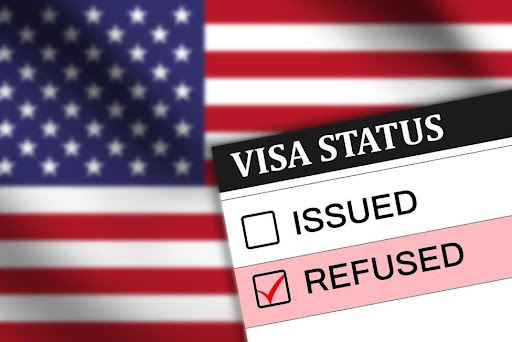
An approved L-1 petition does not guarantee visa issuance
Even with a complete L-1 visa checklist and an approved USCIS petition, an L-1 visa is never guaranteed. USCIS petition approval and visa issuance are separate steps, and a U.S. consular officer makes the final decision at the interview.The visa interview is based on your DS-160, answers, and supporting documents
Your eligibility is assessed using your DS-160, your interview responses, and the supporting documents you present. Officers may request additional evidence, issue a 221g request, or place a case into administrative processing.Requirements vary by embassy or consulate
Document requirements and local procedures can vary by embassy or consulate and may change without notice. Always follow the instructions for your specific post.This checklist is a guide, not an official list or legal advice
This L-1 visa document list is a practical guide to documents commonly requested for an L-1 petition and an L-1 visa interview, but it is not an official or exhaustive list and it is not legal advice. Bring clear, consistent evidence that matches the job duties and company details described in the petition.FAQS: Frequently Asked Questions
What documents are required for an L-1A visa?
An L-1A petition for a manager or executive typically requires Form I-129 with L Supplement, evidence of the qualifying corporate relationship between the foreign and U.S. entities, proof that both companies are doing business, an organizational chart showing the subordinate roles the employee will manage, a detailed duty breakdown with realistic percentages, employer verification letters confirming one year of qualifying employment abroad, and a U.S. job description establishing managerial or executive capacity.
What documents are required for an L-1B visa?
An L-1B petition for a specialized knowledge employee typically requires Form I-129 with L Supplement, qualifying relationship evidence, proof of one year of qualifying foreign employment, and concrete documentation of specialized knowledge. This includes proprietary processes, systems, training materials, product documentation, patents, internal playbooks, or evidence of unique experience with the company's tools and methods. If the employee will work at a client site, additional offsite L-1B documentation is required.
What documents are required for an L-1 visa interview?
For the L-1 visa interview at a U.S. embassy or consulate, applicants typically bring the appointment letter, DS-160 confirmation page with barcode, a valid passport plus old passports, two consulate-compliant photos, the Form I-797 approval notice, a full copy of the I-129 petition package, an employer support letter, a current resume or CV, and a detailed U.S. job description with an organizational chart. Recent pay statements, tax records, and prior I-94 records may also be requested.
What documents are required for a blanket L-1 visa?
Blanket L-1 applicants typically bring Form I-129S, a copy of the approved blanket petition notice, qualifying relationship documents for the petitioner and the qualifying organization the employee is transferring from, DS-160 confirmation if applying at a consulate, passport and photos, employer support letter, evidence of one year of qualifying foreign employment, and proof of payment of the fraud prevention and detection fee where applicable.
What documents are required for an L-2 spouse?
L-2 spouse applicants typically need a valid passport, the marriage certificate, a DS-160 confirmation page, a visa appointment letter, consulate-compliant photos, a copy of the principal L-1 approval notice and petition evidence, proof of the bona fide relationship, and certified translations for any documents not in English. Children require birth certificates instead of marriage certificates.
What documents are required for L-1 change of status?
For an L-1 change of status filed inside the United States, the documents typically include the Form I-129 petition package with L Supplement, proof of the applicant's current lawful status, the most recent I-94 record, prior visa stamps and approval notices, and full supporting employer and employee evidence. DS-160 and a consular interview usually do not apply for change of status cases adjudicated by USCIS.
What is the difference between L-1 change of status and consular processing documents?
L-1 change of status cases filed inside the United States generally require Form I-129, proof of lawful status, and supporting employer and employee evidence, while consular processing cases require DS-160 confirmation, passport, interview documents, and visa stamping at a U.S. embassy or consulate.
What documents are required for an L-1 extension?
An L-1 extension typically requires Form I-129 with L Supplement, updated employer support letter, current organizational chart, evidence that the U.S. entity is operating as described in the original petition, recent pay statements and W-2s showing the beneficiary has worked in the qualifying capacity, updated financial statements, and copies of the prior I-797 approval notice and most recent I-94 record. New office L-1 extensions also require evidence that the business has been actively operating during the first year. For full details, see our L-1 visa renewal guide.
What additional documents are needed for L-1 visa applicants from India?
In addition to the standard L-1 checklist, Indian applicants commonly provide Provident Fund (PF) statements, Form 16 and Income Tax Return filings for the last three years, monthly salary slips, the original appointment letter and any promotion or transfer letters, Aadhaar and PAN copies, the Indian entity's ROC filings and audited financials, GST registration where applicable, and a Chartered Accountant's certificate on the qualifying corporate relationship. L-1B applicants from India should also document project allocations and educational credentials in detail.
What are the most important documents in an L-1 petition?
USCIS focuses on three themes: the qualifying relationship between entities, evidence that both entities are doing business, and evidence that the employee worked abroad for at least one continuous year in the past three years and will fill a qualifying role in the United States. If you are unsure where to invest time, strengthen these three areas first.
How do we prove the qualifying relationship between the foreign and U.S. entities?
Provide corporate records that clearly show ownership and control, such as share registers, stock certificates, corporate filings, an ownership statement signed by an authorized representative, and a simple relationship diagram. If ownership is indirect, include the full chain of ownership with supporting documents for each link.
How do we prove the employee completed one full year abroad within the last three years?
Use employer verification letters showing title, dates, and duties, supported by payroll records and tax records where available. For multinational payroll setups, add an explanation of how compensation is administered and who the true employer is, and align names and dates across all records.
What should the support letter include to reduce the risk of an RFE?
The letter should map facts to the legal requirements in a readable way: qualifying relationship, doing business, the employee’s role abroad, and the proposed U.S. role. Include a duty breakdown with realistic percentages, reporting lines, and examples of projects or functions that demonstrate managerial, executive, or specialized knowledge capacity.
What do we need to show for an L-1A manager or executive role?
Include an organizational chart that shows who the employee manages, their titles, and functions, and explain how the role primarily manages people or an essential function rather than performing day to day production work. For executives, emphasize senior decision making authority and wide latitude over direction and goals.
What do we need to show for an L-1B specialized knowledge role?
Define the specialized knowledge in concrete terms: proprietary processes, systems, products, or domain expertise that is uncommon in the labor market. Provide examples such as project artifacts, training materials, product documentation, patents, internal playbooks, or evidence of unique experience with the company’s tools and methods.
What extra documents are most helpful for a new office petition?
In addition to incorporation and ownership records, include a credible business plan with hiring milestones, evidence of premises, bank funding or investment, and early business activity such as contracts, client discussions, letters of intent, or pipeline evidence. Show how the U.S. entity will support the role during the first year.
What should the employee bring to the consular interview?
Bring the appointment letter, DS-160 confirmation, the passport and photos, the I 797 approval notice, and a full copy of the petition package. It is also helpful to bring updated employment verification, an updated organization chart, and evidence that the business is active and operating as described in the petition.
Do documents need translations?
Yes. Any document not in English should include a full translation and a translator certification stating the translator is competent to translate and that the translation is complete and accurate.
What are common reasons cases are delayed at the interview stage?
Common issues include not bringing the full petition copy, inconsistencies between the DS-160, petition, and interview answers, unclear organizational charts, weak evidence of business activity, and vague descriptions of specialized knowledge. Review names, titles, dates, and duties across all documents for consistency.
How should we organize evidence for modern USCIS review systems?
Use clear section labeling and descriptive file names, keep dates and titles consistent, and avoid dumping large volumes of unlabeled exhibits. A concise exhibit list and a short roadmap letter help the reviewer find the key evidence quickly.
Where can I find official guidance on L category requirements?
USCIS adjudication guidance appears in the USCIS Policy Manual, Volume 2, Part L. Consular guidance appears in 9 FAM 402.12. These references are helpful when drafting and reviewing supporting letters and evidence.
About the Authors
Mark I. Davies, Esq.
Chairman of Davies & Associates; focused on E visa strategy and complex consular filings.Why make Davies & Associates Your Lawyers
Page revision history
- 4 September 2026: Westminster (Big Ben and Union Flag) hero image added across the L-1 pages, Shutterstock 2209687145.
- 17 September 2026: L-1 case panel and mobile contact bar added after the overview; header enquiry form preset to USA and L1 Visa.
Why make Davies & Associates Your L-1 Visa Lawyers
The L-1 Visa can be highly complex, and while it can be proven easier than other visa categories, the USCIS has become stricter and more critical of L-1 visa petitions due to widespread abuse. To give you leverage in your L-1 Visa petition, it's highly crucial that you consult with the best immigration attorneys for the job now.
Here at Davies & Associates, we will assist you from the start until the end of your petition to make it efficient and to minimize the costs spent.
We have successfully assisted hundreds of clients with L-1 visa applications, including both existing-office and new-office L-1 cases.
Our corporate lawyers and immigration lawyers work closely to ensure that your business meets all the qualifications and requirements.
We also go beyond and can assist you with your L-1 visa renewals and extensions, or when you want to switch to a Green Card to gain lawful permanent resident status. If you pursue permanent residence, you will likely file Form I-140.
Video: Learn about our global immigration solutions and business visa expertise.
Contact Davies & Associates Offices in United States
Check all of our locations around the world.
Company location
New York Office World Trade Center
1 World Trade Center, Suite 8500, New York, NY 10007
Map and Driving Directions
New York Office E69th Street
200 E 69th Street, 2N, New York, NY 10022
Map and Driving Directions
California Office
555 Anton Blvd, Suite 150, Costa Mesa, CA 92626
Map and Driving Directions
Philadelphia Office
1500 John F Kennedy Blvd, Suite 450, PMB 41, Philadelphia, PA 19102
Map and Driving Directions
Los Angeles Office
601 South Figueroa Street, Suite 4050, Los Angeles, CA 90017
Map and Driving Directions
Chicago Office
155 N. Upper Wacker Dr., Suite 4250, Chicago, IL 60606
Map and Driving Directions
Miami Office
80 S.W. 8th St., Suite 2000, Miami, FL 33130
Map and Driving Directions
Atlanta Office
1075 Peachtree Street NE, Suite 3650, Atlanta, GA 30309
Map and Driving Directions
Telephone number
New York Office World Trade Center
+1 212 537 9196
Fax: +1 949 396 1371
New York Office E69th Street
+1 212 537 9196
Fax: +1 949 396 1371
California Office
+1 949 620 1811
Fax: +1 949 396 1371
Philadelphia Office
+1 215 525 1881
Fax: +1 949 396 1371
Chicago Office
+1 312 261 8560
Fax: +1 949 396 1371
Miami Office
786 490 2661
Fax: +1 949 396 1371
Contact us by email

Looking to acquire an L-1 Visa?
We are known for our creative solutions that obtain "impossible" visas. We solve the most complex immigration problems for businesses, investors, individuals, and families.
L-1 Visa Immigration lawyer near meSeveral lawyers told me I would not be able to get a TN visa. Two weeks after contacting Davies & Associates I was working in New York, visa in hand.
Individual seeking 'Impossible' TN VisaD&A was very detail-oriented and very thorough in what they did. They worked on my case 24/7 and were very patient in answering all my questions.
E-2 Visa ClientMy case felt complex but D&A managed the whole process carefully and helped me move seamlessly from one stage to the next.
E2 + CBI ClientD&A was my guiding light through the entire EB-5 process.
EB-5 Visa ClientI would definitely be a big advocate for the rest of my life for anyone wanting to explore the Grenada Citizenship by Investment Programme leading to the E-2 visa. The most important thing is a good team behind you. With Davies & Associates, you're in safe hands... you need someone who can support you on the ground and, again, you are well taken care of by D&A. The people are really warm, very helpful and quite open-minded when it comes to business... Not to mention as a passport it's great from a travel perspective... It's just 4 to 5 hours from New York.
Grenada CBI + E2 Visa ClientThe entire process of getting an EB-5 visa is handled in a professional way by Mark Davies and his team. EB-5 is a wonderful option for anyone considering moving to the United States if you have the means. I was hoping to use the H-1B route for my children, but it became unreliable and so I looked to the EB-5 visa instead. It is great for anyone who has the resources. Mark gives you the first meetings himself which gives you great comfort. Both Mark and Sanjay are abundantly available and I even had the pleasure of hosting them at my house.
Parent of 2 EB-5 visa holdersI'm in the process of extending my L-1 visa. I submitted a few questions regarding my case, and he contacted me back almost immediately, both by email and telephone. Unlike other attorneys I met before, he gave me the impression of knowing off the top of his head what kind of visa I have, and what actions had to be taken to extend it. He is very thorough and clear regarding the process and what to expect in terms of timelines and issues that may arise. He is constantly in contact, so you definitely know he's working on your case.
L-1B Visa HolderMark Davies is a joy to work with. His extensive knowledge, speedy response and attentive service took away all my fears of dealing with immigration and visa applications. He is very generous with his time in explaining every step along the way and I have already and will in the future recommend him to anybody who is looking for an immigration lawyer.
E2 Visa for Small Professional Business With International OfficesDavies & Associates assisted us with an immigration emergency involving my brother's fiancée who was outside the United States. They assisted us in a highly professional manner, working with the relevant US embassy, US immigration and the governments of two other countries. As a result of their efforts the individual involved is now working in the United States. While their knowledge of the law is exemplary what really distinguishes this firm and attorney Davies from any other firm we have worked with is their dedication to customer service and their unrivaled level of professionalism.
Complex Fiancée Visa Need Involving Multiple International JurisdictionsSeveral lawyers told me I would not be able to get a TN visa. Two weeks after contacting Davies & Associates I was working in New York, visa in hand. I have recommended this firm to several friends and colleagues, they do an excellent job every time.
Individual Seeking 'Impossible' TN VisaI was qualified as a physician in a foreign country. Being on a J1 visa I was facing having to leave the United States and return to my home country. Davies & Associates secured one of only 30 J1 visa waivers available in my State, allowing me to work for a US hospital and remain in the United States.
Doctor Seeking J1 Visa WaiverI am very satisfied with the services Mark Davies has provided me. He has a very extensive knowledge in immigration laws and has a thorough approach to any case.
U Visa Applicant, A Victim of CrimeLooking to relocate or having trouble with a visa application?
We are known for our creative solutions that obtain "impossible" visas. We solve the most complex immigration problems for business, investors, individuals and families.
Request Free Consultation
New York Office World Trade Center:
1 World Trade Center, Suite 8500, New York, NY 10007
+1 212 537 9196
Map and Driving Directions
New York Office E69th Street:
200 E 69th Street, 2N, New York, NY 10022
+1 212 537 9196
Map and Driving Directions
California Office:
555 Anton Blvd, Suite 150, Costa Mesa, CA 92626
+1 949 620 1811
Map and Driving Directions
Philadelphia Office:
1500 John F Kennedy Blvd, Suite 450, PMB 41, Philadelphia, PA 19102
+1 215 525 1881
Map and Driving Directions
London Office:
69 Old Broad Street, Dashwood House, London EC2M 1QS, United Kingdom
+44 20 3884 1812
Map and Driving Directions
London Office Beaufort Court:
Beaufort Court, Admiral Way, London E14 9XL, United Kingdom
+44 20 3884 1812
Map and Driving Directions
Edinburgh Office:
28 Rutland Square, Edinburgh, Scotland, EH1 2BW
+44 (20) 38841812
Map and Driving Directions
Milton Keynes Office:
The Pinnacle, 170 Midsummer Blvd, Milton Keynes MK9 1FE, United Kingdom
+44 7740 000769
Map and Driving Directions
Glasgow Office:
+44 131 392 0686
Map and Driving Directions
Vietnam Office:
46th Floor, Bitexco Financial Tower, 2 Hai Trieu, Ben Nghe Ward, District 1, Ho Chi Minh City, Vietnam
+84 28 44582309
Map and Driving Directions
India Office:
Enam Sambhav C-20, G Block, Bandra-Kurla Complex, Mumbai 400051, Maharashtra
+91 720 856 4057
Map and Driving Directions
Italy Office:
Via Bonifacio Lupi 29, 50129 Firenze FI, Italy
+39 055 076 3054
Map and Driving Directions
Manila Office:
Unit 107, AIC Burgundy Empire Tower, ADB Ave. cor Garnet and Sapphire Streets, Ortigas Center, Pasig City 1605, Metro Manila, Philippines
+63 2 7215 7878
Map and Driving Directions
Sydney Office:
Level 12, 210 George Street, Sydney NSW 2000, Australia
+61 2 9156 1032
Map and Driving Directions
Perth Office:
Davies & Associates LLC, Level 1, 12 St Georges Terrace, Perth WA 6000, Australia
+61 2 9156 1032
Map and Driving Directions
Singapore Office:
160 Robinson Road, #14-04, Singapore Business Federation Centre, Singapore 068914
+65-9615-0528
Map and Driving Directions
Looking for an Immigration attorney?
Immigration lawyer near meList of US Embassies, Consulates and USCIS
List of Italian Embassies, Consulates and USCIS
Copyright ©2026 by Davies & Associates LLC.