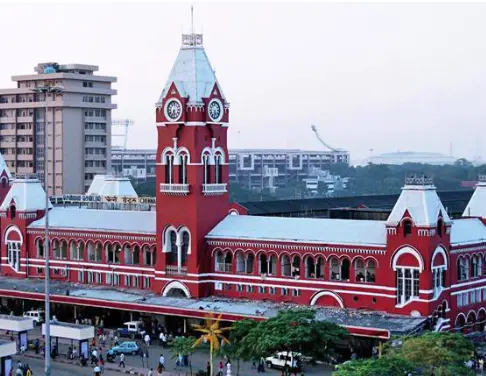
The US runs five consular posts in India — Mumbai, New Delhi, Chennai, Hyderabad, and Kolkata. Which post you attend is determined by where you reside, under 9 FAM 402.12. One critical exception: all Blanket L-1 petitions filed in India are adjudicated only at the US Consulate in Chennai, per 8 CFR 214.2(l)(5) (Chennai also handles individual L-1A and L-1B cases for its catchment of Tamil Nadu, Karnataka, Kerala, Puducherry, Lakshadweep, and Andaman & Nicobar). Pick your nearest post in the dropdown or grid below for the post-specific guide with its address, fees, wait times, and step-by-step process.
2026 update. Per a State Department guidance issued in September 2025, non-immigrant visa applicants must now schedule the L-1 interview at the post in their country of nationality or legal residence. The earlier practice of routing Indian L-1 applicants through Singapore or Ho Chi Minh City when Indian wait times were excessive is no longer routinely permitted. Plan to interview at home.
🎯 Find Your L-1 Visa Consulate
Select your home state, union territory, or country — we will route you to the correct US post and the post-specific L-1 guide.
L-2 dependent visas (spouse and children) are processed at any of the five Indian posts. Blanket L-1 is exclusively at Chennai.
Pick Your Post — L-1 Consulate Guide
Each card below opens a post-specific guide with the address, contact details, local-currency fee, document requirements, wait times, and the unique procedural quirks of that particular Embassy or Consulate. Cards marked +BLANKET L handle individual L-1 cases for their state catchment and additionally accept Blanket L-1 (I-129S) cases from anywhere in India.
Our Asia-based India L1 visa team are based in Mumbai, Bangalore, Delhi, Singapore*, Manila and Ho Chi Minh City*. Our Asia team works with Davies & Associates lawyers in the United States to process L1A visa and L1B visa cases. We believe it is our knowledge of India and Indian business that have made our success second to none. * Note: under 2025 State Department guidance, third-country processing in Singapore or Ho Chi Minh City is no longer routinely permitted — applicants must interview in their country of nationality or residence.
This page is the consular hub for L-1 cases across India. We cover the seven-step process, costs, wait times, refusal grounds (including the colour-coded 221(g) system), and links to each post-specific guide. For L-1 visa eligibility, see our L-1 visa requirements page; for the documentary record at the I-129 stage, see our L-1 visa documents required guide; for renewals, see our L-1 visa renewal guide (2026 updates).
Step 1. Approval of Form I-129
The first step is to obtain approval of your form I-129. For more information on this please view our India L1 Visas page.
Once your form I-129 is approved your case will be forwarded to the applicable US Consulate in India for visa issuance. The applicable consulates covering the various States in India are listed below on this page. You will be scheduled for a visa interview at the consulate covering the State in which you reside. L1 blanket visas are an exception and are all processed at the US Consulate in Chennai, per 8 CFR 214.2(l)(5).
Step 2. Proper Business Documentation
The consulate will want to know that you have a bona fide business in India. The largest cause of L visa refusals and Administrative Processing is failure to properly document the Indian business under 9 FAM 402.12-5 (qualifying relationship test).
If you do not convince the consular officer that you have a legitimate Indian business, your case is likely to be placed in Administrative Processing. Administrative Processing under 9 FAM 403.10-3 can cause weeks of delay as the consulate investigates your business.
Step 3. Consular L-1 Visa Application Procedures in India
US Consulates in India have different procedures for processing L1 visa applications. L visa applications from each of the 28 States and 8 Union territories in India are handled by a specific consulate. Follow the links below for a guide on how to process your L1 visa application.
We have also listed the Davies & Associates ("D&A") office in India servicing the relevant area. Feel free to call our local team with questions.
Step 4: Wait. How Much Processing Time does an L1 Visa Take in India?
L1 processing time from India is the combination of two factors:
A) I-129 Processing Time. There are two relevant times:
a) Premium Processing. With premium processing the applicant pays an additional fee. The premium processing fee changes but the current fee is published by the USCIS. Cases taking premium processing are either adjudicated in fifteen calendar days under 8 CFR 103.7, or the premium processing fee is refunded.
B) Consular Processing Time.
Different consulates have different processing times. Current times are published by the US State Department. In our experience, Mumbai and Chennai see heavier traffic than Hyderabad and Kolkata.
Step 5: Avoiding Consular Delays in India
1. Processing in a Different Consulate — 2025/2026 Update
It was formerly possible for an Indian L1 visa applicant to process their visa in a consulate outside of India. Vietnam and Singapore have both been popular recent options. However, in September 2025 the US State Department issued guidance that an applicant should process their L-1 visa application either in: (1) their home country; or (2) a country where they lawfully reside. The September 2025 rule has been enforced more tightly through 2026, with third-country processing now treated as the exception rather than the rule.
2. Make Sure your Indian Business is Compliant
The consulates in India will make sure your Indian business is in proper compliance and lawfully operating. Where there is any uncertainty a consular investigator or inspector may be sent to your Indian business premises. Have your Indian tax returns and applicable licenses, such as a Shops & Establishments Act license, available.
Cost of a Consular Interview in India
Most of the fees involved with an L1 visa are paid at the I-129 stage. These fees are significant and are listed on our L-1 visa requirements page.
As a reminder, these fees include:
I-129 basic filing fee (currently $1,385 standard / $695 small employer per USCIS Form G-1055)
Asylum Program Fee: $600 standard / $300 small employer
Anti-Fraud Fee: $500
Public Law 113-114 Fee: $4,500. Applicable only if the US employer has greater than 50 employees with over half in L-1 or H-1B status under 8 CFR 214.2(l)(17).
In addition to the above I-129 stage fees there is a visa application/issuance fee charged by the consulate.
The MRV consular application fee for L-1 is currently USD $205 per applicant. Confirm against the State Department fee schedule.
The MRV is paid in Indian Rupees through the designated bank channel via ustraveldocs.com/in.
Receipts issued on or after October 1, 2022 are valid for 365 days from issue.
Step 6. Preparing for your Interview
Every consulate has different staff and officers conducting interviews. Interview questions and practices vary not only by consulate but by consular officer, all working from the same FAM standard at 9 FAM 402.12.
If you are an L-1B applicant be prepared to discuss your specialized knowledge under the test at 9 FAM 402.12-7. If you are an L-1A applicant be ready to walk through your executive or managerial role under 9 FAM 402.12-6.
⚠️
L1 Visa Refusal: Keep Your Indian Business Open
In our only refused case, the US consular staff in Delhi sent an investigator to the client’s Indian business. The investigator found no employees there. The client explained that the employees worked nights to serve the US market. The investigator returned a few nights later. Still, there were no employees present. As a result, the visa was refused.
💡
Davies & Associates Hot L-1 Tip
While your L-1 lawyer will ensure your application is compliant with FAM, you should read 9 FAM 402.12 before your interview. That way you will be familiar with the instruction under which the officer you meet is adjudicating your case — particularly the qualifying-relationship test (402.12-5) and the documentation expectations (402.12-8).
Step 7. Consular Refusals in India
In the past decade, we have handled hundreds of L visa cases. Our success rate has been exceptional, as only one of our clients has faced an L visa refusal in India.
If the consulate wishes to investigate your application further they place your case in "Administrative Processing". The consulate may send an investigator to your business or request other documentation under 9 FAM 403.10-3. At the conclusion of Administrative Processing your visa will either be issued or refused.
If your visa is refused you have a very narrow window of opportunity to get the consulate to reconsider before the case is returned to the US under 8 CFR 214.2(l)(9). We have had success in overnighting further evidence to the consulates in Mumbai and Delhi with a request that the refusal be reviewed.
Specific reasons why your visa may be refused include:
The applicant failed to convince the consular officer that they meet the requirements for visa issue. A case may be placed into "Administrative Processing" while the applicant is given an opportunity to produce additional documentation.
214(b)
The applicant did not establish eligibility for the visa category being applied for or overcome the presumption of being an intending immigrant.
212(a)(2)(A)(i)(I)
Applicant convicted of a crime of moral turpitude.
212(a)(2)(A)(i)(II)
Drug related conviction.
212(a)(2)(B)
Has two or more criminal convictions for which the total sentence of confinement was 5 years or more.
212(a)(4)
Did not provide an adequate affidavit of support when one was required; therefore denied under public charge.
212(a)(6)(C)(i)
Misrepresentation or Fraud in a visa application.
212(a)(9)(B)(i)
Prior unauthorized overstay in the United States.
Consular Refusals and 221(g) in India
For L visa applicants the most common cause of L visa refusal is 221(g), found at INA § 221(g) / 8 USC 1201(g).
Often a 221(g) refusal results in a case being placed in "administrative processing" while the consulate investigates a question or concern they may have. However, the consulate can also refuse to issue a visa and return the application to the National Visa Center/USCIS for revocation of your I-129 approval under 8 CFR 214.2(l)(9).
A 221(g) L1 visa refusal may not be final and can be issued for different reasons. While increasingly consulates DO NOT follow the State Department’s color-coded refusal sheet system for 221(g) refusals it neatly categorizes 221(g) refusals.
Color-Coded 221g Slips
Pink 221(g)
Your case will require administrative processing.
White 221(g)
Your case falls under the complex category of section 221(g).
Blue 221(g)
The consulate needs more supporting documentation.
Yellow 221(g)
The consulate needs additional time to review the documents.
L-1 Visa Guide for UK Residents and UK Nationals (London & Belfast Consular Processing) — if you are Indian and now live and work in the UK, this is the route. The L-1 interview happens at the US Embassy in London or the Consulate in Belfast, not in India. Particularly relevant for Indian professionals at UK-headquartered firms transferring to a US affiliate.
8 CFR 103.7 — USCIS petition fees and premium processing
Foreign Affairs Manual (consular adjudication)
9 FAM 402.12 — the master FAM section for L-visa adjudication, including the qualifying-relationship test (402.12-5), executive/managerial test (402.12-6), specialised knowledge (402.12-7), and documentation (402.12-8)
NASSCOM — National Association of Software and Service Companies (relevant for L-1B specialised-knowledge cases)
About the Authors
Author: Sukanya Raman, Esq.
Managing Attorney, Davies & Associates, India. Working with L-1, E-2, and EB-5 clients across India.
Reviewer: Mark I Davies, Esq.
Chairman of Davies & Associates; focused on E visa strategy and complex consular filings.
Mark I Davies, Esq. JD, University of Pennsylvania Law School, Licensed with the SRA (SRA ID: 384468) in the UK, Member Law Society of England & Wales, MBA, Wharton School of Business. Top 10 Investment Visa Lawyer, Licensed (USA), Georgia State Bar.AILA Member.
Area
Details
Education
JD, University of Pennsylvania Carey Law School | MBA (Finance), The Wharton School, University of Pennsylvania | Chartered Accountant (ICAEW)
Financial Training
Completed Analyst Training Program at a major international bank | Chartered Accountant background with professional training in financial analysis and reporting
Legal Practice
Admitted to practice in Georgia (USA) | Registered Solicitor with the Law Society of England & Wales | Former CMBS lawyer at one of the world’s largest international law firms
Immigration Track Record
15+ years advising HNW investors |
Zero denials for clients advised on source-of-funds compliance in EB-5 | Hundreds of successful EB-5 cases globally
Recognition
Named a
Top 25 EB-5 Immigration Attorney by EB5 Investors Magazine (2018–2023)
Professional Engagements
Lecturer/trainer for other lawyers at AILA, ACA, University of Pennsylvania Law School | Frequent speaker at global investment immigration conferences
We are known for our creative solutions that obtain "impossible" visas. We solve the most complex immigration problems for businesses, investors, individuals, and families.
Several lawyers told me I would not be able to get a TN visa. Two weeks after contacting Davies & Associates I was working in New York, visa in hand.
Individual seeking 'Impossible' TN Visa
D&A was very detail-oriented and very thorough in what they did. They worked on my case 24/7 and were very patient in answering all my questions.
E-2 Visa Client
My case felt complex but D&A managed the whole process carefully and helped me move seamlessly from one stage to the next.
E2 + CBI Client
D&A was my guiding light through the entire EB-5 process.
EB-5 Visa Client
I would definitely be a big advocate for the rest of my life for anyone wanting to explore the Grenada Citizenship by Investment Programme leading to the E-2 visa. The most important thing is a good team behind you. With Davies & Associates, you're in safe hands... you need someone who can support you on the ground and, again, you are well taken care of by D&A. The people are really warm, very helpful and quite open-minded when it comes to business... Not to mention as a passport it's great from a travel perspective... It's just 4 to 5 hours from New York.
Grenada CBI + E2 Visa Client
The entire process of getting an EB-5 visa is handled in a professional way by Mark Davies and his team. EB-5 is a wonderful option for anyone considering moving to the United States if you have the means. I was hoping to use the H-1B route for my children, but it became unreliable and so I looked to the EB-5 visa instead. It is great for anyone who has the resources. Mark gives you the first meetings himself which gives you great comfort. Both Mark and Sanjay are abundantly available and I even had the pleasure of hosting them at my house.
Parent of 2 EB-5 visa holders
I'm in the process of extending my L-1 visa. I submitted a few questions regarding my case, and he contacted me back almost immediately, both by email and telephone. Unlike other attorneys I met before, he gave me the impression of knowing off the top of his head what kind of visa I have, and what actions had to be taken to extend it. He is very thorough and clear regarding the process and what to expect in terms of timelines and issues that may arise. He is constantly in contact, so you definitely know he's working on your case.
L-1B Visa Holder
Mark Davies is a joy to work with. His extensive knowledge, speedy response and attentive service took away all my fears of dealing with immigration and visa applications. He is very generous with his time in explaining every step along the way and I have already and will in the future recommend him to anybody who is looking for an immigration lawyer.
E2 Visa for Small Professional Business With International Offices
Davies & Associates assisted us with an immigration emergency involving my brother's fiancée who was outside the United States. They assisted us in a highly professional manner, working with the relevant US embassy, US immigration and the governments of two other countries. As a result of their efforts the individual involved is now working in the United States. While their knowledge of the law is exemplary what really distinguishes this firm and attorney Davies from any other firm we have worked with is their dedication to customer service and their unrivaled level of professionalism.
Complex Fiancée Visa Need Involving Multiple International Jurisdictions
Several lawyers told me I would not be able to get a TN visa. Two weeks after contacting Davies & Associates I was working in New York, visa in hand. I have recommended this firm to several friends and colleagues, they do an excellent job every time.
Individual Seeking 'Impossible' TN Visa
I was qualified as a physician in a foreign country. Being on a J1 visa I was facing having to leave the United States and return to my home country. Davies & Associates secured one of only 30 J1 visa waivers available in my State, allowing me to work for a US hospital and remain in the United States.
Doctor Seeking J1 Visa Waiver
I am very satisfied with the services Mark Davies has provided me. He has a very extensive knowledge in immigration laws and has a thorough approach to any case.
Looking to relocate or having trouble with a visa application?
We are known for our creative solutions that obtain
"impossible" visas. We solve the most
complex immigration problems for business, investors, individuals and families.