
 English
E-2 Visa for Taiwan 2026: Complete AIT Taipei Guide
- Agriculture & Commodities Industry Practice
- Commercial Manufacturing & Production Industry Group
- Energy Practice Group
- Fashion Industry
- Information Technology
- Logistics & Warehousing Practice
- Retail Practice
- Startup & Emerging Business
- Mobile Application & Social Media
- India Practice Group
- Investors and Entrepreneurs
- Consulting & Service Oriented Businesses
- Visa Franchise Practice
- Mining
- Financial
- Medical Professionals
- Moving from Australia to US
- Emigrate to & from Canada
- Moving from Germany to US
- Grenada Citizenship by investment
- Moving from India to US
- Italian Citizenship & Residency
- Moving from Philippines to US
- Portuguese Residency By Investment
- Moving from Singapore to US
- Turkish Citizenship
- Moving from United Kingdom to US
- Immigration to the United Kingdom
- Moving from Vietnam to US
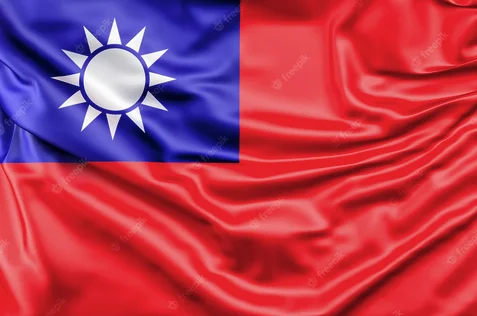
Applying for an E-2 visa in Taipei is handled through the American Institute in Taiwan (AIT), which conducts E-2 interviews on behalf of the U.S. Department of State. The E-2 visa process in Taiwan follows the standards set out in 9 FAM 402.9 and 8 CFR § 214.2(e), with AIT Taipei applying its own document review and interview practice.
Key Takeaways: E-2 Visa for Taiwan (2026)
The E-2 visa for Taiwan is a U.S. non-immigrant treaty investor visa available to Taiwanese nationals through the American Institute in Taiwan (AIT) in Taipei. See Quick Facts below for the headline numbers; the legal framework is summarised here.
- Taiwan is an E-2 treaty country. Taiwanese nationals qualify under the Treaty of Friendship, Commerce and Navigation between the United States and the Republic of China.
- All E-2 cases for Taiwanese nationals are normally processed through AIT Taipei, which conducts E-2 interviews on behalf of the U.S. Department of State.
- The legal test for investment is proportionality, not a fixed dollar amount (8 CFR § 214.2(e)(14); 9 FAM 402.9-6(D)). The investment must be substantial relative to the cost of the business and committed at risk.
- The U.S. business must be at least 50% Taiwanese-owned and the applicant must enter to develop and direct the enterprise.
- The enterprise must be more than marginal — it must have the present or future capacity to generate more than a minimal living for the investor and family (8 CFR § 214.2(e)(15)).
- Spouses are employment-authorized incident to status (no separate EAD required since 2022). Children receive derivative E-2 status until they age out.
- The E-2 is a non-immigrant visa and does not directly lead to a green card, but Taiwanese investors commonly transition to U.S. permanent residency through EB-1C, EB-2 NIW, or EB-5.
- AIT Taipei applies particularly close scrutiny to investment substantiality and franchise template cases following a refusal trend reported in late 2025.
Table of Contents
- ► E-2 Visa for Taiwan: Executive Summary
- ► Representative Matters at AIT Taipei
- ► Types of E-2 Visa Available to Taiwanese Nationals
- ► Why Taiwanese Investors Choose the E-2 Visa
- ► E-2 Treaty Investor Visa: Develop and Direct a U.S. Business
- ► E-2 Visas and AIT: Why Every Taipei Applicant Should Read the FAM
- ► E-2 Visa Taiwan Requirements: Eligibility and Core Standards
- ► Applying for an E-2 Visa in Taipei: AIT Process Step by Step
- ► AIT Taipei E-2 Document Checklist for Taiwanese Applicants
- ► E-2 Essential Worker Visa for Taiwanese Nationals
- ► E-2 Visa Investment Requirements for Taiwan
- ► How Long Does the E-2 Visa Process in Taiwan Take?
- ► 2026 Update: E-2 Visa Interviews at AIT Taipei
- ► From E-2 to U.S. Permanent Residency
- ► Contact Davies & Associates — Taipei Office
- ► Glossary of Key Terms
- ► Frequently Asked Questions — E-2 Visa for Taiwan
E-2 Visa for Taiwan: Executive Summary
The E-2 visa is a U.S. investor visa that allows nationals of treaty countries, including Taiwan, to invest in and direct a business in the United States. For Taiwanese applicants, cases are processed through the American Institute in Taiwan (AIT) in Taipei under the rules set out in 9 FAM 402.9 and 8 C.F.R. § 214.2(e).
This guide is structured around the practical realities of presenting a Taiwanese E-2 case at AIT Taipei. It covers eligibility and core standards, the AIT application process step-by-step, the document checklist AIT publishes for Taiwanese applicants, investment sizing and the proportionality test, source-of-funds tracing, interview preparation and the 2026 update on consular practice, family options including spouse work authorization and the age-out cliff for derivative children, and the routes from E-2 to permanent residency through EB-1C, EB-2 NIW, and EB-5.
For Taiwanese applicants weighing the E-2 against alternative routes, the side-by-side comparison table further down provides the headline differences. For a complete breakdown of fees and typical investment levels, see our 2026 E-2 visa cost guide.
E-2 Visa for Taiwan — At a Glance E-2 Visa for Taiwan: Key Facts for Applying at AIT Taipei (2026)
Types of E-2 Visa Available to Taiwanese Nationals
Three E-2 Visa Categories for Taiwan
- E-2 Treaty Investor Visas for founders and business owners.
- E-2 Essential Worker Visas for the key staff of a qualifying E-2 business.
- E-2 Dependent Visas for spouses and children under 21.
The U.S.–Taiwan Treaty Basis for the E-2 Visa
Taiwanese nationals qualify for the E-2 visa under the Treaty of Friendship, Commerce and Navigation between the United States of America and the Republic of China, signed in Nanking on November 4, 1946 and entered into force on November 30, 1948. This treaty continues to provide the legal basis under which Taiwanese nationals are eligible for E-1 (treaty trader) and E-2 (treaty investor) visas. The U.S. State Department's reciprocity schedule confirms Taiwan's continuing E-2 eligibility and sets the maximum E-2 visa validity at 60 months (5 years).
E-2 Treaty Investor Visas: Developing and Directing a U.S. Business
An E-2 Treaty Investor Visa is a non-immigrant visa that allows the holder to come to the United States[1] for the purpose of setting up or acquiring and then "develop and direct" a U.S. business. 8 C.F.R. § 214.2(e)(2); 9 FAM 402.9-6(F).
Can a Taiwanese E-2 Visa Holder Diversify into Other Businesses?
Yes, if correctly structured.
A Taiwanese E-2 visa holder is only permitted to work for the E-2 entity for which the visa was approved. However, if that entity is structured correctly and diversifies into multiple businesses, the investor may be eligible to work across those dependent businesses.
Management Companies and Holding Companies: Immigration Law vs. Corporate Law and Tax Planning
Placing a variety of different businesses in one corporate entity can be optimal for immigration planning. However, from a liability protection and taxation planning perspective this can be problematic. Disagreements between E-2 immigration attorneys and U.S. corporate lawyers are commonplace. Generally, E-2 immigration lawyers disfavor the use of holding companies, while corporate and tax lawyers insist on using them.
One solution is to use a holding company that employs staff who provide services to subsidiary businesses, which can work for E-2 visa purposes. In these circumstances, it is critical that corporate and immigration counsel work as a team.
E-2 Visas and AIT: Why Every Taipei Applicant Should Read the FAM
The Foreign Affairs Manual ("FAM") guides consular officers during the E-2 visa decision-making process. Reading the FAM is worthwhile for every E-2 visa applicant interviewing at AIT Taipei. See 9 FAM 402.9.
In addition to the guidance in the FAM, the American Institute in Taiwan follows its own E-visa procedures and practical review style. While general E-2 procedures are posted on the AIT website, that guide is not complete. In Taipei, working with an experienced E-2 lawyer who regularly presents cases before AIT is highly beneficial.
E-2 Visa for Taiwan: Requirements, Eligibility and Core Standards
To qualify for an E-2 Treaty Investor Visa, Taiwanese applicants must meet all the regulatory and evidentiary requirements set out in 8 C.F.R. § 214.2(e) and 9 FAM 402.9. These standards define the essential eligibility criteria for investors from treaty countries such as Taiwan, focusing on the nature of the investment, ownership structure, and the operational integrity of the enterprise.
| Key Eligibility Criteria | Description | References |
|---|---|---|
| 1. Treaty Nationality | The applicant must be a national of a country that maintains a qualifying treaty of commerce and navigation with the United States. Taiwan qualifies under the 1946 Treaty of Friendship, Commerce and Navigation. | 8 C.F.R. § 214.2(e)(3)(i); 9 FAM 402.9-4(A); USCIS Policy Manual Vol. 2 Pt. G — Treaty Traders and Treaty Investors |
| 2. Substantial Investment | The investor must have made, or be actively making, a substantial investment in a bona fide U.S. enterprise. The investment must be significant in relation to the total cost of purchasing or establishing the business and sufficient to ensure its successful operation. | 8 C.F.R. § 214.2(e)(14); 9 FAM 402.9-6(D); USCIS Policy Manual Vol. 2 Pt. G |
| 3. At-Risk Capital | The investment funds must be at risk and subject to potential loss if the business fails. Loans secured by business assets generally do not qualify, as they do not expose the investor to true financial risk. | 8 C.F.R. § 214.2(e)(12); 9 FAM 402.9-6(C); USCIS Policy Manual Vol. 2 Pt. G |
| 4. Real and Active Enterprise | The enterprise must be a real, operating commercial undertaking that produces goods or services for profit. Speculative or idle investments such as undeveloped land or stock portfolios are not eligible. | 8 C.F.R. § 214.2(e)(13); 9 FAM 402.9-6(A); USCIS Policy Manual Vol. 2 Pt. G |
| 5. More Than a Marginal Enterprise | The business must not be marginal — meaning it must have the present or future capacity to generate more than a minimal living for the investor and their family within five years. | 8 C.F.R. § 214.2(e)(15); 9 FAM 402.9-6(E); USCIS Policy Manual Vol. 2 Pt. G |
| 6. Control and Development Intent | The applicant must be entering the United States solely to develop and direct the enterprise, typically by owning at least 50 percent of the business or through a managerial or executive position with operational control. | 8 C.F.R. § 214.2(e)(16); 9 FAM 402.9-6(F); USCIS Policy Manual Vol. 2 Pt. G |
For a detailed breakdown of these principles and practical guidance tailored for Taiwanese investors, visit our E-2 Core Standards page. This resource explains how U.S. consular officers and USCIS interpret "substantial investment," "marginality," and "control" in line with the USCIS Policy Manual, Volume 2, Part G.
Representative AIT Taipei E-2 matters
E-2 Visas and AIT Taipei: Representative Matters We Have Handled or Seen
Representative E-2 matters that Davies & Associates has handled or seen at AIT Taipei illustrate the wide range of Taiwanese businesses that can qualify for an E-2 visa — from technology and food & beverage to franchise and manufacturing ventures, these representative matters show that successful E-2 cases are not limited to one industry or one business model.
The fact patterns below are anonymised composites drawn from matters that Davies & Associates and other practitioners have advised on at AIT Taipei. Specific names, identifying facts, and confidential details are not disclosed:
- A Taiwanese technology entrepreneur expanding a SaaS business into California with qualifying investment.
- A bubble tea franchise operator from Taipei opening a flagship location in Texas.
- A Taiwanese restaurant group expanding into the New York metropolitan area.
- A precision manufacturing business from Taichung establishing a U.S. distribution and assembly arm.
- An e-commerce founder from Kaohsiung structuring a U.S. operating company supported by inventory investment.
- A senior care franchise investment by a Taiwanese investor relocating with family on derivative E-2 visas.
- A Taiwanese specialty food and beverage importer establishing a U.S. wholesale and retail operation.
These representative matters illustrate how the E-2 visa can support Taiwanese entrepreneurs entering the U.S. market across a broad range of sectors, provided the business is properly structured and the investment is credible, committed, and well documented. Past results do not guarantee a similar outcome in any individual matter; outcomes depend on the specific facts and circumstances of each case.
⚖ Expert Tip: For comprehensive advice on selecting the right legal partner for your E-2 application, consult our specialist resource:
Can I Study or Take a Degree While on an E-2 Treaty Investor Visa?
An E-2 visa holder is not able to engage in formal studies that are unrelated to the applicant's E-2 work or work for unrelated entities. However, where a degree or course of study is relevant to the petitioner's E-2 visa work, part-time study may be possible.
Applying for an E-2 Visa in Taipei: The AIT Process Step by Step
E-2 Visas and AIT Taipei: Where Taiwanese Applicants Apply
All E-2 Treaty Investor Visa applications for Taiwanese nationals are normally handled by the American Institute in Taiwan (AIT). AIT functions as the equivalent of a U.S. embassy or consulate for visa purposes and conducts E-2 interviews on behalf of the U.S. Department of State. In practice, the entire E-2 visa process for Taiwanese nationals is centred on AIT Taipei, although a third-country consular processing option may be available in narrow circumstances depending on the applicant's residence, the relevant post's third-country national policy, and appointment availability.
To begin applying for an E-2 visa in Taipei, applicants complete Form DS-160 and submit a comprehensive E-2 visa package directly to AIT for pre-screening before an interview can be scheduled. Processing times depend on case volume and the completeness of the documentation.
Official Source: American Institute in Taiwan – Nonimmigrant Visa Information
Step-by-Step E-2 Visa Process in Taiwan (via AIT Taipei)
- Select a qualifying E-2 business. Make a substantial, at-risk investment in a real operating U.S. enterprise. This is the most basic E-2 visa requirement.
- File Form DS-160 online. Complete the DS-160 nonimmigrant visa application following AIT's specific guidelines for Taiwanese applicants.
- Pay the visa application fee. Create an online account with AIT and pay the MRV fee.
- Organize your supporting documents. AIT publishes specific guidance on E-2 documentation; up-to-date practical insight from recent matters at AIT is also valuable.
- Schedule an interview. Submit your document package and book an E-2 interview slot through the AIT online appointment system.
- Prepare for the AIT E-2 interview. Comprehensive preparation, including a review of common AIT-specific questions, materially improves outcomes.
Key Authority
Benefits
- Up to five years of E-2 visa validity per the U.S. Department of State reciprocity schedule for Taiwan, renewable indefinitely while the business continues to qualify. (Source: U.S. Department of State)
- Spouse may apply for, and is generally employment authorized incident to status, allowing the E-2 spouse to work in the U.S. (Source: USCIS)
- Children under 21 may accompany you but cannot work. (Source: USCIS)
Useful Links
- 9 FAM 402.9 — Treaty Trader, Investor and Essential Employee guidance.
- USCIS E-2 Treaty Investors info — 8 CFR regulatory basis.
- AIT Taipei nonimmigrant visa info — official AIT E-2 overview.
- Checklist of Documents to Bring to your E-2 Interview at AIT in Taipei
AIT Taipei E-2 Document Checklist: What Taiwanese Applicants Must Bring
The American Institute in Taiwan publishes its own Required Document List for E-2 Applications that goes beyond the generic federal forms. The checklist below summarises both the federal requirements and the Taiwan-specific civil-document requirements that AIT explicitly asks Taiwanese applicants to provide.
Required Forms
- Form DS-160 confirmation page. Submitted online through the Consular Electronic Application Center; printed barcode page is brought to the interview.
- Form DS-156E (Nonimmigrant Treaty Trader/Investor Application). Following the State Department's 2024 update, DS-156E content is now folded into DS-160 for principal investors, but DS-156E is still required for E-2 employees (managers, executives and essential workers) and AIT may still request a supplementary DS-156E in certain cases. Three parts cover (i) the U.S. business profile, (ii) staffing and ownership, and (iii) the applicant's role.
- Valid passport with at least six months remaining validity beyond the intended period of stay.
Government Fees
- MRV (machine-readable visa) application fee: USD 315 for E-category visas, payable through the AIT online appointment system.
- Reciprocity fee: None for Taiwan (per the State Department reciprocity schedule). By contrast, Australian E-2 applicants pay USD 3,574 in reciprocity fees, so Taiwanese applicants enjoy a meaningful comparative advantage.
- I-129 premium processing (Change of Status only): USD 2,965 for USCIS action within 15 business days. This fee does not apply to consular E-2 cases adjudicated at AIT.
Photograph Specifications
AIT requires one 5cm x 5cm (2 inch x 2 inch) photograph with a white background, taken within the last six months. The photograph must meet the U.S. Department of State photo requirements. Photographs that fail any of these criteria are a common reason for AIT to reject the document package at intake.
Taiwan-Specific Civil Documents
AIT applies the following Taiwan-specific civil-document standards (set out on the State Department Taiwan reciprocity page):
- Household Registration record (戶口名簿) — obtained from any local Household Registration Office on production of the applicant's Taiwan National ID. Used in lieu of, or in addition to, a birth certificate.
- Taiwan Police Certificate — required for each applicant aged 16 or older, issued by the Police Department headquarters with jurisdiction over the county or city where the applicant's household is registered. Application may be initiated online through the Taiwan National Police Agency, but in-person collection of supporting documents is required.
- Foreign Police Certificate — required for each applicant aged 16 or older who has lived in any foreign country for 12 months or more. Applicants who have lived in multiple countries must submit a separate police certificate from each country.
- Marriage Certificate or Divorce Decree, if applicable.
Business and Investment Evidence (Proof of Investment)
AIT consistently focuses on the substance of the investment rather than the size of the headline number. Acceptable evidence includes:
- Wire transfer records from the Taiwan-based source bank to the U.S. business bank account.
- Receipts and invoices for capital purchases (equipment, furniture, build-out costs).
- Lease agreements or commercial property purchase contracts for the U.S. premises.
- Equipment invoices and supplier purchase orders.
- Monthly U.S. business bank statements covering the period since the funds arrived.
- Profit-and-loss statements and corporate tax filings, where the business has begun operating.
- IRS Form 1040 for the three most recent fiscal years for any applicant with prior U.S. tax filing history.
- Franchise agreement (entire agreement), where the E-2 business is a franchise.
- Articles of incorporation, operating agreement or bylaws, stock certificates, and the IRS EIN letter for the U.S. entity.
Source-of-Funds Tracing
Source-of-funds review is one of the most common grounds for AIT to issue an INA 221(g) administrative-processing hold on a Taiwanese E-2 case. Funds must be lawfully obtained, and the documentary trail must show movement from origin to U.S. business bank account without unexplained gaps. Acceptable documentation includes Taiwan tax returns, salary records, business sale documentation, real-estate sale closing statements, gift letters with bank-trace evidence, and inheritance documentation. Mortgages and loans secured by the U.S. business assets do not count as the investor's at-risk capital under 8 C.F.R. § 214.2(e)(12); however, loans personally guaranteed against the investor's other assets may qualify.
Translation Requirements
AIT explicitly requires that any document not in Chinese or English must be translated into English by a certified translator and sworn before a Notary Public. In practice, even Chinese-language Taiwan civil documents (e.g., household registration extracts) benefit from a certified English translation when submitted to AIT, because the U.S. consular officer reviewing the file may not read Chinese.
E-2 Essential Worker Visa for Taiwanese Nationals
An E-2 Essential Worker visa allows a Taiwanese national to work in the United States for a business owned and controlled by Taiwanese nationals (or nationals of another E-2 treaty country sharing the same nationality as the majority owner), where the worker's skills or role are essential to the company's U.S. operations. This visa is commonly used by Taiwanese companies expanding into the U.S. to bring in trusted specialist staff with unique or critical expertise.
E-2 Visa Investment Requirements for Taiwan: How Much Do You Need?
There is no fixed minimum investment for an E-2 visa. Instead, the investment must be substantial relative to the cost of the business and sufficient to support a real, operating enterprise. For Taiwanese applicants, the amount needed varies significantly depending on whether the business is a lower cost service model or a more capital intensive operation.
Applicants should also understand the wider E-2 visa costs and fees alongside the business investment itself.
There is no official minimum investment amount. In practice, many applicants invest around USD 100,000 or more to present a stronger case (9 FAM 402.9). See also 8 CFR 214.2(e) on the substantial investment rule.
What counts as a substantial investment for an E-2 visa?
A substantial investment depends on the nature and cost of the business. Lower cost businesses may qualify if most or all of the required funds are already committed, while larger or more operationally intensive businesses may require greater capital. The key question is whether the investment makes the enterprise credible, real, and capable of operating. The legal foundation is the proportionality test in 8 CFR § 214.2(e)(14), with consular guidance at 9 FAM 402.9-6(D) and USCIS adjudication standards in the USCIS Policy Manual, Volume 2, Part G.
The Proportionality Test in Practice: Worked Examples
The proportionality test compares the qualifying funds actually invested by the Taiwanese applicant against the total cost of purchasing or establishing the business. The lower the total business cost, the higher the proportion of investment expected. The State Department does not publish a fixed sliding scale, but the cases below illustrate how the test typically applies in practice at AIT:
- Example 1 — passes: A Taiwanese applicant invests USD 200,000 to purchase a USD 250,000 cafe (including build-out, equipment, and three months working capital). Investment is 80% of total cost. Likely to satisfy proportionality, with the marginality test then becoming the focus.
- Example 2 — passes: A Taiwanese applicant invests USD 400,000 of their own funds (100%) to establish a bedding-products distribution business, using the full amount for inventory, warehouse lease, and initial staff. The proportionality test is conclusively satisfied at 100% deployment; the AIT focus shifts to whether projected revenue is sufficient to clear the marginality bar (compare the Tsangs Law success-story case at USD 399,982 in 100% of investment).
- Example 3 — fails: A Taiwanese applicant invests USD 200,000 into a USD 5,000,000 manufacturing facility (4% of total cost). At that ratio, the investment is unlikely to be considered substantial, regardless of the absolute dollar value, because the 4% commitment does not reflect a meaningful at-risk stake in the enterprise.
- Example 4 — borderline: A Taiwanese applicant invests USD 80,000 into a USD 120,000 home-services franchise (67%). The proportion is acceptable, but AIT may scrutinise whether the projected revenue sustains the applicant's family beyond marginal subsistence within five years — especially in light of the late-2025 franchise template refusal trend at AIT Taipei.
The rule of thumb: aim for the investor's funds to represent the majority of total business cost where the business is small, and to be a clearly committed, irrevocable stake regardless of business size. Use the E-2 visa cost guide to model investment sizing alongside government fees and professional costs.
Why AIT Taipei Tends to Be More Demanding on Investment Amount
Although the legal standard for E-2 investment is the same at every U.S. consular post — the proportionality test in 8 CFR § 214.2(e)(14) and 9 FAM 402.9-6(D) — the practical bar in Taipei has tended to run higher than at many other consulates. In our experience and that of other practitioners, AIT Taipei applies the "substantial" and "more than marginal" tests with notable rigour, and is less forgiving of low-capitalised cases than some posts in Europe or Latin America.
Two patterns are worth highlighting for Taiwanese applicants:
- Higher de-facto investment expectations. Cases that might clear interview at a more permissive post on a sub-USD 80,000 investment have historically faced harder questioning at AIT, particularly where the business model is service-light or where the funds are not yet substantially deployed.
- Late-2025 spike in franchise template refusals. Davies & Associates have publicly noted a "spate of these cases refused at AIT in Taipei, Taiwan" in late 2025, where Taiwanese applicants relied on template business plans bundled with franchise opportunities. AIT officers identified the templates as generic and refused the cases under INA § 214(b). The lesson: a credible, individually drafted E-2 business plan tied to the actual business, market, and use of funds matters more at AIT than at almost any other post.
The practical takeaway is that Taiwanese applicants should plan for a stronger evidentiary package than the headline USD 100,000 figure suggests — not because the law requires more, but because AIT consistently expects to see the investment substantially deployed, the business plan individually drafted, and the marginality argument grounded in real hiring and revenue assumptions. For a complete breakdown of investment levels, government fees, and professional costs, see our E-2 visa cost guide.
Consular Processing vs. Change of Status to E-2 Status
Instead of applying through AIT for an E-2 visa, it is possible to enter "E-2 status" from within the United States without obtaining an E-2 visa stamp. More details on Change of Status vs. Consular Processing.
An Important Difference: USCIS VIBE Applies to I-129 Filings, Not to AIT
Taiwanese applicants comparing the two routes should be aware of one practical difference: USCIS uses an automated business-verification tool called VIBE (Validation Instrument for Business Enterprises) to cross-check the petitioning company against third-party data when adjudicating Form I-129 Change of Status filings. AIT Taipei does not adjudicate I-129s and therefore does not use VIBE on consular E-2 cases. Taiwanese investors who file a Change of Status from within the United States, however, should ensure that the U.S. company's D-U-N-S record is accurate before filing — mismatched address, ownership, or headcount data is a common trigger for a Request for Evidence. Statutory basis: 8 CFR § 103.2(b); consular standards remain governed by 9 FAM 402.9.
How Long Does the E-2 Visa Process in Taiwan Take?
Once the applicant has identified the business they will use for their E-2 visa application, the E-2 visa process in Taiwan moves through several distinct phases:
- Incorporating the business and obtaining the necessary corporate documentation (1–8 weeks).
- Preparing a business plan (2–4 weeks).
- Filing the E-2 treaty investor visa case with AIT.
- Attending the consular interview at AIT Taipei. (Current consular waiting times.)
Processing times at AIT Taipei vary with case volume; in many periods the wait between filing and interview can be a few weeks, although busier periods may take longer. When AIT processing times are extended, applicants may sometimes be able to interview at another consulate in the region.
E-2 Visa Interviews at AIT Taipei in 2026: What to Expect
Interviews demand serious preparation
E-2 visa interviews at AIT Taipei are not a routine final step. Consular officers conduct a substantive review of the business, the investment, and the applicant's role.
What E-2 visa officers may ask
Applicants should be ready to answer detailed questions about the business and the investment. Common themes include:
- Source and path of investment funds.
- The structure and ownership of the U.S. company.
- The applicant's role and ability to "develop and direct" the business.
- The business plan, projected revenue, and hiring plans in the U.S.
- Whether the U.S. business is more than marginal.
- For employee cases: why the U.S. business needs the applicant in the United States.
Why this matters
Refusals under INA § 214(b) are possible if the consular officer is not satisfied. A well-prepared application package and careful interview preparation are critical at AIT Taipei.
Demonstrating Non-Immigrant Intent: What AIT Officers Want to See
The E-2 visa is a non-immigrant classification, which means the applicant must demonstrate intent to depart the United States when E-2 status ends. Unlike the H-1B visa, the E-2 does not formally permit dual intent — an applicant cannot openly state plans to pursue permanent residence at the AIT interview without risking refusal under INA § 214(b).
Practical evidence of non-immigrant intent that AIT officers commonly look for:
- Property ownership in Taiwan — Taiwanese real-estate holdings, mortgages, or rental income provide a tangible reason to return.
- Family ties — immediate family (parents, siblings, extended family) remaining in Taiwan supports the case for return.
- Continuing business interests in Taiwan — an existing Taiwanese company, employment contract, or board seat the applicant intends to continue managing remotely or returning to.
- Bank accounts, investments, and financial commitments in Taiwan — Taiwan-based pension contributions, brokerage accounts, or insurance policies.
- A clean travel history — prior compliance with U.S. visa terms, no overstays, and consistent return to Taiwan.
- The DS-156E and supporting cover letter — should contain a clear statement of unequivocal intent to depart the U.S. when E-2 status ends.
Many Taiwanese applicants do later transition to U.S. permanent residence through EB-1C, EB-2 NIW, or EB-5 (see the comparison table below). That is permitted — but the intent must develop after the E-2 is granted, not be pre-existing at the time of the AIT interview. Davies & Associates' Taipei team prepares Taiwanese applicants on how to discuss plans honestly without inadvertently undermining their non-immigrant intent.
What Is the Most Important Part of an E-2 Visa Application?
The business plan is probably the most important part of the E-2 visa application.
Much of the secret of E-2 success lies in convincing the consular officer that the applicant has a real business which is either currently operating or capable of immediately entering operation.
Can I Bring my Family to the U.S. on an E-2 Visa?
Yes. Taiwanese E-2 visa holders can bring their spouse and children under 21[4] to the United States as E-2 derivative visa holders. Typically, an E-2 derivative family member will have the same visa validity as the primary E-2 investor.
Source: USCIS E-2 Treaty Investors
Spousal Work Authorization: No Separate EAD Required Since 2022
E-2 spouses are employment authorized incident to status, meaning the spouse may work for any U.S. employer (or operate their own business) without filing a separate Form I-765 Application for Employment Authorization. This is a meaningful change from the pre-2022 framework, which required E-2 spouses to obtain a stand-alone EAD card before working — a process that frequently took 6–9 months and forced many families to plan their U.S. entry around the EAD wait. Under the current rules, an unexpired Form I-94 marked with the E-2S spouse classification serves as evidence of work authorization. See USCIS policy guidance for E and L spouses and USCIS Policy Manual, Volume 10, Part B, Chapter 2.
Children "Aging Out" at 21: A Critical Planning Issue
Children of Taiwanese E-2 investors hold derivative E-2 status only up to their 21st birthday. On the day a derivative child turns 21, they immediately lose E-2 status and must change to another visa category — typically F-1 (student), H-1B (specialty occupation), or O-1 (extraordinary ability). For Taiwanese families with teenage children, this "age-out cliff" is one of the most important planning issues on the entire E-2 pathway:
- If the child is approaching age 21 and intends to study at a U.S. college, plan a change to F-1 student status well in advance — ideally 6–12 months before the 21st birthday.
- If the child wishes to remain in the U.S. and work for the family business, the Taiwanese family may consider EB-5 immigrant investor structuring before the child ages out, since EB-5 conditional permanent residence is preserved if filed before the 21st birthday under the Child Status Protection Act.
- If the parents are pursuing EB-1C or EB-2 NIW pathways, age-out of children may be the controlling timing constraint on the family's overall U.S. immigration strategy.
Davies & Associates routinely models child age-out scenarios as part of the initial E-2 strategic planning consultation for Taiwanese families.
What is the Maximum Validity of an E-2 Visa for a Taiwanese National?
Maximum Possible Visa Term
Total Maximum E-2 Validity for Taiwanese Nationals is Unrestricted
There is no restriction on the total number of years for which a Taiwanese national can hold an E-2 visa, provided the underlying business continues to qualify. (9 FAM 402.9)
Taiwan Reciprocity Schedule: Multiple Entries, 60 Months, No Reciprocity Fee
The U.S. Department of State Taiwan reciprocity schedule sets the following terms for E-2 visas issued to Taiwanese nationals:
- Reciprocity fee: None (compare Australia at USD 3,574 or France at variable rates)
- Number of entries: Multiple ("M") — the visa allows unlimited U.S. entries during its validity period
- Validity period: 60 months (5 years) — the maximum permitted under the reciprocity schedule
By any global comparison, the Taiwan E-2 reciprocity terms are exceptionally favourable. Many treaty countries receive shorter validity (e.g., France at 25 months) or material reciprocity fees, so Taiwanese applicants should not assume their experience will mirror that of E-2 applicants from other origins.
Taiwanese Nationals Receive Up to Five-Year Multiple-Entry E-2 Visas
E-2 visas are typically issued to Taiwanese nationals in increments of up to five years per the U.S. State Department reciprocity schedule. The five-year term is a maximum; in some cases shorter validity may be issued.
E-2 Status, Visa Validity Period, and the I-94 Admission: Three Different Things
Three concepts are easily confused, and the distinction matters at the airport:
- E-2 visa stamp validity — up to 60 months for Taiwanese nationals. This is the period during which the visa stamp in the passport is valid for travel to the U.S. port of entry.
- I-94 admission period (E-2 status) — up to 24 months from each entry. CBP officers at the U.S. port of entry issue the I-94 record on each admission, and that I-94 controls how long the holder may remain inside the United States, regardless of the visa stamp's remaining validity.
- Total cumulative E-2 stay — unlimited, provided the underlying business continues to qualify and the holder maintains valid status.
The practical consequence: a Taiwanese E-2 visa holder with a five-year visa stamp may still need to either depart and re-enter the U.S. (to obtain a fresh two-year I-94 admission) or file Form I-129 to extend status from inside the U.S. as the I-94 expiry approaches. Many Taiwanese investors use a brief regional trip (Taipei, Tokyo, Seoul, Hong Kong) every two years specifically to refresh the I-94 admission.
Each Entry: New I-94, Fresh Two-Year Admission
Each time a Taiwanese national enters the U.S. on an E-2 visa they are usually admitted in E-2 status for up to two years. When that admission period expires, the visa holder must either: (1) extend their status from within the U.S. by filing Form I-129; or (2) depart and re-enter using a valid E-2 visa.
The Five-Year AIT Re-Registration Cycle for E-2 Companies
Beyond individual visa renewals, the underlying U.S. E-2 enterprise itself is subject to periodic re-registration with AIT every five years under the consular E-visa registration program described at 9 FAM 402.9-7(D). The re-registration is a streamlined version of the original E-2 application focused on whether the business is still operating, still meets the substantiality and non-marginality tests, and still satisfies the ownership requirements.
Re-registration evidence typically includes:
- Updated DS-156E for principal applicant
- Cover letter documenting continuing eligibility
- Corporate tax returns (pages 1–2) or independent auditor's report for the most recent fiscal year
- The principal applicant's IRS Form 1040 (pages 1–2 and Schedule C, pages 1–2) for each of the last two fiscal years
- Evidence the business is currently operating (monthly bank statements, invoices, profit-and-loss statements)
- For employee applicants, documents showing ongoing executive, supervisory, or essential-skills engagement
Re-registration is materially less burdensome than the initial application but requires demonstrating that the business has performed broadly in line with the original business plan submitted to AIT five years earlier. Davies & Associates' Taipei team supports E-2 re-registration on the same fee structure as a new application, with file continuity from the initial filing.
From E-2 to U.S. Permanent Residency
The E-2 visa is a non-immigrant visa and does not, by itself, lead to a green card. However, Taiwanese E-2 holders have several well-established paths to U.S. permanent residency:
- EB-1C — for international managers and executives transferring to a related U.S. entity.
- EB-2 National Interest Waiver (NIW) — an immigrant visa for advanced-degree professionals or those of exceptional ability whose work substantially benefits the U.S. national interest. Increasingly popular with Taiwanese tech workers, researchers, and entrepreneurs in semiconductor, biotech, and AI sectors.
- EB-2 or EB-3 — employment-based immigrant visas typically requiring a U.S. employer sponsor.
- EB-5 — the immigrant investor green card program. Some Taiwanese investors increase their E-2 investment into a qualifying EB-5 amount, or make a separate EB-5 investment through an approved Regional Center project.
Side-by-Side: E-2 vs. EB-1C vs. EB-2 NIW vs. EB-5 vs. L-1 for Taiwanese Investors
For Taiwanese applicants weighing alternatives to the E-2, the headline differences are summarised below. This is a high-level overview — the right choice for any individual case depends on the applicant's profile, business plans, capital availability, and timeline.
| Visa | Type | Min. investment | Path to green card | Typical timeline | Best for |
|---|---|---|---|---|---|
| E-2 | Non-immigrant | No fixed min.; ~USD 100K+ in practice | No (renewable indefinitely) | 3–6 months at AIT | Active Taiwanese investors and operators |
| EB-1C | Immigrant (green card) | None (qualifying employer) | Yes — direct | 12–24 months | Senior managers/executives of multinational Taiwanese companies |
| EB-2 NIW | Immigrant (green card) | None | Yes — direct | 12–30 months | Taiwanese researchers, founders, and high-skilled professionals in fields of national interest |
| EB-5 | Immigrant (green card) | USD 800K (TEA) or USD 1.05M | Yes — direct (conditional → permanent) | 24–48 months | HNW Taiwanese investors prioritising green card over operational control |
| L-1 | Non-immigrant | None (qualifying employer) | Indirect (via EB-1C) | 3–6 months | Existing Taiwanese companies expanding to a U.S. office |
Source: Davies & Associates analysis based on USCIS adjudication data, State Department reciprocity schedules, and Visa Bulletin trends. Timelines are illustrative and depend on case complexity, post workload, and Visa Bulletin retrogression for immigrant categories.
Why the E-2 Visa Is the Top U.S. Business Visa for Taiwan
The E-2 visa for Taiwan is widely used by Taiwanese entrepreneurs starting or expanding businesses in the United States, particularly in technology, food & beverage, franchise, retail, manufacturing, and specialist growth sectors. For Taiwanese founders, the E-2 visa remains one of the most practical U.S. business immigration routes because it combines operational flexibility, renewable validity, and the ability to build a genuine U.S. commercial presence without the long timelines of green-card-based options.
Where Taiwanese E-2 Investors Concentrate: Sector Patterns
Taiwan brings to the E-2 program a distinctive industrial profile. The Taiwanese economy's strengths in high-technology manufacturing, supply-chain integration, and specialty consumer brands translate directly into the kinds of businesses that AIT understands and that perform well under E-2 scrutiny. Taiwanese E-2 investments most frequently cluster in the following sectors:
- Semiconductor design and supporting services — including IC design houses, EDA tooling, advanced packaging, and OEM/ODM manufacturing services in the U.S. Sun Belt and Texas semiconductor corridor.
- Biotech, medical devices, and life sciences — leveraging Taiwan's strong pharmaceutical-manufacturing and contract-research base.
- Precision manufacturing and machine tools — Taiwan's century-long reputation in machine tools and precision components transfers naturally into U.S. industrial supply.
- Specialty food and beverage — particularly bubble tea (boba) franchises, Taiwanese bakery concepts, hot-pot chains, and specialty coffee. This is the largest single Taiwanese E-2 sector by number of cases at AIT.
- Consumer technology and e-commerce — Taiwanese-founded direct-to-consumer brands, particularly in beauty, lifestyle, and consumer electronics accessories.
- Hospitality and lifestyle — restaurants, boutique fitness, and wellness concepts with strong brand differentiation.
The pattern matters at AIT: cases that fit a recognisable Taiwanese sector profile typically face less skepticism on marginality and viability than generic U.S. small-business filings, because the consular officer can reference Taiwan's broader industrial track record when evaluating the plan.
Strategic Benefits Beyond the Visa
For many Taiwanese investors, the E-2 visa is part of a broader business strategy rather than purely an immigration decision:
- U.S. market access. Operating from a U.S. base materially shortens sales cycles into the world's largest consumer and B2B market and enables U.S.-domiciled procurement, distribution, and customer service.
- Brand prestige and credibility. A U.S. business presence commonly enhances brand prestige in international markets and improves access to global partnerships, licensing arrangements, and capital that may not be as accessible when operating solely from Taiwan.
- Supply-chain diversification. Many Taiwanese manufacturers and brand-owners use the E-2 to establish a U.S. operational footprint as part of a broader global diversification strategy, complementing existing operations in Taiwan and Southeast Asia.
- Talent and capital pipeline. A U.S. base enables Taiwanese founders to recruit U.S.-based engineering and commercial talent and to access U.S. venture capital and growth-stage debt markets.
- Family stability and education. Spouses can work without a separate EAD; children attend U.S. schools or universities; the family enjoys multi-year continuous residence.
Contact Davies & Associates — Taipei Office
Our Taipei office is located on Level 37 of the Taipei 101 Tower in the heart of the Xinyi business district. Taiwanese applicants are welcome to schedule an in-person E-2 strategy session, or to request a free initial assessment by phone or email.
Davies & Associates LLC — Taipei Office
Level 37, Taipei 101 Tower, No. 7, Sec. 5, Xinyi Road Xinyi District, Taipei City 110 Taiwan (R.O.C.)- Telephone:
- +1-860-830-5665
- Consultation:
- Request a free E-2 assessment
- Hours:
- Monday–Friday, 09:00–18:00 (CST / UTC+8)
- Nearest MRT:
- Taipei 101 / World Trade Center Station (Red Line, R03)
Our Taipei office liaises directly with Davies & Associates' U.S. offices in New York, Philadelphia, Los Angeles, Chicago, Miami, and Atlanta — ensuring continuous coverage across U.S. and Taiwan business hours for Taiwanese E-2 clients.
Glossary of Key Terms: E-2 Visa for Taiwan
The following plain-English definitions cover the most commonly used acronyms and terms on the Taiwanese E-2 visa pathway. Each definition is consistent with the relevant statutory or regulatory definition, and is used in this sense throughout the present guide.
- E-2 Treaty Investor Visa
- A U.S. non-immigrant visa under INA § 101(a)(15)(E)(ii) that allows a national of a treaty country to enter the United States to develop and direct the operations of a U.S. business in which the investor has placed substantial capital at risk.
- AIT (American Institute in Taiwan)
- The non-profit corporation that conducts U.S. consular operations in Taiwan in lieu of a formal embassy or consulate. AIT Taipei adjudicates E-2 visa applications for Taiwanese nationals on behalf of the U.S. Department of State.
- Form DS-160
- The online Nonimmigrant Visa Application filed with the U.S. Department of State by every applicant for a U.S. nonimmigrant visa, including E-2 applicants at AIT Taipei.
- Form DS-156E
- The Nonimmigrant Treaty Trader/Investor Application. Following the U.S. State Department's 2024 update, DS-156E content for principal investors is folded into the DS-160. DS-156E is still required for E-2 employees (managers, executives, essential workers) and may still be requested by AIT in supplementary form.
- MRV Fee
- The "Machine-Readable Visa" application fee charged by the U.S. Department of State for processing a visa application. Currently USD 315 for E-category visas. The MRV fee is non-refundable and does not represent the total cost of an E-2 application.
- Form I-129
- The Petition for a Nonimmigrant Worker filed with USCIS. Used for an E-2 Change of Status from inside the U.S., as an alternative to consular processing at AIT Taipei.
- Substantial Investment
- An investment of capital in a U.S. business that is, by reference to 8 CFR § 214.2(e)(14), substantial in relation to the total cost of the business, sufficient to ensure the investor's commitment to its successful operation, and of a magnitude that supports the likelihood of successful development and direction. There is no fixed minimum dollar amount.
- Marginality
- An E-2 enterprise is "marginal" if it does not have the present or future capacity to generate more than a minimal living for the investor and family. A marginal enterprise does not satisfy E-2 requirements (8 CFR § 214.2(e)(15)).
- Proportionality Test
- The doctrine applied by USCIS and U.S. consular officers under which the substantiality of the investment is measured against the total cost of the business: the lower the total business cost, the higher the proportion of investor capital required.
- VIBE (Validation Instrument for Business Enterprises)
- An automated business-verification tool used by USCIS to cross-check petitioning companies on Form I-129 filings. VIBE applies to E-2 Change of Status filings adjudicated by USCIS, but not to consular E-2 cases adjudicated by AIT Taipei. See VIBE explained.
- 9 FAM (Foreign Affairs Manual)
- The U.S. Department of State's Foreign Affairs Manual, which provides binding adjudication guidance to U.S. consular officers. 9 FAM 402.9 sets out the consular framework for E-1 and E-2 visa adjudication.
- I-94 Admission
- The Arrival/Departure Record issued by U.S. Customs and Border Protection at each U.S. port of entry. The I-94 controls how long the E-2 visa holder may remain inside the United States, distinct from the visa stamp's validity period.
- Reciprocity Schedule
- The U.S. Department of State Visa Reciprocity and Civil Documents by Country table, which sets the validity period, entries, and reciprocity fee for visas issued to nationals of each country. Taiwan's E-2 reciprocity terms are 60 months, multiple entries, no fee.
- INA § 214(b)
- Section of the Immigration and Nationality Act that creates a presumption of immigrant intent for nonimmigrant visa applicants. AIT Taipei may refuse an E-2 case under INA § 214(b) if the consular officer is not satisfied that the applicant intends to depart the U.S. when E-2 status ends.
Frequently Asked Questions — E-2 Visa for Taiwan
What is an E-2 visa for Taiwanese nationals?
An E-2 visa is a U.S. non-immigrant investor visa that allows nationals of treaty countries — including Taiwan — to enter, live, and work in the U.S. by investing in and actively managing a qualifying business. Taiwanese applicants apply through the American Institute in Taiwan (AIT).
Who qualifies for an E-2 visa from Taiwan?
To qualify, the applicant must be a Taiwanese national, make a substantial at-risk investment in a real operating U.S. business, and direct and develop that business. The U.S. business must be at least 50 percent owned by Taiwanese nationals (or nationals of the same treaty country).
Where do you apply for an E-2 visa in Taipei?
Taiwanese nationals normally apply for an E-2 visa through the American Institute in Taiwan (AIT) in Taipei. AIT conducts E-2 interviews on behalf of the U.S. Department of State and is the standard processing point for Taiwanese applicants. In limited circumstances — such as where the applicant resides outside Taiwan, has a legitimate residence in another consular district, or where AIT appointment availability is constrained — a U.S. consular post in another country may consider an E-2 application from a Taiwanese national, subject to that post's third-country national policy and appointment availability.
How much investment is needed for an E-2 visa?
There is no fixed minimum investment. The investment must be "substantial" relative to the business being purchased or established. While many applicants invest around USD 100,000 or more, lower amounts may be acceptable depending on the type and scale of business.
What happens at the AIT Taipei E-2 interview?
After submitting Form DS-160 and the supporting documents to AIT, the applicant is scheduled for an E-2 interview. The consular officer will ask about the business, the investment, the source of funds, and the applicant's role and plans in the United States.
Can family members accompany an E-2 visa holder?
Yes. The applicant's spouse and children under 21 can accompany them as E-2 derivative visa holders. The spouse may work in the U.S., and children may attend school.
How long does an E-2 visa last for Taiwanese nationals?
Per the U.S. Department of State reciprocity schedule, Taiwanese nationals are eligible for E-2 visas with an initial validity of up to 60 months (5 years), and the visa can be renewed indefinitely as long as the business continues to qualify.
Can I change status to E-2 from inside the U.S.?
Yes. If you are already in the United States under a different visa status, it is possible to apply for a Change of Status to E-2 with USCIS by filing Form I-129, without attending a consular interview at AIT Taipei.
What types of E-2 visas are available?
E-2 Treaty Investor Visa — for active owners who invest and direct the business.
E-2 Essential Worker Visa — for key employees of a qualifying E-2 business.
Derivative E-2 visas — for spouses and children under 21.
Is the E-2 visa a path to a green card?
No — the E-2 is a non-immigrant visa. However, Taiwanese E-2 holders commonly transition to permanent residency via EB-1C (executives and managers) or EB-5 (immigrant investor program).
When was the E-2 treaty between the United States and Taiwan signed?
The Treaty of Friendship, Commerce and Navigation between the United States and the Republic of China was signed on November 4, 1946 and entered into force on November 30, 1948. Taiwan continues to qualify under that treaty for E-1 and E-2 visa purposes.
How does the E-2 visa process in Taiwan work?
The E-2 visa process in Taiwan runs through the American Institute in Taiwan (AIT) in Taipei. The applicant first identifies and structures a qualifying U.S. business, files Form DS-160 online, pays the MRV fee, submits a comprehensive E-2 package to AIT for pre-screening, and then attends a consular interview at AIT Taipei. From package filing to interview is typically a few weeks, depending on AIT case volume.
How much does an E-2 visa cost from Taiwan?
The U.S. government MRV filing fee is USD 315 for E-category visas. Taiwan has no reciprocity fee (compare Australia at USD 3,574). Total E-2 program cost — including the qualifying business investment, professional legal fees, and corporate setup — is materially higher and depends on the business model. Most successful Taiwanese E-2 cases involve total committed capital of approximately USD 100,000 or more in the underlying business.
How long does it take to get an E-2 visa from Taiwan?
End-to-end timing for a Taiwanese E-2 case at AIT Taipei is typically 3 to 6 months from initial business structuring to visa issuance. AIT pre-screens E-2 packages before the interview is scheduled, which adds a queuing step. Once the interview is held, decisions are usually issued within days, although INA 221(g) administrative processing can extend this where source-of-funds or business-substantiality questions remain open.
What is the success rate of the E-2 visa for Taiwanese applicants?
The U.S. State Department does not publish a country-specific E-2 approval rate, and a single statistic would be misleading because outcomes depend heavily on case structure, investment substantiality, source-of-funds documentation, and business plan quality. Late-2025 reporting indicated heightened scrutiny at AIT Taipei on franchise template cases. Properly structured cases supported by a credible business plan, traceable funds, and a substantial investment continue to perform well at AIT, in line with broader E-2 trends.
What are the most common reasons E-2 visas are refused at AIT Taipei?
The most common refusal grounds at AIT Taipei are: (i) investment not substantial in proportion to the business cost; (ii) source-of-funds documentation incomplete or untraceable; (iii) business plan judged speculative or marginal under 8 CFR § 214.2(e)(15); (iv) franchise template filings that do not show genuine investor commitment; and (v) failure to demonstrate non-immigrant intent under INA § 214(b). Most refusals are issued under 214(b) and may be cured by re-filing with stronger evidence.
Can a Taiwanese national apply for an E-2 visa without living in Taiwan?
Yes. Taiwanese citizenship is what determines E-2 treaty eligibility, not residence. A Taiwanese national living in another country may apply for an E-2 visa at AIT Taipei or, in narrow circumstances and subject to that post's third-country national policy, at a U.S. consular post in their country of residence. Most Taiwanese applicants apply through AIT Taipei, which is best positioned to adjudicate Taiwanese E-2 cases.
References
- 8 CFR § 214.2 — Special requirements for admission, extension, and maintenance of status (E-2 Treaty Investor Visas).
- 9 FAM 402.9 — Treaty Trader, Treaty Investor, and Specialty Occupations.
- USCIS — E-2 Treaty Investors.
- 9 FAM 402.9-9 — Dependents of E-2 Principal Aliens (spouse and children).
- USCIS Policy Manual, Volume 2, Part G — Treaty Traders and Treaty Investors (E-1, E-2).
- U.S. Department of State — Visa Reciprocity and Civil Documents by Country (Taiwan).
- American Institute in Taiwan (AIT) — Nonimmigrant Visa Information.
- U.S. Travel Docs Taiwan — DS-160 Form Completion Guidelines.
- U.S. Department of State — DS-160 Online Nonimmigrant Visa Application.
- USCIS — Policy Guidance for E and L Nonimmigrant Spouses.
- 8 CFR § 248.1 — Eligibility for change of nonimmigrant status.
- U.S. Department of State — Visa Wait Times.
- USCIS — Validation Instrument for Business Enterprises (VIBE) Program.
- 8 CFR § 103.2 — Submission and adjudication of benefit requests (RFE / NOID).
- Davies & Associates — E-2 Visa Cost Guide (2026).
- Davies & Associates — E-2 Visa Business Plan Guide (2026).

 E-2 Visas for UK Citizens
 E-2 Visas for Italians
 E-2 Visas for Australians
 E-2 Visas for Singaporeans
 E-2 Visas in New York City
 E-2 Visas for Canadians
 E-2 Visas from the UAE
 E-2 Visas for Argentinians
 E-2 Visas for Germans
 E-2 Visas for French
 E-2 Visas for Turkish
 E-2 Visas for Grenadians

Contact Davies & Associates Offices in Taiwan
Check all of our locations around the world.
Looking to acquire an E-2 Visa for Taiwan: Process & Requirements?
We are known for our creative solutions that obtain "impossible" visas. We solve the most complex immigration problems for businesses, investors, individuals, and families.
E-2 Visa for Taiwan: Process & Requirements Immigration lawyer near meSeveral lawyers told me I would not be able to get a TN visa. Two weeks after contacting Davies & Associates I was working in New York, visa in hand.
Individual seeking 'Impossible' TN VisaD&A was very detail-oriented and very thorough in what they did. They worked on my case 24/7 and were very patient in answering all my questions.
E-2 Visa ClientMy case felt complex but D&A managed the whole process carefully and helped me move seamlessly from one stage to the next.
E2 + CBI ClientD&A was my guiding light through the entire EB-5 process.
EB-5 Visa ClientI would definitely be a big advocate for the rest of my life for anyone wanting to explore the Grenada Citizenship by Investment Programme leading to the E-2 visa. The most important thing is a good team behind you. With Davies & Associates, you're in safe hands... you need someone who can support you on the ground and, again, you are well taken care of by D&A. The people are really warm, very helpful and quite open-minded when it comes to business... Not to mention as a passport it's great from a travel perspective... It's just 4 to 5 hours from New York.
Grenada CBI + E2 Visa ClientThe entire process of getting an EB-5 visa is handled in a professional way by Mark Davies and his team. EB-5 is a wonderful option for anyone considering moving to the United States if you have the means. I was hoping to use the H-1B route for my children, but it became unreliable and so I looked to the EB-5 visa instead. It is great for anyone who has the resources. Mark gives you the first meetings himself which gives you great comfort. Both Mark and Sanjay are abundantly available and I even had the pleasure of hosting them at my house.
Parent of 2 EB-5 visa holdersI'm in the process of extending my L-1 visa. I submitted a few questions regarding my case, and he contacted me back almost immediately, both by email and telephone. Unlike other attorneys I met before, he gave me the impression of knowing off the top of his head what kind of visa I have, and what actions had to be taken to extend it. He is very thorough and clear regarding the process and what to expect in terms of timelines and issues that may arise. He is constantly in contact, so you definitely know he's working on your case.
L-1B Visa HolderMark Davies is a joy to work with. His extensive knowledge, speedy response and attentive service took away all my fears of dealing with immigration and visa applications. He is very generous with his time in explaining every step along the way and I have already and will in the future recommend him to anybody who is looking for an immigration lawyer.
E2 Visa for Small Professional Business With International OfficesDavies & Associates assisted us with an immigration emergency involving my brother's fiancée who was outside the United States. They assisted us in a highly professional manner, working with the relevant US embassy, US immigration and the governments of two other countries. As a result of their efforts the individual involved is now working in the United States. While their knowledge of the law is exemplary what really distinguishes this firm and attorney Davies from any other firm we have worked with is their dedication to customer service and their unrivaled level of professionalism.
Complex Fiancée Visa Need Involving Multiple International JurisdictionsSeveral lawyers told me I would not be able to get a TN visa. Two weeks after contacting Davies & Associates I was working in New York, visa in hand. I have recommended this firm to several friends and colleagues, they do an excellent job every time.
Individual Seeking 'Impossible' TN VisaI was qualified as a physician in a foreign country. Being on a J1 visa I was facing having to leave the United States and return to my home country. Davies & Associates secured one of only 30 J1 visa waivers available in my State, allowing me to work for a US hospital and remain in the United States.
Doctor Seeking J1 Visa WaiverI am very satisfied with the services Mark Davies has provided me. He has a very extensive knowledge in immigration laws and has a thorough approach to any case.
U Visa Applicant, A Victim of CrimeLooking to relocate or having trouble with a visa application?
We are known for our creative solutions that obtain "impossible" visas. We solve the most complex immigration problems for business, investors, individuals and families.
Request Free Consultation
New York Office World Trade Center:
1 World Trade Center, Suite 8500, New York, NY 10007
+1 212 537 9196
Map and Driving Directions
New York Office E69th Street:
200 E 69th Street, 2N, New York, NY 10022
+1 212 537 9196
Map and Driving Directions
California Office:
555 Anton Blvd, Suite 150, Costa Mesa, CA 92626
+1 949 620 1811
Map and Driving Directions
Philadelphia Office:
1500 John F Kennedy Blvd, Suite 450, PMB 41, Philadelphia, PA 19102
+1 215 525 1881
Map and Driving Directions
London Office:
69 Old Broad Street, Dashwood House, London EC2M 1QS, United Kingdom
+44 20 3884 1812
Map and Driving Directions
London Office Beaufort Court:
Beaufort Court, Admiral Way, London E14 9XL, United Kingdom
+44 20 3884 1812
Map and Driving Directions
Edinburgh Office:
28 Rutland Square, Edinburgh, Scotland, EH1 2BW
+44 (20) 38841812
Map and Driving Directions
Milton Keynes Office:
The Pinnacle, 170 Midsummer Blvd, Milton Keynes MK9 1FE, United Kingdom
+44 7740 000769
Map and Driving Directions
Glasgow Office:
+44 131 392 0686
Map and Driving Directions
Vietnam Office:
46th Floor, Bitexco Financial Tower, 2 Hai Trieu, Ben Nghe Ward, District 1, Ho Chi Minh City, Vietnam
+84 28 44582309
Map and Driving Directions
India Office:
Enam Sambhav C-20, G Block, Bandra-Kurla Complex, Mumbai 400051, Maharashtra
+91 720 856 4057
Map and Driving Directions
Italy Office:
Via Bonifacio Lupi 29, 50129 Firenze FI, Italy
+39 055 076 3054
Map and Driving Directions
Manila Office:
Unit 107, AIC Burgundy Empire Tower, ADB Ave. cor Garnet and Sapphire Streets, Ortigas Center, Pasig City 1605, Metro Manila, Philippines
+63 2 7215 7878
Map and Driving Directions
Sydney Office:
Level 12, 210 George Street, Sydney NSW 2000, Australia
+61 2 9156 1032
Map and Driving Directions
Perth Office:
Davies & Associates LLC, Level 1, 12 St Georges Terrace, Perth WA 6000, Australia
+61 2 9156 1032
Map and Driving Directions
Singapore Office:
160 Robinson Road, #14-04, Singapore Business Federation Centre, Singapore 068914
+65-9615-0528
Map and Driving Directions
Looking for an Immigration attorney?
Immigration lawyer near meList of US Embassies, Consulates and USCIS
List of Italian Embassies, Consulates and USCIS
Copyright ©2026 by Davies & Associates LLC.