Davies & Associates handles every stage of L1 visa processing in Delhi at the US Embassy on Shantipath, Chanakyapuri — consular preparation, DS-160 review, document compilation, and post-interview follow-up.
L1 Visa Processing in Delhi — the short answer
If you are wondering how to process an L1 visa in Delhi, here is the short version. The US Embassy in New Delhi handles individual L-1A and L-1B applications for residents of Delhi NCR and the northern Indian states. Processing an L1 visa in Delhi runs through a seven-step sequence under 8 CFR 214.2(l): secure USCIS approval of Form I-129 (see our Form I-129 guide), complete the DS-160 (see our DS-160 guide), pay the $205 MRV fee, book an interview at the Embassy on Shantipath, prepare with your attorney, attend the interview, and receive your passport with the visa stamp. Adjudication at post follows 9 FAM 402.12, with issuance procedures at 9 FAM 403.9 and refusal procedures at 9 FAM 403.10. In our experience, stamping is typically completed within 7–14 working days after a successful interview, although individual cases vary and INA 221(g) administrative processing can extend the timeline. Note: since 6 September 2025, the State Department’s end of third-country processing means Indian L-1 applicants must interview in India — the previous workaround of routing through Singapore or Ho Chi Minh City to skip Delhi wait times is no longer available except in narrow humanitarian or foreign-policy cases. Blanket L-1 cases are not handled in Delhi — those go to Chennai under 8 CFR 214.2(l)(5).
2026 advisory: Three rule changes affect L-1 applicants in Delhi. (1) Third-country processing ended. Effective 6 September 2025 (updated 10 October 2025 and 12 December 2025), Indian L-1 applicants must interview in India — routing through Singapore, Ho Chi Minh City or other posts to bypass wait times is no longer permitted except in narrow humanitarian or foreign-policy cases. (2) L-1 Dropbox / interview waiver eliminated. Effective 2 September 2025, L-1 (and L-2, H-1B, H-4, F-1, J-1, O-1, E-1, E-2) applicants are no longer eligible for the interview waiver — almost all L-1 cases now require an in-person interview at the embassy. Only B-1/B-2 holders meeting strict criteria remain Dropbox-eligible. (3) Consular fees and Proclamation 10998. A new Consular Exchange Rate (96 INR per USD) took effect at U.S. posts in India on 1 April 2026, and Presidential Proclamation 10998 (effective 1 January 2026) introduced limits on entry and visa issuance for nationals of certain countries. Indian nationals are not on the restricted list, but if your case touches a restricted nationality through dual citizenship or family, speak to counsel before you book.
Who this page is for: This is the consular processing guide for individual L-1A and L-1B applicants interviewing at the US Embassy in New Delhi — specifically Indian nationals (or Indian-resident foreign nationals) whose USCIS-approved I-129 petition is being adjudicated at Delhi. If your employer holds a Blanket L-1 approval and you are travelling on a Form I-129S, you will interview at the US Consulate in Chennai, not Delhi — see the Blanket L-1 section below or read our dedicated Chennai Blanket L-1 guide. For L-2 dependents (spouse, children under 21), see the L-2 dependents section.
The L-1 visa, codified at INA 101(a)(15)(L), regulated under 8 CFR 214.2(l), classified by visa symbol at 22 CFR 41.12, and adjudicated at post under 9 FAM 402.12, allows for the transfer of certain employees to a business in the United States which is related to the Indian business. The L visa family includes L-1A, L-1B, and L-2:
1. L-1A — for executives and managers (8 CFR 214.2(l)(1)(ii)(B); managerial-vs-executive standard at 9 FAM 402.12-6).
2. L-1B — for staff with specialised knowledge (8 CFR 214.2(l)(1)(ii)(D); specialised-knowledge test at 9 FAM 402.12-7).
3. L-2 — the dependent visa for the principal L-1 holder’s spouse and unmarried children under 21 (8 CFR 214.2(l)(7)(ii)). L-2 is a separate visa classification, not an L-1 sub-type.
The L category also requires an "ongoing international nature" of the qualifying organisation, addressed in 9 FAM 402.12-10(C). For the requirements, process, and timeline as they apply specifically to Indian applicants, see our L-1 visa for Indians: requirements and process guide.
Who Should Apply at the Delhi Embassy?
The New Delhi Consular District
The US Embassy in New Delhi handles non-immigrant visa applications — including L-1A and L-1B — for applicants who live in Delhi NCR and the northern states of India. Per the U.S. Embassy India consular district map, the New Delhi district covers Delhi, Haryana, Himachal Pradesh, Jammu & Kashmir, Punjab, Rajasthan, Uttarakhand, Uttar Pradesh, and the country of Bhutan. You can apply for the L-1 visa from any country where you are lawfully resident, but Indian applicants who are new to the category should first read our L-1 visa requirements and timeline guide for Indian applicants — or, for the wider picture, our 2026 guide for Indian entrepreneurs, business owners and investors. Important: since the State Department’s 6 September 2025 guidance, third-country processing is sharply restricted — applicants must apply at a post in their country of nationality or legal residence, and applicants applying outside their home jurisdiction will face longer waits, lost fees, and a real risk of refusal (see 9 FAM 403.10). Narrow exceptions remain for humanitarian, medical-emergency or foreign-policy cases.
The Singapore / Ho Chi Minh City Route is Closed
Until September 2025, our Indian clients sometimes processed their L visas in Singapore or Ho Chi Minh City to avoid excessive waits in India. That route is now closed. Under the State Department’s 6 September 2025 guidance (further updated 10 October 2025 and 12 December 2025), Indian L-1 applicants must apply at a post in India — the procedures described on this page are for Delhi specifically. Narrow exceptions remain for humanitarian, medical-emergency or foreign-policy cases, but these are unusual. Our team is happy to consult with you and you may
click here to contact us to arrange a free consultation
to discuss your business’ needs, personal circumstances and plans. Visit our New Delhi office page to see how we work with North-India-based clients.
Blanket L-1 Cases Go to Chennai — Not Delhi
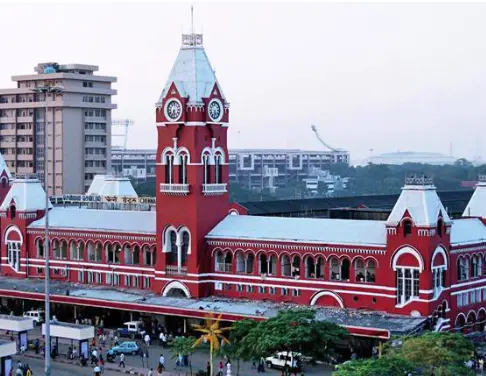
Important: all Blanket L-1 petitions filed in India are processed exclusively at the Consulate in Chennai (using Form I-129S, per 8 CFR 214.2(l)(5), with consular procedure at 9 FAM 402.12-7(E) on the burden of proof and 9 FAM 402.12-7(F) on Blanket L denials). Delhi handles individual L-1A and L-1B cases, plus L-2 dependents. The U.S. Embassy in New Delhi and U.S. Consulates in Mumbai, Kolkata and Hyderabad no longer accept or process applications for the Blanket L category. The blanket L category includes specialised knowledge professionals, executives and managers. For an overview of how consular processing differs across all five Indian posts, see our L-1 visa consular processing in India guide.
How to Process an L1 Visa in Delhi — The 7-Step Sequence
Below is the sequence we walk every Delhi-based L-1 client through, from petition approval to passport return. This is the operational answer to "how to process an L1 visa in Delhi" — each step maps to a specific section of 9 FAM 402.12 and the corresponding 8 CFR 214.2(l) regulation.
L1 Visa Processing in Delhi — The Seven-Step Sequence
Petition approval through to passport return at the Shantipath, Chanakyapuri embassy
Each applicant fills out the DS-160 separately, including dependents on L-2: DS-160 portal (CEAC). State Department guidance is at the DS-160 FAQs. Print the barcode confirmation page — that goes with you to the interview. Per current US Embassy India policy, you must bring both your original DS-160 confirmation page and (if you later corrected the form) the corrected confirmation page on the day of your appointment.
You may schedule your interview at any U.S. Consulate, however, since the State Department’s 6 September 2025 third-country processing guidance, you must schedule at a post in your country of nationality or legal residence — for Indian residents that means India. Booking outside your home jurisdiction now risks a refusal under 9 FAM 403.10, and any fees paid will not be refunded or transferred. You will need to provide the receipt number that is printed on your approved L-1 petition for a Nonimmigrant Worker, Form I-129, or Notice of Action, Form I-797, to schedule an interview. Book online via Schedule a Visa Appointment or call +91 120 4844644 / +91 40 46258222 (India), +1 703 520 2239 (US). Important: under the State Department’s 2 September 2025 interview-waiver update, L-1 visas are no longer eligible for the Dropbox / interview waiver programme. Almost all L-1 applicants — first-time and renewals — must now attend an in-person interview at the embassy.
5.Prepare for the interview with your attorney
We, at Davies and Associates, are ideally positioned to assist you in your preparation for the interview through our team in India. We can answer all your questions about the interview process, give you valuable tips and conduct mock interviews. For over 15 years, we have worked with many Indian nationals across L-1A executive, manager, and L-1B specialised-knowledge cases, and have gained a deep understanding of their needs and culture. We tailor our services to meet our clients’ needs and produce the very best immigration solutions possible. Our team has extensive experience preparing Indian L-1 applicants for consular interviews, including complex manager, executive, and specialised-knowledge cases — though no lawyer can guarantee any consular outcome, since the consular officer’s decision is theirs alone under 9 FAM 301.2. Our preparation tracks the L-1 statute at INA 101(a)(15)(L) and the FAM standards at 9 FAM 402.12 — the qualifying relationship (9 FAM 402.12-5), the manager-vs-line-employee distinction (9 FAM 402.12-6), the specialised-knowledge test for L-1B (9 FAM 402.12-7), and credible new-office business plans under 8 CFR 214.2(l)(3)(v).
6.Attend the interview at Shantipath, Chanakyapuri
Bring: your passport (and your old passports), a passport-style photo, the DS-160 barcode page (you will not need the full application), the HDFC visa application fee receipts, the I-797 original notice of approval, the complete I-129 and I-129L petition (3 copies), evidence of employment with the Indian entity, and the offer letter from the U.S. entity, the petitioning company. The Embassy will not accept documents received directly from the company by mail or fax — you must carry them in. Documentation expectations are set out at 9 FAM 402.12-8.
7.Receive your passport with the L-1 visa stamp
After your visa interview, you will be informed how your passport with visa will be returned to you. The approximate processing time for visa issuance is 7 to 14 working days. Issuance procedures (annotations, validity, dual-national passport rules) are at 9 FAM 403.9. In some cases, the consular officer will inform you if further administrative processing is necessary for your application under INA 221(g) — the timeline depends on the question raised — see If You Get a 221(g) below.
Delhi consular stage: from the day the I-797 issues, plan on the time below to reach the interview, plus 7–14 working days from interview to passport return in our experience (individual timelines vary, and post-interview adjudication is governed by 9 FAM 403.9).
Wait Times Across India’s Five US Posts
Wait times for an L-1 interview slot at Delhi are typically materially shorter than the headline B1/B2 visitor visa wait, because work visas are scheduled separately. The table below reflects the pattern we have observed in early 2026 across India’s five posts. Wait times shift month to month, so before booking you should always verify the current figure on the State Department’s Global Visa Wait Times page:
L-1 Visa Interview Wait Times — India’s Five US Posts (2026)
Time to first available L-1 interview slot, current as of early 2026
US Embassy / Consulate
Typical L-1 interview wait
Jurisdiction notes
New Delhi (Shantipath, Chanakyapuri)
A few weeks to ~2 months
Delhi NCR and northern Indian states (Punjab, Haryana, Rajasthan, UP, Uttarakhand, HP, J&K) plus Bhutan
The only post in India for Blanket L-1 (I-129S) cases
Hyderabad
A few weeks to ~2 months
Telangana, Andhra Pradesh, Odisha
Kolkata
A few weeks to ~2 months
West Bengal, Bihar, Jharkhand, Sikkim, and the seven northeastern states
Dropbox / Interview Waiver No Longer Available for L-1
Effective 2 September 2025, L-1 (and L-2, H-1B, H-4, F-1, J-1, O-1, E-1, E-2) applicants no longer qualify for the interview waiver programme. Only B-1/B-2 holders meeting strict criteria (previous visa expired within 12 months, applying in country of nationality or residence, no prior refusals) remain eligible. All L-1 renewals and new applications must now attend an in-person interview at the embassy. The previous practice of L-1 holders dropping off documents at a VFS centre and skipping the consular interview is no longer permitted.
Post-I-797 Checklist — What to Do the Day Your Approval Notice Arrives
The day USCIS issues your I-797 Notice of Approval, the consular clock starts. Run this checklist so nothing slips:
Verify the I-797 details. Check the petitioner’s name, your name (matching your passport), the L-1A or L-1B classification, the validity period, and the consulate the petition is being routed to. Errors here are easier to fix at the I-797 stage than at the embassy.
Confirm passport validity. Six months beyond your intended US stay is the floor. If your passport is short, renew it now — before you build up appointment dependencies.
Complete the DS-160 for yourself and each L-2 dependent at ceac.state.gov/genniv. Save the barcode confirmation page. Per current US Mission India policy, bring both the original confirmation page and (if you correct the form later) the corrected confirmation page to your appointment.
Pay the $205 MRV fee per applicant through HDFC Bank or the online channel at ustraveldocs.com/in. Fee receipts are valid for 365 days from issue. The consular exchange rate at U.S. Mission India was updated to 96 INR per USD on 1 April 2026.
Schedule the Delhi interview slot using the I-797 receipt number. Book the earliest viable date — under the State Department’s 6 September 2025 third-country processing rule, Indian residents must apply in India.
Run a mock interview with counsel. Sample questions are in the Delhi Interview Preparation section below. Rehearse the qualifying-relationship answer, the role description, and the new-office plan if applicable.
Plan post-interview logistics. Most successful Delhi cases see the passport return in 7–14 working days. Build that buffer into any travel plans — do not book US-bound flights for the day after the interview.
If 221(g) administrative processing is issued, follow the instructions on the slip exactly. See the 221(g) section below for what to expect.
Third-Country Processing — What Changed in 2025/2026
The Background: Why Singapore and HCMC Worked Before
For years, our Indian L-1 clients had a useful safety valve: if Delhi or Mumbai wait times became excessive, we routed them through Davies & Associates’ offices in Singapore or Ho Chi Minh City, where consular wait times were shorter and our clients had a strong success record. That route is now closed.
The New Rule: Apply in Your Country of Nationality or Residence
On 6 September 2025 the U.S. Department of State updated its instructions to direct all non-immigrant visa applicants — including L-1 — to schedule interviews at the post in their country of nationality or legal residence. The guidance was further tightened on 10 October 2025 and again on 12 December 2025. The practical effect for Indian L-1 applicants:
Indian nationals resident in India must apply at one of the five Indian posts (New Delhi, Mumbai, Chennai, Hyderabad, Kolkata) — not Singapore, not Ho Chi Minh City, not Bangkok or Dubai.
Indian nationals lawfully resident in another country may apply there if they can demonstrate residence (residency permit, utility bills, tax filings).
Applicants who book at the wrong post will face significantly longer wait times, are at material risk of being refused, and any MRV fees paid will not be refunded or transferred.
Existing third-country appointments booked before September 2025 are generally not being cancelled, but new bookings must follow the rule.
Narrow exceptions remain for genuine humanitarian or medical emergencies and for foreign-policy reasons. Casual convenience or wait-time avoidance does not qualify.
What This Means For Your Delhi L-1 Case
If you are an Indian national resident in India, plan to interview in India. Davies & Associates’ Singapore and Ho Chi Minh City offices remain available for clients who are genuinely resident in those jurisdictions, or who fall within one of the narrow State Department exceptions — please speak to us directly before booking anything. Where the third-country route was previously used to avoid Delhi waits, the answer now is to book the Delhi (or another Indian post) interview as early as possible after the I-797 issues, and to use premium processing at the I-129 stage to compress the USCIS half of the timeline.
Please note that spouse and children visas (L-2) and individual L visas (L-1B and L-1A individuals) may be processed at all five posts in India: Chennai, Hyderabad, Kolkata, Mumbai, and New Delhi. Blanket L-1 cases remain Chennai-only. See our directory of US embassies, consulates and USCIS offices for contact details across all posts. If your case involves expanding into the US through franchising or setting up a US business, we can coordinate the corporate and immigration sides through the same team in New Delhi.
L-1 Visa Document Checklist for the Delhi Interview
Valid passport with at least six months’ validity beyond intended US stay, plus all old passports
Form I-797 original Notice of Action
Three sets of the complete Form I-129 with the L supplement and all exhibits filed with USCIS
Original DS-160 barcode confirmation page (and corrected confirmation page if applicable, per current US Mission India guidance)
MRV fee receipt (HDFC)
One passport-style photograph meeting US specifications
Employer support letter from the Indian entity confirming one continuous year of qualifying employment within the past three years (8 CFR 214.2(l)(1)(ii))
Offer letter or assignment letter from the US employer
Recent payslips and Form 16 from the Indian employer (typically 3–6 months)
Organisational charts showing your role on both sides of the transfer
Marriage certificate and children’s birth certificates if L-2 dependents are applying
For new office L-1A: business plan, lease, evidence of US capitalisation, hiring plan (8 CFR 214.2(l)(3)(v))
L-1 Visa Fees (2026)
Three fee buckets are relevant for L1 visa processing in Delhi. For the full breakdown including premium processing, fraud fee, and attorney costs, see our L-1 visa costs and fees guide:
USCIS petition fees — paid by the US employer with the I-129 under 8 CFR 103.7. These vary by employer size and whether premium processing is elected. See the current USCIS fee schedule for the latest figures.
MRV consular fee — $205 per applicant (including L-2 dependents), paid in INR before booking the Delhi interview. Set by 22 CFR 22.1 / Fees for Visa Services. Note the consular exchange rate moved to 96 INR per USD on 1 April 2026.
Ongoing international nature of the qualifying organisation — 9 FAM 402.12-10(C).
How to overcome a prior refusal at Delhi — 9 FAM 306.2.
Consular officer responsibilities generally — 9 FAM 301.2.
Knowing the test the officer is applying lets us draft the support letter and rehearse interview answers in language that maps cleanly onto the FAM standard.
Davies & Associates Hot L-1 Visa Tip
Read 9 FAM 402.12 yourself before you go in. You do not need to recite it — but the questions will land differently when you know the rule the officer is checking against.
The Delhi consular officer typically has 2–4 minutes per L-1 case. They have already read the petition and the I-797 — the interview tests whether your live answers match the paper record under 9 FAM 402.12. Inconsistency, hesitation on the corporate relationship, or vague descriptions of your role are the main triggers for 221(g) administrative processing. Below are the question patterns we rehearse with every Delhi-bound L-1 client — broken out by L-1A, L-1B, and new-office.
For L-1A (Executive or Manager) Applicants
What does your Indian company do? How is it related to the US company?
Who owns the Indian entity and the US entity? Walk me through the ownership structure.
What is your current title in India? How many people report to you, and what do they do?
What will your title be in the US? How many people will report to you there?
How do you spend a typical week — what percentage of your time is spent on managerial vs operational work?
Why does the US entity need an executive transferred from India rather than a US hire?
What strategic decisions have you made in the last 12 months? (Be ready with concrete examples.)
What is your annual salary in India? What will it be in the US?
How long do you intend to stay in the US? What are your plans after the L-1 period ends?
For L-1B (Specialised Knowledge) Applicants
What is your specialised knowledge? Be specific — what proprietary process, product, or methodology?
How did you acquire this knowledge? How long did it take?
Why can’t the US entity train a US worker to do this?
What project will you work on in the US? Who are the US clients or end-users?
How does your knowledge differ from publicly available training in your field?
Has your knowledge been documented internally? Patents, internal manuals, training materials?
How many other people at your Indian company have this same knowledge?
What does the US business do? Who are your target customers?
Have you secured US office premises? Walk me through the lease.
How much capital has been transferred to the US entity? From what source?
What is your hiring plan for the first 12 months?
What revenue do you project for Year 1, 2, and 3? On what basis?
Will you continue to manage employees, or will you initially be doing operational work yourself?
If your Year 1 plan is mostly operational, can you point to the specific managerial role that will exist by the time of the I-129 extension?
Common questions across all L-1 cases
How long have you worked at the Indian company? In what roles?
Are you married? Will your spouse and children travel with you on L-2 visas?
Have you been to the US before? On what visas?
Have you ever been refused a US visa, or had a US visa cancelled?
Have you ever overstayed a US visa or been deported from the US?
Where will you live in the US? Have you arranged housing?
Davies & Associates Hot L-1 Visa Tip
The two most common Delhi-specific friction points we see are: (a) Indian-side compliance gaps — outdated Shops & Establishments Act licence, missing tax filings, no visible employees if a consular investigator visits; and (b) vague answers about the US role, especially where the US entity is small or newly opened. Tighten both before you book the interview slot.
Maximum Period of Stay on an L-1 (5 / 7 Years)
One of the most-missed rules in L1 visa processing in Delhi is the cap on total time in L status. 9 FAM 402.12-14(C) caps total L-1B (specialised knowledge) stay at five years, and total L-1A (executive or manager) stay at seven years — including any time previously spent in H status. Initial admission is up to three years (one year for new offices under 8 CFR 214.2(l)(3)(v)), with extensions in increments of up to two years per 9 FAM 402.12-14(B). Under 9 FAM 402.12-14(D), an applicant who has hit the cap must reside outside the United States before becoming eligible again. Officers at the Delhi Embassy will check your passport for prior US time before they stamp; if you are close to the cap, your I-129S validity dates may be limited accordingly. We track this for every renewal we run through Delhi.
Blanket L-1 Cases — Chennai-Only
Delhi does not accept Blanket L-1 (I-129S) applications. Every Blanket L-1 case in India is acceptance-stamped at the US Consulate in Chennai. The U.S. Consulate General in Chennai is the sole acceptance centre in India for all applications for intra-company transfers under the blanket L category. The blanket L category includes specialised knowledge professionals, executives and managers. The Blanket L programme is governed by 8 CFR 214.2(l)(4) and (l)(5), with the consular burden of proof at 9 FAM 402.12-7(E) and the procedure for denying a Blanket-L visa at 9 FAM 402.12-7(F). Read about the Chennai Blanket L-1 process here.
If your employer holds Blanket L approval and you live in Delhi’s catchment, you will travel to Chennai for the interview.
L-2 Dependents at Delhi
Spouse and unmarried children under 21 apply for the L-2 visa under 8 CFR 214.2(l)(7)(ii), which can be processed at any of the five posts in India — including Delhi. Each dependent files a separate DS-160 and pays a separate $205 fee, and they normally interview alongside the principal L-1 applicant.
Administrative Processing, 221(g), and Passport Return at Delhi
The two outcomes of a Delhi L-1 interview
At the close of the interview the consular officer will tell you one of two things:
Approved — the officer keeps your passport. The visa foil is printed at the embassy, your passport with the L-1 stamp is couriered back, and in our experience this typically takes 7–14 working days from interview to passport return. Issuance procedures are at 9 FAM 403.9. You can track the status on ustraveldocs.com/in. Do not book US-bound flights for the day after the interview — build a 2–3 week buffer.
221(g) administrative processing — the officer hands you (or e-mails you) a slip listing what is needed before issuance. The case is not denied; it is on hold pending the post’s further review. Most Delhi 221(g) holds clear within 60 days, but the timeline varies with the question.
What 221(g) means
A refusal under INA 221(g) (8 USC 1201(g)) is the most common L-1 hold-up. It is rarely a final denial — it usually means the officer wants more documents, wants to verify a fact, or wants to refer the case for inter-agency review before issuing the visa. The case enters “administrative processing”, which can run from a few days to several months depending on what is being checked. The procedure the officer must follow when issuing a 221(g) is set out at 9 FAM 403.10-3, and the route to overcoming it is at 9 FAM 306.2. Helpfully, the FAM bars the post from charging a second MRV fee if you re-apply within 12 months of a 221(g) refusal.
What to do if Delhi issues a 221(g)
Read the slip carefully. Note the exact information requested and the channel for submitting it (e-mail, courier, or in-person at VFS).
Reply through the specified channel only. Replies sent through other channels (e.g. directly to the consul) get lost.
Cover the legal point, not just the document. Where the request relates to the qualifying relationship or specialised knowledge, send the document plus a covering letter that points to the specific FAM section in play (9 FAM 402.12-5, 402.12-6, or 402.12-7).
Keep the petition open. If you let the I-129 expire while in administrative processing, you may be back to square one.
Watch for a return-to-USCIS letter. If the post issues a notice that the petition is being returned to USCIS for revocation under 8 CFR 214.2(l)(9), the strategy shifts — you should engage counsel immediately, because the next move is at USCIS, not at the post.
We have had repeat success at Delhi by overnighting targeted further evidence with a covering letter that points to the specific FAM section in play. The most common Delhi 221(g) triggers we see are: (a) corporate-relationship documents that don’t cleanly tie the Indian and US entities together; (b) Indian-side compliance gaps the officer wants verified; and (c) ambiguous or thin role descriptions, particularly for L-1B specialised-knowledge cases.
Email addresses (current as of 2026):
Routine non-immigrant visa enquiries: [email protected]
Non-routine New Delhi NIV enquiries: [email protected] Note: the U.S. Mission India customer service centre migrated from [email protected] to [email protected] in 2025/26 — older copies of this page may still list the legacy address.
Call Center: Callers in India: Call +91 120 4844644 or +91 40 46258222. Callers in the United States: Call +1 703 520 2239.
Operating hours (Customer Service): Mon–Fri 8:00 a.m. to 8:00 p.m. IST; Sun 9:00 a.m. to 6:00 p.m. IST. The call centre is closed on Saturdays, Christmas, New Year’s, Holi, Diwali, Republic Day, Independence Day and Gandhi Jayanti.
Davies & Associates — New Delhi Office
Davies & Associates has a New Delhi presence to support clients with L1 visa processing in Delhi, alongside our wider India practice in Mumbai and Bangalore. We meet North-India-based L-1 applicants in Delhi for petition strategy sessions, document compilation, and pre-interview prep tied to the Embassy on Shantipath:
L1 Visa Processing in Delhi — Frequently Asked Questions
The questions below are the ones we hear most often from clients on L1 visa processing in Delhi. For a broader Q&A on the L-1 category itself, see our L-1 visa FAQs and L-1 visa process guides.
How long does it take to process an L1 visa in Delhi?
Once you have the I-797 in hand, the Delhi stage of L1 visa processing in Delhi usually runs three to eight weeks: a few weeks to land an interview slot, and 7–14 working days from interview to passport return. Add the USCIS stage on top — 1–6 months on regular processing, or roughly 15 calendar days with premium under 8 CFR 103.7. The figure changes month to month; the State Department publishes current Delhi data on its Global Visa Wait Times page, and adjudication standards at post are at 9 FAM 402.12.
How do I process an L1 visa in Delhi step by step?
The seven-step sequence is: (1) USCIS approves the I-129 petition; (2) you complete the DS-160; (3) you pay the $205 MRV fee; (4) you book the interview at the Embassy on Shantipath; (5) you prepare with your attorney to FAM standards; (6) you attend the Delhi interview; (7) the Embassy returns your passport with the L-1 stamp, typically in 7–14 working days. Each step is detailed in the 7-step table above, with FAM and CFR citations for the exact rule the officer applies at each stage.
Who is eligible to apply for an L-1 visa in New Delhi?
Under INA 101(a)(15)(L) and 8 CFR 214.2(l), you must have worked for the foreign employer for at least one continuous year within the previous three, in an executive, managerial, or specialised knowledge role, and be transferring to a qualifying related US entity in the same or a comparable role. The full eligibility test is set out in our L-1 visa requirements guide, with the specialised-knowledge standard at 9 FAM 402.12-7.
Can I attend my L-1 interview at a different consulate if Delhi is fully booked?
Generally no, since 6 September 2025. The State Department’s updated guidance directs L-1 applicants to apply at a post in their country of nationality or legal residence. Indian residents must apply in India. You can still pick a different Indian post (Mumbai, Chennai, Hyderabad, Kolkata) if Delhi waits are excessive — the rule is country-of-residence, not city — but applying outside India is now restricted to narrow humanitarian, medical-emergency or foreign-policy exceptions. Booking at the wrong post means lost fees and a real risk of refusal. The previous practice of routing Indian L-1 applicants through Singapore or Ho Chi Minh City to skip Indian wait times is no longer permitted as a routine option — see the third-country processing section above.
What documents must I bring to the L-1 interview in New Delhi?
Original passport, I-797, three copies of the I-129 packet, the original DS-160 barcode page (plus any corrected confirmation page per current US Mission India policy), MRV fee receipt, employer support letter, payslips, organisational charts, and (for L-2) marriage and birth certificates. The full list is in the checklist above. Documentation expectations are at 9 FAM 402.12-8.
What is the L-1 visa fee in New Delhi for 2026?
The MRV application fee is US $205 per applicant, paid in Indian Rupees through HDFC at the consular exchange rate (96 INR per USD as of 1 April 2026). For Indian nationals on L-1, the visa issuance reciprocity fee is generally zero — check the current reciprocity table. The petition-stage USCIS fees are paid separately by the US employer.
Can my spouse and children travel with me on the L-1?
Yes. Spouses and unmarried children under 21 apply for L-2 dependent visas at Delhi, either with you or later. L-2 spouses are work-authorised on admission under 8 CFR 274a.12(a)(18).
What happens if my L-1 case is placed in 221(g) administrative processing?
A 221(g) hold under 8 USC 1201(g) is usually a temporary information request, not a final denial. The officer normally hands you (or e-mails) a coloured slip listing what is needed. Submit it through the channel specified, and the case re-opens. Most 221(g) holds clear within 60 days — the procedure the officer must follow is at 9 FAM 403.10-3, and overcoming it is governed by 9 FAM 306.2. If the post returns the petition to USCIS under 8 CFR 214.2(l)(9), that is more serious — we would step in to push back through the post or through the National Visa Center.
What is the maximum time I can stay in the US on an L-1 visa?
Under 9 FAM 402.12-14(C), total time on an L-1B (specialised knowledge) is capped at five years; total time on an L-1A (executive or manager) is capped at seven years. Time previously spent in H status counts toward the cap. After the cap, you generally must reside outside the US before re-qualifying (9 FAM 402.12-14(D)).
Can I get an L-1 visa stamped in New Delhi for a Blanket L-1 case?
No. The Consulate in Chennai is the sole post in India for Blanket L-1 (I-129S) acceptance under 8 CFR 214.2(l)(5). If your employer holds blanket approval, you will travel to Chennai for the interview, even if you live in Delhi’s catchment.
Is the Dropbox (interview waiver) available for L-1 renewals in New Delhi?
No, not since 2 September 2025. Under the State Department’s September 2025 interview-waiver update, L-1 (along with L-2, H-1B, H-4, F-1, J-1, O-1, E-1 and E-2) is no longer eligible for the Dropbox programme. All L-1 renewals must now attend an in-person interview at the embassy. Only B-1/B-2 holders meeting strict criteria (previous visa expired within 12 months, applying in country of nationality or residence, no prior refusals, full ten-year prior validity) remain eligible. The DS-160 system will direct you to book an in-person interview. For renewal strategy more broadly, see our L-1 visa renewal guide.
Delhi is one stage of a longer L-1 case. Depending on where you are in the process, these companion pages will be useful:
Davies & Associates offices in India
Davies & Associates — New Delhi office — covering Delhi NCR, Punjab, Haryana, Rajasthan, UP and the wider northern jurisdiction served by the US Embassy on Shantipath.
EB-5 visa India practice (eb5visaindia.com) — our dedicated India site for the EB-5 investor green card, covering FEMA / RBI source-of-funds compliance, the Indian backlog, and direct vs Regional Center options for Indian investors who want to combine an L-1 transfer with a long-term green card strategy.
Managing Attorney, Davies & Associates, India. Working with L-1 and E-2 clients across India, including the New Delhi Embassy.
Sukanya leads the firm’s India practice and works directly with L-1 applicants on petition strategy, consular preparation, and post-interview follow-up at the US Embassy in New Delhi. She advises Indian multinational employers, founder-led businesses expanding into the US, and individual L-1A and L-1B transferees, with day-to-day oversight of every L-1 case the firm runs through Delhi.
Reviewer: Mark I Davies, Esq.
Chairman of Davies & Associates; focused on E and L visa strategy and complex consular filings.
Mark I Davies, Esq. JD, University of Pennsylvania Law School, Licensed with the SRA (SRA ID: 384468) in the UK, Member Law Society of England & Wales, MBA, Wharton School of Business. Top 10 Investment Visa Lawyer, Licensed (USA), Georgia State Bar.AILA Member.
Mark I Davies — Credentials at a Glance
Area
Details
Education
JD, University of Pennsylvania Carey Law School · MBA (Finance), The Wharton School, University of Pennsylvania · Chartered Accountant (ICAEW)
Financial Training
Completed Analyst Training Program at a major international bank; Chartered Accountant background with professional training in financial analysis and reporting
Legal Practice
Admitted to practice in Georgia (USA) · Registered Solicitor with the Law Society of England & Wales · Former CMBS lawyer at one of the world’s largest international law firms
Immigration Track Record
15+ years advising HNW investors · Zero denials for clients advised on source-of-funds compliance in EB-5 · Hundreds of successful EB-5 cases globally
Recognition
Named a Top 25 EB-5 Immigration Attorney by EB5 Investors Magazine (2018–2023)
Professional Engagements
Lecturer/trainer for AILA, ACA, University of Pennsylvania Law School · Frequent speaker at global investment immigration conferences
We are known for our creative solutions that obtain "impossible" visas. We solve the most complex immigration problems for businesses, investors, individuals, and families.
Several lawyers told me I would not be able to get a TN visa. Two weeks after contacting Davies & Associates I was working in New York, visa in hand.
Individual seeking 'Impossible' TN Visa
D&A was very detail-oriented and very thorough in what they did. They worked on my case 24/7 and were very patient in answering all my questions.
E-2 Visa Client
My case felt complex but D&A managed the whole process carefully and helped me move seamlessly from one stage to the next.
E2 + CBI Client
D&A was my guiding light through the entire EB-5 process.
EB-5 Visa Client
I would definitely be a big advocate for the rest of my life for anyone wanting to explore the Grenada Citizenship by Investment Programme leading to the E-2 visa. The most important thing is a good team behind you. With Davies & Associates, you're in safe hands... you need someone who can support you on the ground and, again, you are well taken care of by D&A. The people are really warm, very helpful and quite open-minded when it comes to business... Not to mention as a passport it's great from a travel perspective... It's just 4 to 5 hours from New York.
Grenada CBI + E2 Visa Client
The entire process of getting an EB-5 visa is handled in a professional way by Mark Davies and his team. EB-5 is a wonderful option for anyone considering moving to the United States if you have the means. I was hoping to use the H-1B route for my children, but it became unreliable and so I looked to the EB-5 visa instead. It is great for anyone who has the resources. Mark gives you the first meetings himself which gives you great comfort. Both Mark and Sanjay are abundantly available and I even had the pleasure of hosting them at my house.
Parent of 2 EB-5 visa holders
I'm in the process of extending my L-1 visa. I submitted a few questions regarding my case, and he contacted me back almost immediately, both by email and telephone. Unlike other attorneys I met before, he gave me the impression of knowing off the top of his head what kind of visa I have, and what actions had to be taken to extend it. He is very thorough and clear regarding the process and what to expect in terms of timelines and issues that may arise. He is constantly in contact, so you definitely know he's working on your case.
L-1B Visa Holder
Mark Davies is a joy to work with. His extensive knowledge, speedy response and attentive service took away all my fears of dealing with immigration and visa applications. He is very generous with his time in explaining every step along the way and I have already and will in the future recommend him to anybody who is looking for an immigration lawyer.
E2 Visa for Small Professional Business With International Offices
Davies & Associates assisted us with an immigration emergency involving my brother's fiancée who was outside the United States. They assisted us in a highly professional manner, working with the relevant US embassy, US immigration and the governments of two other countries. As a result of their efforts the individual involved is now working in the United States. While their knowledge of the law is exemplary what really distinguishes this firm and attorney Davies from any other firm we have worked with is their dedication to customer service and their unrivaled level of professionalism.
Complex Fiancée Visa Need Involving Multiple International Jurisdictions
Several lawyers told me I would not be able to get a TN visa. Two weeks after contacting Davies & Associates I was working in New York, visa in hand. I have recommended this firm to several friends and colleagues, they do an excellent job every time.
Individual Seeking 'Impossible' TN Visa
I was qualified as a physician in a foreign country. Being on a J1 visa I was facing having to leave the United States and return to my home country. Davies & Associates secured one of only 30 J1 visa waivers available in my State, allowing me to work for a US hospital and remain in the United States.
Doctor Seeking J1 Visa Waiver
I am very satisfied with the services Mark Davies has provided me. He has a very extensive knowledge in immigration laws and has a thorough approach to any case.
Looking to relocate or having trouble with a visa application?
We are known for our creative solutions that obtain
"impossible" visas. We solve the most
complex immigration problems for business, investors, individuals and families.