
Mark I. Davies, Esq., J.D., University of Pennsylvania Law School, licensed by the SRA (SRA ID: 384468) in the UK, and a member of The Law Society of England & Wales, MBA, Wharton School of Business. Top 10 Investment Visa Lawyer. Licensed in the USA. Georgia State Bar member. AILA member.
Davies & Associates is a U.S. immigration law firm with a staffed office in Bandra Kurla Complex, Mumbai. The Mumbai team, led by Sukanya Raman, Esq., handles L-1A, L-1B, new office L-1, and blanket L-1 cases for Indian businesses expanding to the United States, including USCIS petition preparation, RFE responses, and Mumbai Consulate interview preparation. The office is located in The Capital building at Enam Sambhav, C-20, G Block, Bandra Kurla Complex, Mumbai 400051. Indicative L-1 legal fees start at USD 5,500; new office L-1 from USD 9,500.
For the underlying legal framework, see our L-1 Visa Guide for Indian Managers & Executives. For the consular interview process at the U.S. Consulate Mumbai, see our Mumbai Consulate L-1 guide. This page covers how to engage our Mumbai team directly.
Who This Page Is For
- Indian founders and business owners opening a new U.S. office under the L-1A new office provisions
- Indian companies with existing U.S. operations transferring executives, managers, or specialized knowledge employees
- Multinational corporates with a Mumbai HR or mobility team coordinating L-1 transfers
- Individual executives and managers being transferred to the U.S. under L-1A or L-1B
- Applicants with a prior L-1 refusal looking to restructure and refile
BKC Office
Located in The Capital, Enam Sambhav, G Block, Bandra Kurla Complex. Verifiable on Google Business Profile.
Mumbai Managing Attorney
Sukanya Raman, Esq., based in our BKC office, works directly on L-1 cases alongside our U.S. legal team.
Mumbai Client Video
A Mumbai client on camera discussing his L-1 approval and later EB-1C green card.
On This Page
- How to Engage Our Mumbai L-1 Team
- What to Look for in an L-1 Lawyer in Mumbai
- Our Mumbai Office (BKC)
- Located Near the U.S. Consulate Mumbai
- Your Mumbai Managing Attorney
- Mumbai Client Video
- What an L-1 Lawyer in Mumbai Does
- Why Mumbai L-1 Cases Are Different
- L-1A and L-1B: Which Category Applies
- The L-1 Process from Mumbai
- Documents We Review in Mumbai
- Mumbai Consulate Interview Preparation
- Common Mumbai L-1 Refusal Issues
- L-1 Visa Lawyer Fees in Mumbai
- Why Choose Davies & Associates
- FAQs
How to Engage Our Mumbai L-1 Team
Engaging us follows the same predictable steps whether you are a Mumbai-based founder, a multinational employer in BKC, or an individual transferee:
How to Engage Us for Your L-1 Case
- Book a consultation — in person at our BKC office or by video call. There is a fixed consultation fee, applied as credit if you proceed.
- Eligibility review — we assess the applicant, the role, and the corporate relationship between the Indian and U.S. entities against the L-1 visa requirements, and identify any issues before filing.
- Engagement letter — clear scope, fixed fees where possible, naming the lawyer responsible for your case.
- Petition preparation and filing by our U.S. legal team, working from documentation reviewed at our Mumbai office. See our guide to L-1 visa documents required.
- Consulate interview preparation — mock interviews and document set at our BKC office, ahead of your appointment at the U.S. Consulate Mumbai.
Your case is led by a qualified U.S. immigration lawyer named in your engagement letter, supported where appropriate by paralegals and case managers under that lawyer's supervision.
Best fit for: Mumbai-based business owners, multinational executives, and founders planning to expand to the U.S. or transfer staff under L-1A or L-1B. Equally suited to first-time L-1 cases and to recovering refused petitions. Many clients later move on to the EB-1C green card pathway.
What to Look for in an L-1 Visa Lawyer in Mumbai
L-1 petitions are evidence-heavy and consulate-sensitive. Most of the evidence in an L-1 case originates in India: corporate filings, financial statements, organisational charts, and employment records. When evaluating any L-1 lawyer in Mumbai, these are the questions worth asking:
- Is there a verifiable physical office? Confirm the address on Google Business Profile, with real opening hours and reviews. A virtual office or mailbox is not the same as a staffed office.
- Are the people advising you qualified lawyers? U.S. immigration petitions are legal filings. Confirm the person responsible for your case is admitted to a bar and identified by name in your engagement letter.
- Will original documents be reviewed in person? Corporate records, share certificates, and audited financials are easier to verify when reviewed in person rather than by email upload alone.
- Is consulate preparation tailored to Mumbai? Generic interview prep is no substitute for face-to-face mock interviews aligned to the U.S. Consulate Mumbai's process.
- Who actually drafts the petition? Confirm whether the firm drafts in-house or subcontracts. Your engagement letter should name the responsible lawyer.
How we work. Davies & Associates maintains a staffed office at Enam Sambhav, BKC, listed on Google Business Profile. Cases are led by qualified U.S. immigration lawyers, with document review and consulate preparation conducted at our Mumbai office.
Our Mumbai Office — BKC, Bandra East
Davies & Associates maintains a physical, staffed office in The Capital building at Enam Sambhav, G Block, Bandra Kurla Complex — the heart of Mumbai's commercial district. See also our firmwide Mumbai office page.
Davies & Associates US Immigration Law — Mumbai
Located in: The Capital
Address: Enam Sambhav, C-20, G Block Rd, G Block BKC,
Bandra Kurla Complex, Bandra East,
Mumbai, Maharashtra 400051, India
Phone: +91 720 856 4057
Hours: Monday to Friday, 9:30 AM to 6:00 PM IST
Languages: English, Hindi
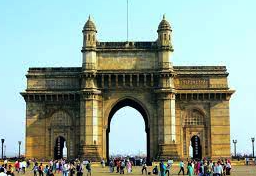
L-1 Visa Lawyer Near the U.S. Consulate Mumbai
Our office and the U.S. Consulate General Mumbai are both located within the Bandra Kurla Complex (BKC) business district. For L-1 applicants, this proximity has practical advantages on interview day: a final document review at our office shortly before the appointment, easy logistics if the consular officer requests additional materials under 221(g) administrative processing, and same-day debriefs after the interview.
Your Mumbai Managing Attorney
Meet Your Mumbai Attorney
Sukanya Raman, Esq.
Managing Attorney, Davies & Associates India · Mumbai (BKC)
Sukanya leads the firm's India practice from the Mumbai office and oversees L-1 case strategy and client work — from initial eligibility review and corporate-structure analysis, through Form I-129 preparation, to consular interview preparation at our BKC office. She advises Mumbai-based business owners, multinational executives, and founders on L-1A, L-1B, new office, and refused-petition recovery cases.
Working with the U.S. team: Sukanya works alongside Davies & Associates Chairman Mark I. Davies, Esq. (J.D. Penn Law, MBA Wharton, AILA) and the firm's wider U.S. immigration and corporate legal team. The result is a single coordinated case team across Mumbai and the U.S.
Sukanya authored our detailed guide to L-1 visa processing at the U.S. Consulate General Mumbai, reviewed by Mark I. Davies.
A Mumbai L-1 Client — In His Own Words
Below is a video of a Mumbai-based client of our firm discussing how we handled his L-1 case after it had been refused by another firm. The case was restructured, the L-1A petition was approved, and the client subsequently obtained a green card through the EB-1C multinational executive category.
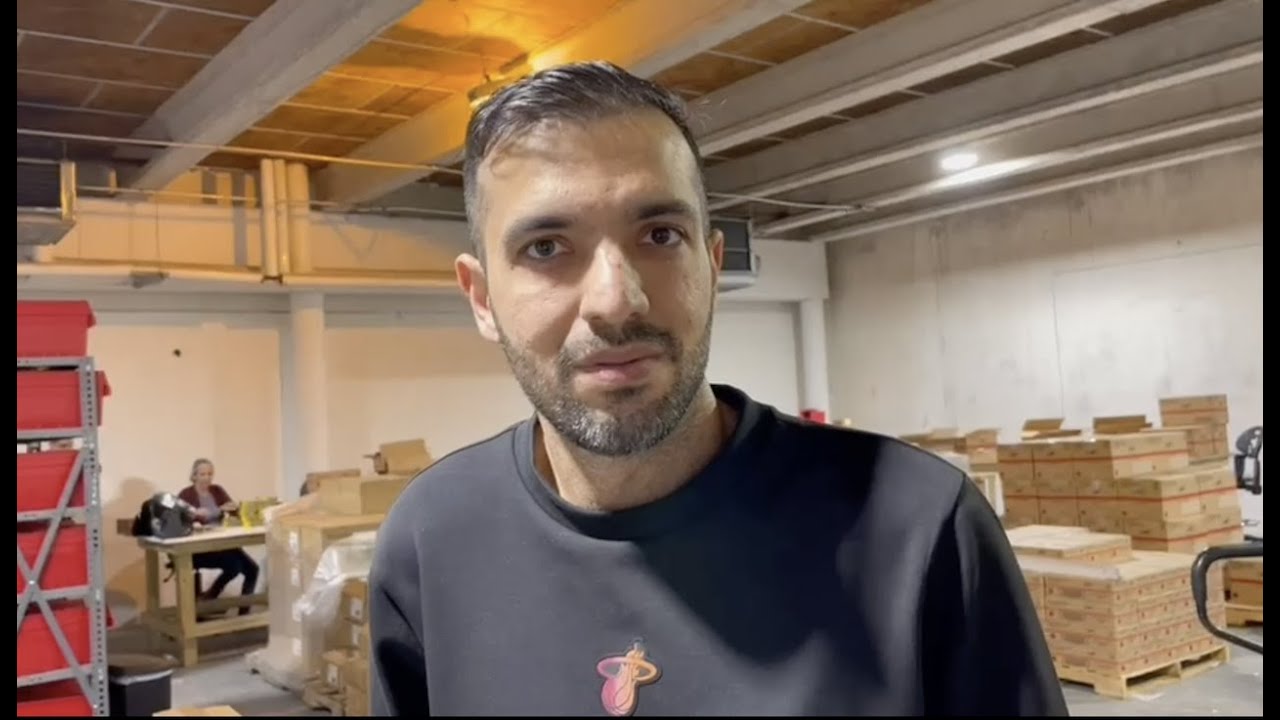
Mumbai client of Davies & Associates discussing his L-1 visa experience.
See more in our L-1 case studies and client testimonials.
What an L-1 Visa Lawyer in Mumbai Does
The L-1 visa allows a multinational employer to transfer a qualifying executive, manager, or specialized knowledge employee from a foreign office to a U.S. office. The legal framework is in INA §101(a)(15)(L), the regulations in 8 CFR § 214.2(l), and the consular standards in 9 FAM 402.12.
Our Mumbai L-1 services include:
- Eligibility assessment against the L-1 visa requirements before any petition is filed.
- Corporate structuring — documenting the qualifying relationship between the Indian and U.S. entities, in line with 9 FAM 402.12-2(B).
- Form I-129 petition preparation to USCIS standards.
- New office L-1 petitions — for Mumbai companies opening a U.S. entity, with a USCIS-grade L-1 business plan satisfying 8 CFR § 214.2(l)(3)(v). We also handle U.S. business set-up.
- Blanket L-1 petitions for qualifying Mumbai-headquartered groups.
- Premium processing via Form I-907 where appropriate.
- Consular interview preparation for the U.S. Consulate Mumbai, conducted at our BKC office.
- Responses to RFEs and refusals, including 221(g) administrative processing under 9 FAM 303.3-2.
- L-1 visa extensions and renewals.
- L-2 dependant visas and EAD applications for spouses and children.
Why Mumbai L-1 Cases Are Different
L-1 petitions filed from Mumbai sit at the intersection of Indian corporate practice and U.S. immigration law. Indian holding structures, family-owned business groups, and IT services arrangements often involve features that require careful documentation for USCIS adjudicators: ownership through multiple holding companies, share transfers documented under the Companies Act 2013, audited financials prepared under Indian Accounting Standards, and payroll records covering employees deployed across client sites. The petition must translate this evidence into a form U.S. adjudicators recognise, while remaining accurate to the underlying Indian record. Many Mumbai-originated L-1 applications are ultimately handled through the U.S. Consulate General Mumbai, depending on appointment availability and consular routing, which regularly handles L-1 visa interviews for applicants in western India.
L-1A and L-1B: Which Category Applies
L-1A: Executives and Managers
The L-1A visa is for employees moving to the U.S. in an executive or managerial capacity. The definitions in INA §101(a)(44), expanded in 9 FAM 402.12-2(C), are specific: a manager must primarily direct the organisation, supervise the work of other supervisory or professional employees, and have authority over personnel decisions. An executive must direct the management of the organisation or a major component, set goals and policies, and exercise wide latitude in discretionary decision-making.
Job titles alone are not enough. A "Vice President" who personally performs operational tasks rather than directing other managers will not qualify. Our role is to test the proposed position against these statutory and consular standards before the petition is filed.
L-1A holders may stay in the U.S. for up to seven years and have a direct path through the EB-1C multinational manager category — see our L-1 to green card guide.
L-1B: Specialized Knowledge
The L-1B visa is for employees with specialized knowledge of the company's products, services, research, equipment, techniques, or management. The standard, in 8 CFR § 214.2(l)(1)(ii)(D) and clarified in 9 FAM 402.12-2(D), requires knowledge that is genuinely advanced or proprietary, not knowledge that is merely common in the industry.
L-1B petitions from Mumbai — particularly from IT services companies — receive heightened USCIS scrutiny. The petition must clearly distinguish the employee's knowledge from what a similarly qualified U.S. worker would possess. L-1B holders may stay for up to five years.
The L-1 Process from Mumbai
For the complete national-level process, see our full L-1 visa process guide. For a Mumbai-originated case, the typical sequence is:
- Eligibility and structure review at our BKC office.
- Documentation gathering — see L-1 visa documents required.
- I-129 petition filing with USCIS. Standard adjudication takes around four to six months; premium processing shortens USCIS review to 15 business days, though it does not guarantee approval.
- DS-160 and consular interview booking at the U.S. Consulate General in Mumbai.
- Interview preparation at our Mumbai office.
- Visa interview and issuance.
End-to-end, most cases conclude within two to eight months from instruction to visa issuance, depending on USCIS processing times, consular availability, and case complexity.
Documents We Review in Mumbai
Documents typically reviewed at our BKC office before the petition is filed include:
- Certificates of Incorporation and Memorandum & Articles of Association for the Indian and U.S. entities
- Share registers, share transfer deeds, and any holding-company structure diagrams
- Most recent audited financial statements for the Indian entity
- Indian payroll registers and Form 16 records for the applicant
- Provident Fund and ESIC records covering the qualifying one-year employment period
- Board resolutions authorising the U.S. expansion and transfer
- Organisation charts showing the applicant's reporting lines in India and proposed reporting lines in the U.S.
- Commercial lease or letter of intent for U.S. premises (for new office cases)
- RBI / FEMA documentation for capital transferred to the U.S. entity
- Applicant's passport, prior U.S. visa stamps, and any prior I-797 approvals
A full evidentiary list is in our guide to L-1 visa documents required.
Mumbai Consulate Interview Preparation
The U.S. Consulate General in Mumbai sits in BKC, in the same business district as our office. The consular officer has independent authority to refuse the visa even where USCIS has approved the petition. Where additional information is required, the officer may issue a 221(g) refusal under 9 FAM 303.3-2.
Our preparation sessions, held at our Mumbai office, work through:
- What the applicant actually does day-to-day, beyond the job title.
- Who reports to the applicant and how the team is structured.
- How the Indian and U.S. entities are connected, including ownership through any intermediate jurisdictions.
- Why the proposed U.S. role qualifies as executive, managerial, or specialized knowledge under 9 FAM 402.12-2.
- How the applicant's answers align with the petition filed at USCIS — inconsistencies are a common reason for refusal.
Step-by-step Mumbai consulate guide: L-1 visa interview at the U.S. Consulate Mumbai
Common Mumbai L-1 Refusal Issues
In our experience working on Mumbai-originated L-1 cases, the issues most often raised by USCIS adjudicators or consular officers include:
- Unclear qualifying relationship between the Indian and U.S. entities, particularly where ownership runs through intermediate holding companies in third jurisdictions.
- Insufficient managerial substance for L-1A, where the applicant's role is documented as project management or technical leadership rather than direction of other supervisory or professional employees.
- Generic specialized-knowledge claims for L-1B, particularly in IT services arrangements involving deployment to third-party U.S. client sites.
- Thin new-office evidence — insufficient premises, an undercapitalised U.S. entity, or a business plan that does not credibly support a managerial or executive role in the first year.
- Documentary inconsistencies between the petition letter, Form I-129, DS-160, organisation charts, and audited financials.
- Unresolved prior U.S. visa history, including past refusals or status issues that the petition does not address.
Each of these is addressable when identified before filing, which is why our process begins with an eligibility and structure review at our Mumbai office.
L-1 Visa Lawyer Fees in Mumbai
L-1 legal fees vary by category, the complexity of the corporate structure, and whether the case involves a new U.S. office or a blanket petition. We work on transparent fixed fees wherever possible. For a full firmwide breakdown of L-1 costs, see L-1 Visa Costs & Fees.
The ranges below are indicative only and will be confirmed in your engagement letter after an initial consultation. They cover legal fees only — USCIS filing fees, premium processing fees, and consular fees are paid separately.
| Service | Indicative Legal Fee (USD) |
|---|---|
| Initial consultation (in person at BKC or by video) | Fixed fee, credited against engagement |
| L-1A petition (executive or manager) | From approximately USD 5,500 |
| L-1B petition (specialized knowledge) | From approximately USD 5,500 |
| New office L-1 (first-time U.S. entity) | From approximately USD 9,500 |
| Blanket L-1 petition (qualifying groups) | Quoted on instruction |
| L-2 dependant visa per family member | From approximately USD 1,500 |
| RFE response or refusal recovery | Quoted after case review |
Indicative ranges only. Actual fee depends on case complexity. Government and third-party fees (USCIS I-129 filing fee, fraud prevention fee, ACWIA fee where applicable, premium processing fee, DS-160 visa fee) are payable separately. Full breakdown: L-1 Visa Costs & Fees.
Why Choose Davies & Associates
- Physical Mumbai office at Enam Sambhav, BKC, listed on Google Business Profile.
- Lawyer-led, with a qualified U.S. immigration lawyer named in your engagement letter.
- A Mumbai client video testimonial discussing a real L-1 outcome.
- Cross-border legal coordination: U.S. corporate, tax, and immigration lawyers working with Indian counsel where required.
- Transparent, mostly fixed-fee structure.
- Long-term green card planning — many L-1 clients move on to EB-1C green cards; see also our EB-1C visa overview.
- Davies & Associates lawyers have been listed among the Top 25 immigration attorneys by EB5 Investors Magazine.
FAQs: L-1 Visa Lawyer in Mumbai
For a comprehensive FAQ covering every L-1 visa scenario, see our complete L-1 visa FAQ. The questions below focus on engaging an L-1 lawyer in Mumbai specifically.
Where is your Mumbai office located?
Our office is located in The Capital building at Enam Sambhav, C-20, G Block Rd, G Block BKC, Bandra Kurla Complex, Bandra East, Mumbai, Maharashtra 400051. We are listed on Google Business Profile so you can verify the address, opening hours, and reviews independently. The U.S. Consulate General Mumbai is in the same business district.
How do I hire an L-1 visa lawyer in Mumbai?
Start by booking a consultation, in person at our BKC office or by video call. We review your eligibility, the corporate structure, and the proposed role, and give you a clear scope and fee quote. If you proceed, the consultation fee is credited against the engagement and we issue an engagement letter naming the lawyer responsible for your case.
How much does an L-1 visa lawyer in Mumbai charge?
Legal fees vary by category and complexity. We work on transparent fixed fees wherever possible. Indicative ranges are set out in the L-1 Visa Lawyer Fees in Mumbai section. Government filing fees are paid separately to USCIS and the U.S. consulate. For the firmwide breakdown, see L-1 Visa Costs & Fees.
Why use an L-1 visa lawyer based in Mumbai rather than a U.S.-only firm?
L-1 cases are evidence-heavy, and most of the evidence originates in India: corporate filings, financial statements, organisational charts, and employment records. A firm with a Mumbai office can review original documents in person, meet officers of the Indian company, and run consulate interview preparation locally, in line with the standards in 9 FAM 402.12. Our Mumbai team works alongside our U.S. lawyers so the petition and the interview are aligned.
What is the difference between L-1A and L-1B?
L-1A is for executives and managers under INA §101(a)(44) and 9 FAM 402.12-2(C), with a maximum stay of seven years and a direct EB-1C green card pathway. L-1B is for specialized knowledge employees under 8 CFR § 214.2(l)(1)(ii)(D) and 9 FAM 402.12-2(D), with a maximum stay of five years.
How long does an L-1 case from Mumbai take?
Standard USCIS processing of the I-129 petition takes around four to six months. Premium processing under Form I-907 reduces USCIS adjudication to 15 business days, though it does not guarantee approval. After USCIS approval, the consular interview must be scheduled at the U.S. Consulate in Mumbai. Most cases conclude within two to eight months from instruction to visa issuance, depending on USCIS processing times, consular availability, and case complexity.
Can a Mumbai company open a new U.S. office on an L-1 visa?
Yes. The new office L-1 provision under 8 CFR § 214.2(l)(3)(v), supplemented by 9 FAM 402.12-5, allows a foreign company to transfer an executive or manager to establish a U.S. office. Initial approval is granted for one year. The petition must include a credible L-1 business plan, evidence of secured premises, and proof of sufficient funding. We also assist with U.S. business set-up.
What is a blanket L-1 petition, and do Mumbai companies qualify?
A blanket L-1 petition under 8 CFR § 214.2(l)(4) is a pre-approved authorization that allows a qualifying group to transfer eligible employees without filing an individual I-129 for each person. The group must have a U.S. office that has been doing business for at least one year, three or more domestic and foreign branches, and meet revenue or workforce thresholds. Many large Mumbai-headquartered groups qualify.
Are L-1 cases from Mumbai IT services companies treated differently?
In practice, yes. L-1B petitions involving placement of employees at third-party U.S. client sites face heightened scrutiny under the contracts and itinerary requirements in 8 CFR § 214.2(l)(7). The petitioner must show real employer control and that the role requires genuinely specialised knowledge rather than general technical skills.
Can my spouse work in the U.S. on an L-1 visa?
Yes. The L-1 holder's spouse enters the U.S. on an L-2 visa and is eligible for an Employment Authorization Document (EAD) that permits unrestricted employment.
Can I change employers on an L-1 visa?
L-1 status is tied to the petitioning employer. A change of employer requires a new L-1 petition from the new qualifying employer. See our guide to L-1 visa change of employer.
What happens if my L-1 petition is refused?
If USCIS denies the I-129 petition, options include filing a motion to reopen or reconsider, filing a new petition that addresses the deficiencies, or appealing to the Administrative Appeals Office. If the visa is refused at the Mumbai consulate, the procedure is different and may involve responding to a 221(g) request under 9 FAM 303.3-2, or, in some situations, a fresh interview. The right strategy depends on the specific reasons given for the refusal.
About the Authors
Mark I. Davies, Esq.
Chairman of Davies & Associates; focused on E visa strategy and complex consular filings.
Latest case studies
- August 2024: L-1 visa extension petition approved for a manager from India
- June 2024 - Employment-based petition for a multinational executive from India approved in 14 days with premium processing
- August 2024 - L-1 extension petition approved for an executive from India
- June 2024 - New office L-1A petition approved for an executive from Vietnam
- July 2024 - L-1A petition approved for a manager from China
- July 2024 - L-1B Petition Approval for a Specialized Knowledge Employee
- L-1A petition for an executive from India approved for three years
- L-1B visas for specialized knowledge employees of an engineering solutions company in the Semiconductor Industry
- L-1B Petition approved for a specialized knowledge employee from Germany
- New office L-1A approved for a manager from India
- CEO from India granted an extension of two years as L-1A intracompany transferee
- New office L-1A petition approved for an executive from Vietnam
- L1 India client video
- L-1A petition approved for three years for an executive from Australia
- L-1 petition in the “functional manager category” approved for a Singaporean national.
- L1 Visa for a Multinational Company: How to Transfer Employees from India to the US
- U.S. visas for critical employees of a Singapore-based wealth management company
- L-1A Executive Transfer for Music Production
- L-1A Intracompany Transfer for Small Business Videographer
- L-1A Visa for an Executive of a Birding Tours Company
- L-1A extension petition approved for a Canadian manager
- L-1A extension petition approved for an executive from India in 7 days with premium processing
- L1A for Information Technology and I.T. Staffing
- New office L-1A petition approved for an executive from India
- New office L-1A petition approved for an executive from Vietnam
- Success Story: L1A Visa Approval for Nigerian Telecoms Executive
- A client's journey from a denied L-1A petition to green card
- A client's journey from a denied L-1A petition to green card
- Approved L1-B petition for a specialized knowledge employee from the UK
- August 14th, 2024. L-1 extension petition approved for an executive from India with a Request for Evidence
- July 2024 - Employment-based immigrant petition for a multinational executive from India approved
- L-1 Visa approved by Ho Chi Minh City consulate for an executive from Vietnam
- L-1A extension petition approved for an executive from India
- L-1A petition approved for three years for an operations manager from Germany
- May, 2024 - L1A petition approved for an executive from the United Kingdom
- New office L-1A petition approved for a founder and CEO of the related Vietnamese company
- New office L-1A petition approved for an executive from Vietnam
Awards

Contact Davies & Associates Offices in India
Check all of our locations around the world.
Company location
India Office
Enam Sambhav C-20, G Block, Bandra-Kurla Complex, Mumbai 400051, Maharashtra
Map and Driving Directions
New Delhi Office
Map and Driving Directions
Bangalore Office
Regus UB City, Level 15, Concorde Tower, UB City, 1 Vittal Mallya Road, Bangalore 560001, India
Map and Driving Directions
Telephone number
New Delhi Office
+91 720 856 4057
Bangalore Office
+91 720 856 4057
Contact us by email





Looking to acquire an L1 Visa?
We are known for our creative solutions that obtain "impossible" visas. We solve the most complex immigration problems for businesses, investors, individuals, and families.
L1 Visa Immigration lawyer near meSeveral lawyers told me I would not be able to get a TN visa. Two weeks after contacting Davies & Associates I was working in New York, visa in hand.
Individual seeking 'Impossible' TN VisaD&A was very detail-oriented and very thorough in what they did. They worked on my case 24/7 and were very patient in answering all my questions.
E-2 Visa ClientMy case felt complex but D&A managed the whole process carefully and helped me move seamlessly from one stage to the next.
E2 + CBI ClientD&A was my guiding light through the entire EB-5 process.
EB-5 Visa ClientI would definitely be a big advocate for the rest of my life for anyone wanting to explore the Grenada Citizenship by Investment Programme leading to the E-2 visa. The most important thing is a good team behind you. With Davies & Associates, you're in safe hands... you need someone who can support you on the ground and, again, you are well taken care of by D&A. The people are really warm, very helpful and quite open-minded when it comes to business... Not to mention as a passport it's great from a travel perspective... It's just 4 to 5 hours from New York.
Grenada CBI + E2 Visa ClientThe entire process of getting an EB-5 visa is handled in a professional way by Mark Davies and his team. EB-5 is a wonderful option for anyone considering moving to the United States if you have the means. I was hoping to use the H-1B route for my children, but it became unreliable and so I looked to the EB-5 visa instead. It is great for anyone who has the resources. Mark gives you the first meetings himself which gives you great comfort. Both Mark and Sanjay are abundantly available and I even had the pleasure of hosting them at my house.
Parent of 2 EB-5 visa holdersI'm in the process of extending my L-1 visa. I submitted a few questions regarding my case, and he contacted me back almost immediately, both by email and telephone. Unlike other attorneys I met before, he gave me the impression of knowing off the top of his head what kind of visa I have, and what actions had to be taken to extend it. He is very thorough and clear regarding the process and what to expect in terms of timelines and issues that may arise. He is constantly in contact, so you definitely know he's working on your case.
L-1B Visa HolderMark Davies is a joy to work with. His extensive knowledge, speedy response and attentive service took away all my fears of dealing with immigration and visa applications. He is very generous with his time in explaining every step along the way and I have already and will in the future recommend him to anybody who is looking for an immigration lawyer.
E2 Visa for Small Professional Business With International OfficesDavies & Associates assisted us with an immigration emergency involving my brother's fiancée who was outside the United States. They assisted us in a highly professional manner, working with the relevant US embassy, US immigration and the governments of two other countries. As a result of their efforts the individual involved is now working in the United States. While their knowledge of the law is exemplary what really distinguishes this firm and attorney Davies from any other firm we have worked with is their dedication to customer service and their unrivaled level of professionalism.
Complex Fiancée Visa Need Involving Multiple International JurisdictionsSeveral lawyers told me I would not be able to get a TN visa. Two weeks after contacting Davies & Associates I was working in New York, visa in hand. I have recommended this firm to several friends and colleagues, they do an excellent job every time.
Individual Seeking 'Impossible' TN VisaI was qualified as a physician in a foreign country. Being on a J1 visa I was facing having to leave the United States and return to my home country. Davies & Associates secured one of only 30 J1 visa waivers available in my State, allowing me to work for a US hospital and remain in the United States.
Doctor Seeking J1 Visa WaiverI am very satisfied with the services Mark Davies has provided me. He has a very extensive knowledge in immigration laws and has a thorough approach to any case.
U Visa Applicant, A Victim of CrimeLooking to relocate or having trouble with a visa application?
We are known for our creative solutions that obtain "impossible" visas. We solve the most complex immigration problems for business, investors, individuals and families.
Request Free Consultation
New York Office World Trade Center:
1 World Trade Center, Suite 8500, New York, NY 10007
+1 212 537 9196
Map and Driving Directions
New York Office E69th Street:
200 E 69th Street, 2N, New York, NY 10022
+1 212 537 9196
Map and Driving Directions
California Office:
555 Anton Blvd, Suite 150, Costa Mesa, CA 92626
+1 949 620 1811
Map and Driving Directions
Philadelphia Office:
1500 John F Kennedy Blvd, Suite 450, PMB 41, Philadelphia, PA 19102
+1 215 525 1881
Map and Driving Directions
London Office:
69 Old Broad Street, Dashwood House, London EC2M 1QS, United Kingdom
+44 20 3884 1812
Map and Driving Directions
London Office Beaufort Court:
Beaufort Court, Admiral Way, London E14 9XL, United Kingdom
+44 20 3884 1812
Map and Driving Directions
Edinburgh Office:
28 Rutland Square, Edinburgh, Scotland, EH1 2BW
+44 (20) 38841812
Map and Driving Directions
Milton Keynes Office:
The Pinnacle, 170 Midsummer Blvd, Milton Keynes MK9 1FE, United Kingdom
+44 7740 000769
Map and Driving Directions
Glasgow Office:
+44 131 392 0686
Map and Driving Directions
Vietnam Office:
46th Floor, Bitexco Financial Tower, 2 Hai Trieu, Ben Nghe Ward, District 1, Ho Chi Minh City, Vietnam
+84 28 44582309
Map and Driving Directions
India Office:
Enam Sambhav C-20, G Block, Bandra-Kurla Complex, Mumbai 400051, Maharashtra
+91 720 856 4057
Map and Driving Directions
Italy Office:
Via Bonifacio Lupi 29, 50129 Firenze FI, Italy
+39 055 076 3054
Map and Driving Directions
Manila Office:
Unit 107, AIC Burgundy Empire Tower, ADB Ave. cor Garnet and Sapphire Streets, Ortigas Center, Pasig City 1605, Metro Manila, Philippines
+63 2 7215 7878
Map and Driving Directions
Sydney Office:
Level 12, 210 George Street, Sydney NSW 2000, Australia
+61 2 9156 1032
Map and Driving Directions
Perth Office:
Davies & Associates LLC, Level 1, 12 St Georges Terrace, Perth WA 6000, Australia
+61 2 9156 1032
Map and Driving Directions
Singapore Office:
160 Robinson Road, #14-04, Singapore Business Federation Centre, Singapore 068914
+65-9615-0528
Map and Driving Directions
Looking for an Immigration attorney?
Immigration lawyer near meList of US Embassies, Consulates and USCIS
List of Italian Embassies, Consulates and USCIS
Copyright ©2026 by Davies & Associates LLC.