Davies & Associates Miami E-2 visa lawyers work from 80 S.W. 8th Street, Suite 2000, Miami, FL 33130, near Brickell, and act for treaty investors in Miami, across Florida and abroad. We take E-2 cases on a fixed legal fee, agreed in writing before any work starts and paid in stages. Preparing a case usually takes six to twelve weeks, and most clients reach their consular interview three to six months after engaging us, depending on the post. The work covers the Florida company, the source-of-funds record, the business plan, the consular filing and interview, and later renewals.
Mark I. Davies is admitted in Georgia and is not a member of The Florida Bar. Irina Lust is admitted in Connecticut. Practice limited to U.S. federal immigration law.
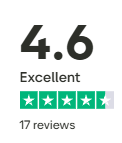
Miami office: 80 S.W. 8th Street, Suite 2000, Miami, FL 33130 · +1 (786) 490-2661 · English, Español, Italiano, Português · Google rating 5.0 (3 reviews)
En español: Nuestros abogados de visas E-2 en Miami asesoran a inversionistas de países con tratado, entre ellos Argentina, Colombia, México y España, en la constitución de la empresa en Florida, la prueba del origen de los fondos, el plan de negocios y la entrevista consular, con honorarios fijos acordados por escrito. Más información en nuestra página en español y en la del equipo de Argentina.
Em português: atendemos investidores de Portugal, país do tratado E-2 desde 2024, e investidores brasileiros com cidadania italiana, portuguesa ou espanhola, que solicitam o visto E-2 como nacionais desse país. Quem reside no Brasil apresenta o pedido no Consulado Geral dos EUA em São Paulo. Veja opções para investidores e empresas do Brasil.
Fixed fee
Legal fee agreed in writing before work begins
10+ yrs
Using escrow structures to protect E-2 investment funds
Global
Offices across the U.S., Europe, Latin America, and Asia
Free Initial E-2 Assessment
Tell us about your business, your funds, and your nationality. We will tell you whether the E-2 route is realistic, what it will cost, and how long it will take — with no obligation.
Request Free Assessment
Already familiar with the E-2 visa? Skip to our five-stage Miami E-2 process, fee structure, or engagement FAQs.
New to the E-2 framework or weighing Miami against other U.S. cities? Start with our broader resources first:
Looking for the bigger picture?
For the full Miami investor-founder context — Florida and Miami-Dade business incentives, Foreign-Trade Zone #281, real estate considerations, the lawyer-vs-broker comparison, the buying-vs-starting analysis, and other operational topics — see the Miami Investor Visa Guide. For E-2 visa requirements globally, see our comprehensive E-2 visa guide. This page focuses specifically on what it is like to engage Davies & Associates for an E-2 case in Miami.
What Miami E-2 Visa Lawyers Do for You
Engaging Davies & Associates for a Miami E-2 case typically includes the following deliverables, all coordinated under one fixed-fee engagement:
E-2 Visa Petition
Form DS-160 preparation, Form DS-156E for executive, manager and essential-employee applicants (and for the principal investor at posts that ask for it, such as Rome), supporting evidence package, legal brief, and consular submission.
E-2 Business Plan
Drafted in-house by our dedicated business-plan team designed to meet the substantiality and non-marginality requirements of 9 FAM 402.9-6(D) and (E), with five-year financial projections, market analysis, and U.S. job-creation forecast.
Source-of-Funds Documentation
Compilation of the lawful-source chain from earnings or sale to the U.S. business account — a frequent focus of consular scrutiny, especially for clients with funds traced through countries with currency controls.
Escrow agreement under which the funds are at risk in the commercial sense and irrevocably committed, released to the business when the visa is issued and returnable on denial. The State Department accepts assets “held in escrow for release or transfer once the condition is met” where “the commitment must be real and irrevocable” (9 FAM 402.9-6(B)(c) and (d); 8 CFR § 214.2(e)(12)).
If the capital is not at risk, the consulate must refuse the visa. We have used this structure in E-2 cases for over a decade.
Florida Business Setup
Coordinated with Florida-licensed counsel and local providers: LLC or C-Corp formation via Sunbiz, EIN registration, Florida sales-tax registration, Miami-Dade business tax receipt, and city-level certificates of use where required.
Consular Coordination
Liaison with the relevant U.S. consulate in your home country — Buenos Aires, Rome, London, Madrid, Mexico City, Frankfurt, Paris, São Paulo, and other major E-2 posts.
Interview Preparation
One-to-one mock interview, document binder review, and post-specific procedural briefing the week before the consular appointment.
Family Visas
Derivative E-2 visas for spouse and children under 21, including E-2S spousal work-authorization guidance.
Post-Approval Setup
Florida operational launch support, coordinated with Florida-licensed counsel: lease review, employment agreements, employee onboarding (I-9, payroll, workers' compensation), and ongoing compliance.
E-2 Renewal
Renewal filing three to six months before the visa or the authorized stay expires, on the schedule set for your nationality, for as long as the U.S. business remains operational.
Our Miami E-2 Process — Five Stages
Every Miami E-2 engagement runs through five clearly defined stages. We tell clients which stage they are in at every weekly update, and we tell them what comes next.
1
Free Initial Assessment
Typically 30–45 minutes · no obligation · no fee
You describe the business you want to run, the funds you have available, and your nationality. A senior E-2 lawyer reviews the facts and tells you, on the call, whether the E-2 route is realistic and what the realistic next step is. If E-2 is not the right fit, we will say so — and where appropriate suggest L-1A, EB-5, or the Grenada-CBI-to-E-2 route as alternatives.
2
Engagement and Fixed-Fee Proposal
Within 5 business days of the assessment
We send a written engagement letter with the fixed legal fee, scope, deliverables, and milestones. Payment is staged across the engagement so you do not pay the full fee upfront.
3
Case Build
Typically 6–12 weeks
The substantive work happens here:
- Florida entity formation (LLC or C-Corp)
- Source-of-funds documentation chain
- Investment escrow set up with a Florida-licensed attorney
- E-2 business plan drafted by our in-house plan team
- Florida and Miami-Dade licensing as needed
- Lease, employment agreements, supplier contracts
- DS-160 (and DS-156E where required) filed
4
Consular Submission and Interview
Timing depends on consular appointment availability
Our local consular liaison (in Rome, Buenos Aires, London, Madrid, Mexico City, or wherever your case is filed) submits the package and books your interview. The week before the interview, we run a one-to-one mock interview and walk you through the post-specific procedure. Italian clients file at the U.S. Embassy in Rome (the only post in Italy that processes E-2). Latin American clients typically file at Buenos Aires, São Paulo, Mexico City, Bogotá, or Lima.
5
Approval, Arrival, and Operational Launch
Once the visa is issued
Once the visa is issued, the escrow funds are released to the operating account, and we coordinate the operational launch: opening business banking, finalizing the lease, onboarding employees, and registering for state and federal employer obligations. Most Miami E-2 clients are operating within four to eight weeks of arrival.
Ready to start with the free assessment? A senior Miami E-2 lawyer will review your situation and tell you, candidly, whether the route fits.
Request Free Assessment
Miami E-2 Visa Lawyer Fees
Many U.S. immigration firms refuse to discuss fees publicly, which makes it hard for foreign clients to compare. Davies & Associates uses fixed-fee engagements for E-2 cases. Here is what you can expect:
How Our Miami E-2 Fees Are Structured
- Fixed legal fee agreed in writing before work begins. The total typically falls in a low-to-mid five-figure range for a principal-investor case, depending on case complexity.
- Staged payments across the engagement — no full upfront fee.
- Government and consular fees are separate and paid directly to the U.S. government or consulate (the MRV application fee is currently USD 315 per applicant; reciprocity issuance fees vary by nationality).
- The E-2 business plan is included where prepared in-house by our team. If you already have a plan from another provider, we review and supplement at a reduced rate.
- Florida entity formation, EIN registration, business tax receipts are included.
- Spouse and children's derivative visas are typically a small additional fee per family member, agreed up front.
- Re-filing on denial is generally handled at no additional legal fee where the original case was reasonably curable, subject to the engagement letter terms.
An exact fixed-fee figure is provided in the written engagement letter at the end of the free assessment, before any work begins. We do not bill hourly for E-2 matters.
For a detailed breakdown of all costs — legal fees, government fees, business plan, escrow, business setup, and ongoing operational costs — see our comprehensive E-2 visa cost guide.
Recent Miami E-2 Case Outcomes
A few representative examples of Miami E-2 cases our team has handled. Names and identifying details have been changed for client confidentiality; the legal and structural details are accurate.
Italian Designer · Approved
Italian Fashion Designer — Wynwood Studio
- Client
- Italian-born designer relocating from Milan with a small but established leather-goods brand
- Challenge
- Wanted to open a Miami studio and showroom with limited dollar cash; brand value was the main asset
- Structure
- Brand licensing agreement between the Italian parent and the new Miami LLC; modest cash investment in escrow; total qualifying investment well above proportionality threshold once brand value was independently appraised
- Consulate
- U.S. Embassy in Rome (the only post in Italy that processes E-2)
- Outcome
- E-2 visa approved for 60 months with multiple entries, the maximum on the Italy reciprocity schedule (USD 198 issuance fee). Studio operational in Wynwood within 6 weeks of arrival, with two U.S. employees
Argentine Founder · Approved
Argentine Founder — Buenos Aires Currency-Controls Case
- Client
- Argentine entrepreneur with established design business in Buenos Aires, target Miami launch
- Challenge
- Source of funds traced through Argentina’s historical currency-control regime , a recurring issue in our Latin American cases
- Structure
- Funds documented via official-rate transfers, audited Argentine tax compliance, and parent-business licensing agreement; Miami operating entity formed and licensed before consular submission
- Consulate
- U.S. Embassy in Buenos Aires
- Outcome
- E-2 visa approved on first submission. Miami business operational with two U.S. employees within 8 weeks of arrival
Indian Founder via Grenada · Approved
Indian Tech Founder — Grenada Citizenship Route
- Client
- Indian tech founder wanting to establish a Miami fintech presence; India is not an E-2 treaty country
- Structure
- Grenada Citizenship-by-Investment via real estate option (Davies & Associates is formally licensed by Grenada as a CBI Marketing Agent), then E-2 visa application as a Grenadian national
- Consulate
- U.S. Embassy in Bridgetown, Barbados (the post that handles E visas for Grenadian nationals)
- Outcome
- Grenadian citizenship granted; E-2 visa subsequently issued. Total elapsed time approximately 12 months end-to-end
More E-2 case studies for Miami, Italian and Latin American investors
For broader case studies and client testimonials across our practice, see Davies & Associates case studies and what our clients say.
Past results do not guarantee future outcomes. Each case is evaluated on its individual merits.
Italian E-2 Investors Choosing Miami
Italy is one of the largest sources of our Miami E-2 cases, alongside Argentina and Brazil.
While Brazil is not an E-2 treaty country, we act for Brazilian investors who hold Italian, Portuguese or Spanish citizenship and apply as nationals of that country; those living in Brazil file at the U.S. Consulate General in São Paulo. Italian founders come to Miami for fashion and design in Wynwood, the Design District and Bal Harbour; hospitality and specialty food import; yacht brokerage, charter and refit; and technology and professional services businesses selling into Latin America.
Procedural note: Italian nationals living in Italy apply at the U.S. Embassy in Rome, which handles E visa cases for Italy. The consulates in Milan and Naples do not.
Italians living elsewhere normally apply in their country of residence, as in our Singapore-issued case study. Our Florence office prepares the Italian side of the file, including source of funds, Italian tax compliance, AIRE registration where relevant and coordination with the commercialista acting for the client, while the Miami team forms the Florida company and writes the business plan.
The full Rome procedure is set out on our E-2 visa for Italian nationals page, with Italian-language coverage at E2 Investitori Visto and the work of our Italy Practice Team. For a representative case, see the Wynwood fashion designer above.
Why Davies & Associates for Miami E-2 Cases
Davies & Associates runs a dedicated E-2 practice. This is how a Miami E-2 engagement with us is set up:
| What matters in an E-2 engagement | How Davies & Associates handles it |
|---|
| Dedicated E-2 team | E-2 cases are handled by our dedicated E-2 team |
| In-house business plan | Written by our own business-plan team and included in the fee |
| Fixed-fee engagement | Total legal fee agreed in writing before work begins |
| Investment escrow | Escrow structures available so funds can be returned if the visa is refused |
| Office network | Offices in the U.S., UK, Italy, India, Vietnam, the Philippines, Australia and Singapore |
| Citizenship by investment | Licensed by the Government of Grenada as a CBI Marketing Agent |
| Consular posts | Filings at E-2 posts across Europe, Latin America and Asia, with post-specific guidance kept up to date |
| Languages | English, Italian, Spanish and Portuguese |
For a third-party-aware checklist of what to look for in an E-2 lawyer, see our guide to choosing the best E-2 visa lawyer.
Award-Winning E-2 Lawyer
We are privileged to have been named one of the top three E-2 visa law firms in London, Paris and New York by Global Citizenship Services, an organization affiliated with Davies & Associates. The rankings reflect our experience advising treaty investors and entrepreneurs on E-2 matters.
We are also proud to have been recognised as a Global Top 25 Investment Visa Law Firm for seven years by EB5 Investors Magazine.
Why E-2 Cases Get Denied (and How We Avoid It)
E-2 refusals tend to turn on a small number of recurring problems. Each is addressable:
- Source-of-funds gaps. A frequent focus of consular scrutiny for Latin American applicants. Argentine, Venezuelan, Brazilian, Mexican, and Colombian cases frequently raise questions about historical currency controls, parallel-market exchange, or family transfers. We compile a complete documented chain from earnings to the U.S. business account before submission.
- Marginal-income business model. A business that generates only enough to cover the investor's living expenses fails the non-marginality test under 8 CFR § 214.2(e)(15). We identify this risk at the assessment stage and either restructure the model or recommend a different visa route.
- Passive-investment framing. The E-2 visa requires active direction and development. Pure real-estate-purchase cases, absentee-owner franchises, and investment-only positions fail. The business must show active U.S. management.
- Insufficient or unrealistic business plan. Boilerplate or template plans get refused. Plans that do not show a substantial, non-marginal enterprise under 9 FAM 402.9-6 get refused. Our plan team writes from first principles for each case.
- Business not far enough along at submission. The enterprise must be real and operating, or close to the start of actual operations (9 FAM 402.9-6(B)(e)). A physical office is not necessarily required (9 FAM 402.9-4(D)), but where the business needs them, Sunbiz registration, an EIN, a Miami-Dade business tax receipt, a lease and a certificate of use are strong evidence that it is.
- Federally-illegal industries. Cannabis (even where Florida medical cannabis is legal), unregulated crypto, and certain other federally-illegal activities carry severe non-immigrant visa risk regardless of state-law position.
The Miami E-2 Team
Our Miami E-2 cases are led by senior E-2 lawyers with corporate, tax, and consular support. Every case is reviewed and audited by our Complex E-2 Visa Case team in London before consular submission — a second, independent review at no additional cost to the client.
- Mark I. Davies, Esq. — Founding Partner. MBA, The Wharton School. Led thousands of investor-visa matters worldwide. Trained originally as a corporate lawyer in one of the world's largest law firms.
- Gary Kaufman, Esq. — Senior Tax Counsel. Handles cross-border tax structuring for Italian, Latin American, and European E-2 clients launching Miami businesses.
- Irina Lust, Esq., Senior Counsel, admitted in Connecticut. Reviewer of this page.
- Florence office (Italy) — Italian-side documentation, Italian-language client service, coordination with the U.S. Embassy in Rome.
- London office — Complex E-2 case audit; consular liaison for UK and continental European posts.
- Business plan team — In-house Wharton-trained MBAs and lawyers drafting plans for every case against the 9 FAM 402.9 standards.
See all Davies & Associates professionals.
From E-2 to a Green Card
The E-2 is a nonimmigrant visa.
It can be renewed for as long as the business continues to qualify, but it does not by itself lead to permanent residence, and the investor must maintain “an intention to depart the United States upon the expiration or termination of E-1 or E-2 status” (8 CFR 214.2(e)(5); 9 FAM 402.9-4(C)). The same regulation provides that an approved labor certification or a filed immigrant petition is not by itself a reason to refuse E status.
The route to a green card is the same as for an L-1 holder: a separate immigrant petition. Depending on the facts, the options include:
- EB-5. One route E-2 investors often consider. The investment is USD 800,000 in a Targeted Employment Area or USD 1,050,000 elsewhere, with at least 10 full-time U.S. jobs, placed either in the existing Miami business (EB-5 Direct) or in a USCIS-designated regional center project.
- EB-1C. For executives and managers of a multinational business with a qualifying affiliate abroad.
- EB-2 National Interest Waiver. For investors whose work has substantial merit and national importance.
- PERM labor certification. Employer sponsorship, where the business can sponsor a qualifying role.
Our Miami EB-5 team works alongside the E-2 team on these cases. For the full EB-5 framework, see the EB-5 visa guide.
Considering EB-5 as your next step after E-2? The same free assessment covers both routes — we will tell you whether E-2 to EB-5 conversion is realistic given your existing Miami business and capital position.
Request Free Assessment
E-2 Visa Myths: What Miami Investors Should Know
Myth: You need at least USD 100,000 to qualify for an E-2 visa.
No. The State Department sets no minimum dollar amount and no fixed percentage: “No set dollar figure constitutes a minimum amount of investment” and “there are no bright line percentages”. The investment must be substantial in proportion to the cost of buying or starting the particular business.
Source: 9 FAM 402.9-6(D)(b) and (c)
Myth: You need a Florida-licensed lawyer for a Miami E-2 case.
No. Any attorney who is “a member in good standing of the bar” of a U.S. state or the District of Columbia may represent you, wherever the office or the client is. E-2 visas are decided by U.S. consulates abroad, not by Florida courts. Setting up your Florida company is separate work for Florida counsel.
Source: 8 CFR 1.2
Myth: USCIS approves E-2 visas.
No. A U.S. embassy or consulate abroad decides the visa. USCIS decides only a change of status or extension filed inside the United States, where a person in lawful status “may file Form I-129 to request a change of status to E-2 classification”. That status is not a visa, so you need an E-2 visa from a consulate before re-entering after travel.
Source: 9 FAM 402.9; USCIS, E-2 Treaty Investors
Myth: An E-2 visa leads to a green card on its own.
No. The E-2 is a nonimmigrant visa and requires “an unequivocal intent to depart the United States upon termination of E status”. A green card needs a separate immigrant petition, such as EB-5, EB-1C, EB-2 NIW or PERM. A filed immigrant petition or approved labor certification is not by itself a reason to refuse an E visa (8 CFR 214.2(e)(5)).
Source: 9 FAM 402.9-4(C)
Myth: Brazilians cannot get an E-2 visa.
Brazil is not an E-2 treaty country. Brazilians who also hold Italian, Portuguese or Spanish citizenship can apply as nationals of that country, because treaty nationals “must own at least 50 percent of the business”. Italy has been an E-2 treaty country since 1949 and Portugal since March 15, 2024. Applicants living in Brazil file at the U.S. Consulate General in São Paulo.
Source: State Department, Treaty Countries; 9 FAM 402.9-4(B)
Myth: Buying a Miami condo qualifies you for an E-2.
No. The enterprise cannot be “an idle speculative investment held for potential appreciation in value, such as undeveloped land”. A single rental condo is usually passive and also fails the marginality test. An active property-management business with staff is assessed differently.
Source: 9 FAM 402.9-6(C) and (E)
Myth: You must own 100% of the business.
No. Treaty nationals must own at least 50 percent of the business, and you must be able to develop and direct it, through at least 50 percent ownership, an equal share in a two-party venture, or managerial control.
Source: 9 FAM 402.9-4(B)(c); 9 FAM 402.9-6(F)
Myth: You must spend your money before you know whether the visa is approved.
Not necessarily. Assets can be “held in escrow for release or transfer once the condition is met”, but “the commitment must be real and irrevocable” and the business must be close to opening. Money sitting in your own bank account does not count.
Source: 9 FAM 402.9-6(B)(d) and (e); 8 CFR 214.2(e)(12)
FAQ: Engaging a Miami E-2 Visa Lawyer
For visa-substance questions (eligibility, treaty countries, investment requirements), see the comprehensive E-2 visa guide and the Miami Investor Visa Guide FAQ. The questions below cover what it is like to actually work with us.
Can I convert my E-2 visa to an EB-5 green card later?
Yes. The E-2 visa is non-immigrant (it does not lead directly to a green card), but the EB-5 Immigrant Investor Program is one route often considered by E-2 holders who want to become U.S. permanent residents. EB-5 requires an additional qualifying investment of USD 800,000 in a Targeted Employment Area or USD 1,050,000 outside one, plus creation of at least 10 full-time U.S. jobs.
E-2 investors typically have two EB-5 options: EB-5 Direct, where additional capital is invested into the same Miami business that already supports the E-2 (preserving operational control), and EB-5 Regional Center, where capital is placed into a USCIS-designated project. See our E-2 to EB-5 path section above and our Miami EB-5 lawyers page for the full conversion workflow.
How much do Miami E-2 visa lawyers charge?
Davies & Associates handles Miami E-2 visa cases on a fixed-fee basis. The total legal-fee envelope for a typical principal-investor E-2 case generally falls in a low-to-mid five-figure range, depending on case complexity, source-of-funds difficulty, and whether the business is a new start-up, a franchise, or an acquisition.
Fixed fees are agreed up front and confirmed in a written engagement letter so the client knows the cost before work begins. The E-2 business plan is included where our team prepares it. Government filing fees and consular reciprocity issuance fees are separate.
We provide an exact fixed-fee proposal at the end of the free initial assessment. For the full breakdown of government, legal and set-up costs, see our E-2 visa cost guide.
How long does a Miami E-2 visa case take?
Most Miami E-2 cases take three to six months from engagement to consular interview, depending on the consulate and the complexity of the source-of-funds documentation. Straightforward cases, such as an existing business acquisition with well-documented funds, can sometimes reach interview sooner.
Cases involving funds traced through countries with currency controls (Argentina, Venezuela), or first-time business start-ups with extensive operational setup, run longer. We provide a realistic timeline at the start of the engagement and update the client weekly.
Do I need to be in Miami to hire a Miami E-2 visa lawyer?
No. Most of our Miami E-2 clients are not in Miami when they hire us. Engagement, document review, business plan drafting, and case preparation are all handled remotely with secure document portals, video calls, and Italian / Spanish / Portuguese / English support.
Most clients do not need to travel to Miami before approval; the E-2 visa interview takes place at the U.S. embassy or consulate that handles E visas for their country, and many do not visit our Miami office at all until after the visa is approved and they are setting up the business.
What happens if my Miami E-2 visa is denied?
Davies & Associates prepares every E-2 case carefully, but no firm can guarantee any visa outcome. If a case we have prepared is denied, we will analyze the refusal grounds, advise on whether re-filing or appeal is appropriate, and where the case is reasonably curable we typically handle the re-filing with no additional legal fee beyond the original fixed-fee engagement.
Where the investment funds were held in escrow pending approval (a structure we recommend in most cases), the funds can be returned to the investor on denial. Where the denial is curable only with a substantial change in facts (such as a different business or different source of funds), additional fees may apply for the second engagement.
Can a Miami E-2 lawyer help me change status from B-1, F-1, H-1B, or L-1 to E-2 without leaving the United States?
Yes. If you are already lawfully in the U.S. on a B-1 business visa, F-1 student visa, H-1B work visa, L-1 intracompany transfer visa, or other non-immigrant status, you may be able to file a change-of-status application to E-2 with USCIS without leaving the United States. The application is filed on Form I-129 and adjudicated by USCIS rather than at a consulate.
Approval grants E-2 status for use inside the U.S.; if you later leave the country, you will need to obtain an E-2 visa stamp at a consulate before re-entering. Change-of-status is often the fastest route for clients already on the ground in Florida. See our E-2 visa process guide for a step-by-step walkthrough of both routes.
Do you handle E-2 visa renewals and extensions for Miami clients?
Yes. E-2 visas can be renewed indefinitely as long as the underlying U.S. business remains operational and continues to satisfy E-2 requirements. We handle E-2 renewals at U.S. consulates abroad and E-2 status extensions filed with USCIS from inside the United States.
How long each E-2 visa remains valid depends on the State Department reciprocity schedule for your nationality, and each entry to the United States is normally admitted for up to two years, whatever the visa validity (8 CFR 214.2(e)(19)). We typically begin renewal work three to six months before the visa or the authorized stay expires. See our E-2 visa renewal guide.
Do you handle E-2 visas for spouses and children?
Yes. The spouse and unmarried children under 21 of an E-2 principal investor qualify for derivative E-2 dependent visas. Spouses are work-authorized incident to E-2S status (no separate Employment Authorization Document is legally required, though some clients obtain one for practical convenience).
Children may attend U.S. schools on the derivative visa. We handle the entire family unit as a single engagement.
Can E-2 employees of my Miami business also get visas?
Yes. Once an E-2 enterprise is registered with the U.S. consulate, qualifying employees who share the principal investor's nationality may apply for E-2 employee visas in either Executive/Manager or Essential Skilled Worker categories. We regularly file E-2 employee visas alongside the principal case, typically as a separate engagement.
I am Italian. Where will my E-2 visa be processed?
Italian E-2 visa applications are adjudicated exclusively at the U.S. Embassy in Rome. The U.S. Consulates in Naples and Milan do not process E-category visas (Naples handles immigrant visas including EB-5; Milan handles other nonimmigrant categories).
Davies & Associates’ Italy office in Florence supports Italian-side documentation, and the case is filed at the U.S. Embassy in Rome. See our dedicated E-2 Visa for Italian Nationals page for full Rome-specific procedure detail; for Italian-language coverage see E2 Investitori Visto.
I am from a non-treaty country (Brazil, China, India, Vietnam). Can I still work with you on a Miami E-2 case?
Yes. Nationals of non-treaty countries can access E-2 by acquiring a treaty-country citizenship through Citizenship-by-Investment.
Davies & Associates is formally licensed by the Government of Grenada as a Marketing Agent for the Grenada Citizenship-by-Investment Program, and we routinely structure Grenada-to-E-2 cases for Brazilian, Chinese, Indian, and Vietnamese clients targeting Miami. Grenada is a short flight from Miami, which makes the route convenient for ongoing business between the two. See our Grenada CBI guide.
What languages does the Miami E-2 team work in?
English, Italian, Spanish, and Portuguese are routinely available across our Miami and partner-office teams. Most engagement and document work can be conducted in the client's first language; the consular interview is usually conducted in English, and some posts arrange interpretation.
Miami Office
Our Miami E-2 visa team is based at 80 S.W. 8th Street, Suite 2000, in the corridor between Brickell and Little Havana — close to PortMiami, the Miami River, the federal courthouse, and the financial district. The office serves our E-2, L-1, and EB-5 clients across Miami-Dade and Broward counties and coordinates with our offices across the United States, Latin America, the Caribbean, Europe, and Asia.
We act for E-2 investors throughout Florida, including Miami-Dade, Broward and Palm Beach counties, Orlando, Tampa and Jacksonville. Clients elsewhere in the state work with the Miami team by video call and secure document portal, and rarely need to visit the office before the visa is issued.
Google rating for our Miami office: 5.0 from 3 reviews (September 2026). Read the reviews on Google.
Next Steps
If you are ready to discuss a Miami E-2 case, the next step is the free initial assessment. A senior E-2 lawyer will review your situation and tell you, on a 30 to 45-minute call, whether E-2 is realistic, what it will cost, and how long it will take.
Request Your Free Miami E-2 Assessment
No obligation. No fee. A senior E-2 lawyer will respond within one business day. Contacting us does not create an attorney-client relationship; that begins only when an engagement letter is signed.
Request Free Assessment
Still researching Miami as a destination?
If you are still weighing Miami against other U.S. cities, or want to understand Florida and Miami-Dade business incentives, real estate considerations, FTZ #281, and the buying-vs-starting analysis, see our Miami Investor Visa Guide. For the global E-2 framework, see the comprehensive E-2 visa guide.
Page revision history
- November 11, 2026: E-2 myths section with 9 FAM and 8 CFR citations, Brazilian and Portuguese treaty nationality, escrow tests, green card routes, links to the E-2 cost guide.
- September 30, 2026: new opening summary, Spanish and Portuguese summaries, Florida Bar admission note, Florida-wide coverage, shorter Italian section, curated case studies, Google rating, comparison table and approval-rate claims revised, Grenada case post corrected, US spelling.


 E-2 Visas for UK Citizens
 E-2 Visas for Italians
 E-2 Visas for Australians
 E-2 Visas for Singaporeans
 E-2 Visas for Canadians
 E-2 Visas from the UAE
 E-2 Visas for Argentinians
 E-2 Visas for Germans
 E-2 Visas for French
 E-2 Visas for Turkish
 E-2 Visas for Grenadians
 E-2 Visas for Taiwanese