Davies & Associates is a U.S. immigration law firm advising Milan entrepreneurs, family businesses and investors on the E-2 treaty investor visa, from our office at Corso Vittorio Emanuele II 15, a few minutes from the Duomo. Every E-2 visa for a resident of Italy is decided by the U.S. Embassy in Rome, not by the U.S. Consulate General in Milan, so the case is built in Milan and filed and interviewed in Rome (U.S. Embassy Rome, E Visas). We act for clients across Lombardy and Northern Italy, including Monza, Bergamo, Brescia, Como, Varese, Turin and Verona.
Our Milan office
Corso Vittorio Emanuele II 15
20122 Milano, near the Duomo
Where the visa is decided
U.S. Embassy Rome
Not the Milan consulate
Government fees
USD 315 + USD 198
Application fee plus reciprocity fee
Your Italy E-2 lawyer
Massimiliano Tommasiello
Admitted in Italy and New York
E-2 Visa Lawyer in Milan: Key Facts
Davies & Associates LLC is a U.S. immigration law firm with a Milan office at Corso Vittorio Emanuele II 15, 20122 Milano. Its lawyers prepare E-2 treaty investor visa applications for Italian founders, family businesses and investors based in Milan and Northern Italy. The firm’s Italy E-2 work is led by Avv. Massimiliano Tommasiello, Managing Attorney, admitted in Italy and New York, who meets Milan clients in person or by video in Italian or English.
The U.S. Consulate General in Milan does not decide E visas: every application from Italy goes through the E Visa Navigator of the U.S. Embassy in Rome, with the interview in Rome. Government fees for an Italian national are USD 315 plus a USD 198 reciprocity fee, and the visa can be valid for up to 60 months.
A U.S. Immigration Lawyer in Milan: How We Work With Investors
Davies & Associates is a U.S. immigration law firm with an office at Corso Vittorio Emanuele II 15, Milan. Its Italy practice is led by Avv. Massimiliano Tommasiello, admitted in Italy and New York, and covers E-2, E-1, L-1 and EB-5 matters for Italian nationals.
Milan clients tend to arrive with an operating business, a board or family to answer to, and limited time. We organize the E-2 case around that: one lawyer responsible for the file, a clear timetable to the Rome interview, and evidence drawn from records the client already keeps.
- Strategy and legal work on every E-2 file are done by admitted lawyers, never outsourced.
- A partner of the firm structures and files each case, with Avv. Massimiliano Tommasiello leading the Italian side.
- Meetings at Corso Vittorio Emanuele II 15 by appointment, or by phone or video, in Italian or English. Avv. Tommasiello is based in Rome and meets Milan clients in Milan or by video.
- We work from the documents a Milan company already produces: the visura camerale, notarial deeds, bank statements and filings with the Agenzia delle Entrate.
- Each file is organized to the Rome Embassy’s E Visa Navigator requirements and the standards in 9 FAM 402.9.
- Every Italian file is reviewed by our Complex E-2 Team in London before it is filed.

Your Italy E-2 Lawyer: Massimiliano Tommasiello
Managing Attorney, Davies & Associates · Admitted in Italy and New York
Avv. Massimiliano Tommasiello leads the firm’s E-2 work for Italian nationals and acts for Milan clients from the firm’s Italian offices and by video. He advises founders and family companies on structuring a U.S. investment and on the E-2 filing at the U.S. Embassy in Rome, in Italian and English.
- Avvocato, enrolled with the Ordine degli Avvocati di Roma (Rome Bar)
- Attorney and Counselor at Law, New York, registered with the New York State Unified Court System
- Trained at LUISS (Rome) and Temple University Beasley School of Law
- Advises on E-2, E-1, L-1 and EB-5 visas for Italian nationals
Read Massimiliano Tommasiello’s full profile →
Talk to an E-2 lawyer before you sign or wire funds.
Most avoidable E-2 problems start with the purchase contract, the route the money takes or the ownership structure. We review all three before anything is committed.
Book a free E-2 consultation →
Milan Businesses We Advise on the E-2
Milan’s E-2 clients come from the sectors that drive the city’s economy. Each raises its own investment question, and the amount that counts as “substantial” depends on the cost of the particular business, not on a fixed figure (22 CFR 41.51(b)(9); 9 FAM 402.9-6(D)). The ranges below are typical of our cases, not legal thresholds.
| Sector | Typical E-2 investment in our cases | What usually decides the case |
|---|
| Fashion, luxury and design | USD 50,000+; licenses of an Italian brand often form a meaningful part (fashion practice) | Valuing the license and showing a real U.S. operation behind it |
| Food, restaurants and hospitality | USD 70,000 to 350,000+ | Lease, fit-out and staffing evidence; marginality |
| Technology and digital | USD 50,000 cash plus 50,000 non-cash and up (technology practice) | Proving the enterprise operates, not just develops a product |
| Consulting and professional services | USD 50,000+ and 25,000 in non-cash investment (consulting practice) | Showing income beyond a minimal living for the investor |
| Manufacturing and industrial companies expanding to the U.S. | Proportionate to the U.S. set-up cost | Treaty nationality through the group structure; intercompany agreements |
A Milan company can invest through a U.S. subsidiary, provided Italian nationals own at least 50 percent of the U.S. business, traced through each layer of ownership (9 FAM 402.9-4(B)). Senior staff sent to run it can qualify as E-2 executives, managers or essential employees if they share that Italian nationality (9 FAM 402.9-7).
What Our E-2 Lawyers Do for Milan Clients
An E-2 case is decided on the evidence. Our work for Milan clients covers:
- Investment review: whether the capital is substantial, at risk and irrevocably committed (22 CFR 41.51(b)(7) and (9)).
- Source and path of funds: tracing the money from Italian accounts, dividends, property sales or company distributions to the U.S. business.
- Ownership and control: treaty nationality and the investor’s power to develop and direct the enterprise.
- Marginality: showing the business has the present or future capacity to generate more than a minimal living for the investor and family, or to make a significant economic contribution (22 CFR 41.51(b)(10)).
- Business plan: a plan that matches the spending, staffing and contracts in the file.
- Escrow, where it fits: a purchase conditioned on the visa, with funds held in escrow, can count as committed (9 FAM 402.9-6(B); 8 CFR 214.2(e)(12)). The funds must still be at risk.
- Interview preparation: rehearsing the questions a consular officer in Rome is likely to ask about the business and the money.
From Milan to the U.S. Embassy in Rome: How the E-2 Application Works
For an applicant living in Milan, the file is prepared in Milan and decided in Rome.
The U.S. Consulate General in Milan handles other consular services, but the Embassy in Rome processes E visas for Italy, and all E visa applications and inquiries must go through its E Visa Navigator (U.S. Embassy Rome). An E-2 visa application at a consular post is adjudicated by the consular officer under 22 CFR 41.51; USCIS has no role in it and no USCIS petition is required.
- Preparation in Milan: the U.S. company, the investment evidence, the source-of-funds trail and the business plan, assembled with our Milan team.
- Forms and fees: a DS-160 for each applicant and the USD 315 application fee, paid as the Navigator instructs.
- Filing through the E Visa Navigator: the complete E-2 package goes to the Embassy in Rome before any interview is scheduled.
- Embassy review: the Embassy confirms its prescreening time once it holds a complete package, and recommends applying six months before travel, renewals included.
- Interview in Rome: most E visa interviews are held on Tuesdays. We plan the trip from Milan around the appointment and prepare you for it beforehand.
Fees and validity are those in force for Italian nationals: the USD 315 E visa application fee (22 CFR 22.1) and a USD 198 reciprocity fee for each E-2 visa issued, with validity of up to 60 months and multiple entries (State Department reciprocity schedule, checked November 15, 2026). For requirements and costs in detail, see our E-2 visa guide for Italian nationals.
Italian E-2 Case Studies
A Helicopter Brokerage Filed at the U.S. Embassy in Rome
Client: an Italian national who had worked in the sales department of a European helicopter manufacturer and later acted as its exclusive broker, setting up a brokerage in the Miami area.
The problem: the brokerage did not plan to hire significant U.S. staff, and start-up funds of just over USD 100,000 were stretched against the projections. Marginality was the real issue.
The solution: we filed through the E Visa Unit in Rome with a file built to show the enterprise could generate more than a minimal living for the investor and his family on its own economics. His career made the U.S. business a natural extension of an established track record, and he went into the interview well prepared. The E-2 visa was issued. Read the full case study.
Why It Matters: Proving the Business Is Not Marginal
A small investment is not fatal if the business can earn more than a minimal living or make a significant economic contribution (22 CFR 41.51(b)(10)). Rome expects a concise, well-ordered package, so only genuinely probative evidence should go in.
An Italian Citizen Who Applied at a Third-Country Post
Client: an Italian graduate in the United States on an F-1 visa, investing in a sales consulting company and a quick-serve restaurant franchise.
The problem: the wait for a first-time E-2 appointment in Rome was materially longer than at other posts at the time.
The solution: at the time, the State Department encouraged applicants to apply where they lived but did not prohibit applying elsewhere, and some posts accepted third-country nationals. We advised an application at the U.S. Embassy in Singapore, where the E-2 visa was issued, and separately handled his change of status from F-1 to E-2. Read the full case study.
Why It Matters: Where You Apply Is a Legal Decision
Since September 6, 2025 the State Department expects nonimmigrant visa applicants to apply in their country of nationality or residence, so a third-country filing now needs careful advice before it is attempted.
These summaries describe matters the firm has handled. Every E-2 application turns on its own facts, and prior results do not guarantee a similar outcome.
Choosing an E-2 Visa Lawyer in Milan: Five Myths
Milan investors are used to choosing advisers for corporate work. An E-2 case needs a different kind of adviser, and these five assumptions are the ones that most often lead to the wrong choice.
1. “The U.S. Consulate in Milan will handle my E-2, so I need a lawyer who knows it.”
MythMilan residents file their E-2 at the Milan consulate.
FactE visas for Italy are processed by the U.S. Embassy in Rome, and every E visa application and inquiry must go through its E Visa Navigator. Applicants attend an interview in Rome, renewals included.
Why it matters: what counts is experience with the Rome Navigator procedure, not familiarity with the Milan consulate.
2. “My corporate lawyer or commercialista can do the visa as well.”
MythSetting up the U.S. company and the E-2 are one job.
FactThe E-2 is a question of U.S. federal law: INA 101(a)(15)(E)(ii), 22 CFR 41.51 and 9 FAM 402.9. Italian advisers are essential for the bank, tax and notarial records behind the source of funds, but the legal case for the visa needs a lawyer admitted in the United States.
Why it matters: ask which U.S. jurisdiction the lawyer is admitted in and check the public register before you instruct them.
3. “If my Milan company invests, I personally qualify.”
MythAny investment by an Italian company makes its managers E-2 eligible.
FactThe U.S. business must be at least 50 percent owned by Italian nationals, traced through every layer of the group (9 FAM 402.9-4(B)), and employees must share that nationality and be executives, managers or essential staff (9 FAM 402.9-7). A group with non-Italian shareholders can fail the test.
Why it matters: choose a lawyer who analyses the group structure before the U.S. company is formed.
4. “A good lawyer will tell me the minimum that guarantees the visa.”
MythThere is a safe figure that always works.
FactThere is no fixed minimum. The investment must be substantial in proportion to the cost of the business (22 CFR 41.51(b)(9)), and the business must not be marginal (22 CFR 41.51(b)(10)). The consular officer decides each case on its evidence, and no lawyer can guarantee the result.
Why it matters: treat a promised figure or a promised result as a reason to look elsewhere.
5. “I will call a lawyer once the deal is signed.”
MythThe lawyer only assembles papers for the interview.
FactThe capital must be at risk and irrevocably committed, and the applicant must prove it (22 CFR 41.51(b)(7)). A purchase can be made conditional on the visa with funds in escrow (9 FAM 402.9-6(B)), but only if that is built into the contract before signing.
Why it matters: the lawyer is most useful before you sign or transfer anything.
The Legal Framework for E-2 Applications From Italy
The E-2 category is created by INA 101(a)(15)(E)(ii). Italy qualifies under the 1948 Treaty of Friendship, Commerce and Navigation, in force for E-1 and E-2 purposes since 26 July 1949 (9 FAM 402.9-10). A visa application in Rome is governed by the State Department regulation at 22 CFR 41.51, applied through 9 FAM 402.9. The DHS regulation at 8 CFR 214.2(e) governs admission, extensions and changes of status once the investor is in the United States, using the same tests of investment, substantiality and marginality.
E-2 Refusals and Complex Cases: Our Complex E-2 Team
Our Complex E-2 Team in Canary Wharf, London, brings together the firm’s most experienced E-2 lawyers. It reviews every Italian file before filing and takes on the hardest matters, including cases referred to the firm after a first refusal elsewhere and new applications after a refusal, including a refusal under INA § 221(g) pending further documents.
For Milan clients the most common complex points are group structures with several layers of Italian ownership, investments funded by company distributions or property sales, and licenses of Italian brands used as part of the investment (9 FAM 402.9-6(B)(h)).
As of November 15, 2026, no E-2 visa application prepared and filed by Davies & Associates has been refused.
Meet the team on our E-2 visa lawyers in London page and our UK site, E-2 visa lawyers in the UK.
Every E-2 application turns on its own facts, and prior results do not guarantee a similar outcome.
What Milan Investors Get From Davies & Associates
- A Milan office near the Duomo, with the filing and interview handled in Rome by the same team
- Italian and U.S. legal expertise, led by Avv. Massimiliano Tommasiello
- Experience with fashion licenses, family groups, franchises and acquisitions
- Business plan, source of funds and consular filing prepared as one file
- Independent review by our Complex E-2 Team before every filing
- Consultations in Italian and English
Recognition for Our Milan E-2 Practice
Global Citizenship Services Pte. Ltd., which has one director in common with Davies & Associates, LLC, ranked the firm among the top E-2 visa law firms in Milan in 2026.
The firm has also been named a Top 25 Investment Immigration Firm on a global basis by EB5 Investors Magazine, in 2018 to 2023 and in 2026; the badge shown is the 2023 award.
Our Milan Office on Corso Vittorio Emanuele II
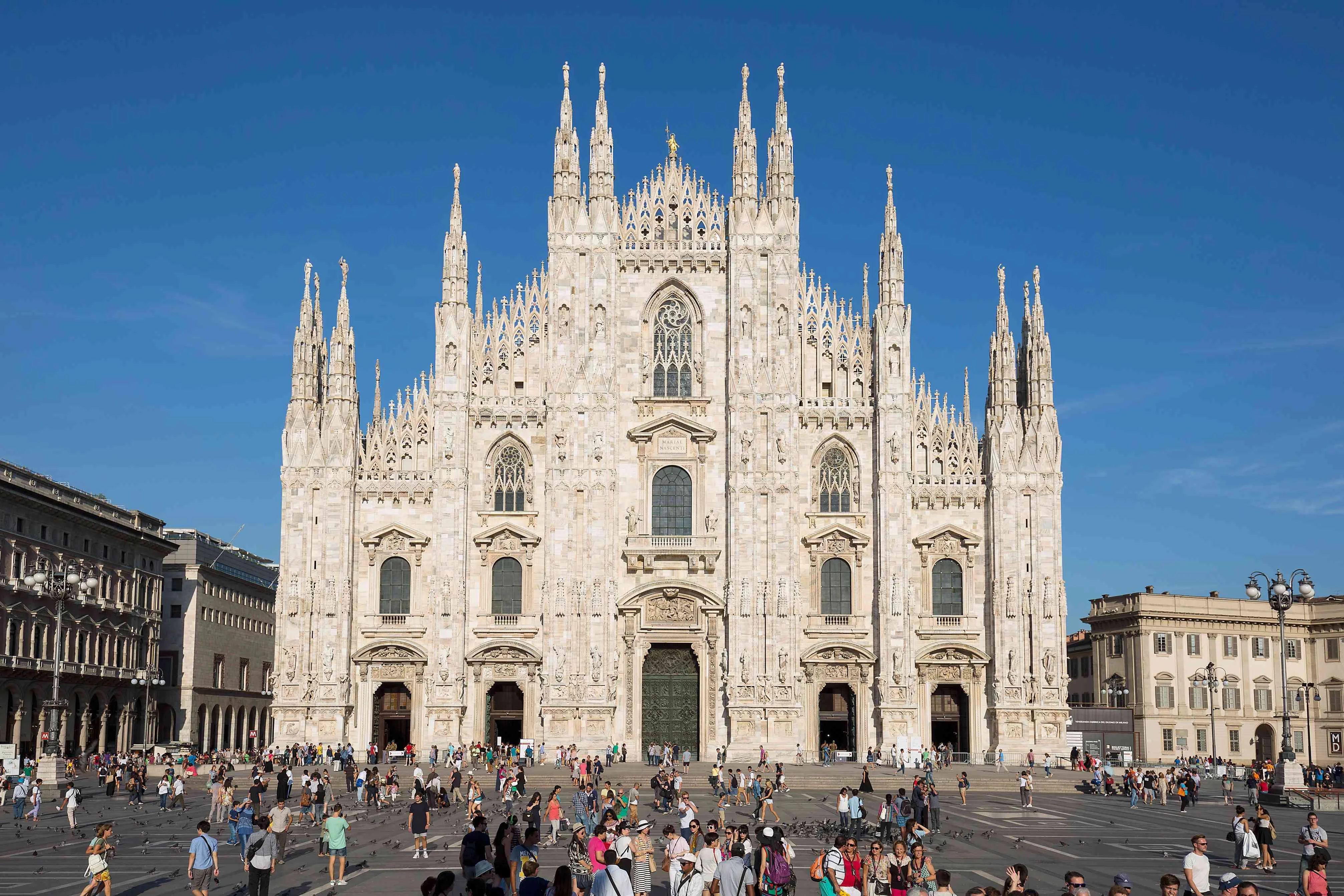
Our Milan office is in the pedestrian heart of the city, between the Duomo and San Babila. Clients from elsewhere in Lombardy and Northern Italy usually meet us here or by video, and travel to Rome only for the Embassy interview.
Milan Office Address
Davies & Associates LLC (Milano)
Corso Vittorio Emanuele II, 15
20122 Milano MI
Italy
Contact Our Milan and Italy Team
Phone/WhatsApp: +39 373 868 7874
Email: [email protected]
Hours: Monday to Friday, 09:00–18:00
Map: Corso Vittorio Emanuele II 15, 20122 Milano
The firm also has a Rome office at Via Aurelia 786, close to the Embassy process: see our E-2 visa lawyer in Rome page.
More E-2 Resources for Italian Investors
E-2 Visa From Milan: Frequently Asked Questions
Do I need an E-2 visa lawyer in Milan to apply from Italy?
No law requires one, but most Milan investors use a lawyer because the E-2 is decided on detailed evidence: the investment, the source of funds, the ownership structure and the business plan. A lawyer admitted in the United States structures the case and presents it in the form the U.S. Embassy in Rome expects.
Does the U.S. Consulate General in Milan issue E-2 visas?
No. E visas for residents of Italy are processed by the U.S. Embassy in Rome, and all E visa applications and inquiries go through its E Visa Navigator (U.S. Embassy Rome, E Visas). Milan residents prepare the case in Milan and attend the interview in Rome.
What is the E Visa Navigator at the U.S. Embassy in Rome?
It is the Embassy’s online channel for E visa applications and inquiries. All E visa applications and inquiries must go through it, and incorrectly submitted applications are not reviewed and are delayed (U.S. Embassy Rome).
Can an Italian citizen apply for an E-2 visa outside Italy?
Since September 6, 2025, the State Department expects nonimmigrant visa applicants to apply in their country of nationality or residence, so a Milan resident normally applies in Rome. An Italian living abroad may be able to apply where they reside and should take advice before choosing a post.
Where is the Davies & Associates office in Milan?
At Corso Vittorio Emanuele II 15, 20122 Milano, between the Duomo and San Babila. The firm’s Italy E-2 work is led by Avv. Massimiliano Tommasiello, Managing Attorney, admitted in Italy and New York, who meets Milan clients in person or by video. Telephone +39 373 868 7874.
Is USCIS involved in an E-2 visa application from Milan?
No. The E-2 visa is issued by a U.S. consular post, here the Embassy in Rome, under 22 CFR 41.51 and 9 FAM 402.9. USCIS only decides changes of status and extensions for people already in the United States (8 CFR 214.2(e)(20) and (21)), and a change of status is not a visa.
Is there a minimum investment for an E-2 visa from Italy?
No fixed minimum appears in the regulation. The investment must be substantial in proportion to the cost of the business (22 CFR 41.51(b)(9)), and the enterprise must not be marginal: it needs the present or future capacity to generate more than a minimal living for the investor and family, or to make a significant economic contribution (22 CFR 41.51(b)(10)).
Can my Milan company invest through a U.S. subsidiary?
Yes, if Italian nationals own at least 50 percent of the U.S. business, traced through each layer of ownership (9 FAM 402.9-4(B)). Executives, managers and essential employees of the same Italian nationality can then qualify as E-2 employees (9 FAM 402.9-7), with a Form DS-156E for each employee applicant in addition to the DS-160 (9 FAM 402.9-11(A)).
Can a license of my Italian brand count toward the investment?
It can. Intangible property such as a trademark license counts to the extent its value can reasonably be determined (9 FAM 402.9-6(B)(h)), so an independent valuation and a real U.S. operation using the license are needed. This is common in fashion and design cases.
How long does the E-2 process take for a Milan applicant?
The Embassy in Rome recommends applying six months before planned travel, renewals included, and confirms its prescreening time only once it holds a complete package. Most E visa interviews are held on Tuesdays (U.S. Embassy Rome). Preparation in Milan usually takes several weeks before filing, depending on how quickly the business evidence comes together.
How much does the E-2 visa cost for an Italian national?
The government fees are the USD 315 E visa application fee (22 CFR 22.1) and a USD 198 reciprocity fee for each E-2 visa issued to an Italian national, under the State Department reciprocity schedule checked on November 15, 2026. Legal fees are separate; see our E-2 visa costs page.
Can my family come with me on the E-2?
Yes. Your spouse and unmarried children under 21 can apply as dependents. The E-2 spouse is employment-authorized incident to status (INA 214(e)(2)) and can work without a separate EAD; children can study but not work.
Can an E-2 lawyer help if my application was refused?
Yes. Our Complex E-2 Team in London reviews the refusal, identifies what went wrong and advises whether and how to file again, including after a refusal under INA § 221(g) pending further documents.
Do you advise in Italian?
Yes. Consultations are available in Italian and English, and an Italian version of this page and our Italian E-2 guide are available for clients who prefer to read in Italian.
Disclaimer
This page is for general information and is not legal advice. Every case is assessed on its own facts and documents, and prior results do not guarantee a similar outcome. Applicants should check the U.S. Embassy Rome E visa page for current procedures and appointments.

 E-2 Visas for UK Citizens
 E-2 Visas for Italians
 E-2 Visas for Australians
 E-2 Visas for Singaporeans
 E-2 Visas in New York City
 E-2 Visas for Canadians
 E-2 Visas from the UAE
 E-2 Visas for Argentinians
 E-2 Visas for Germans
 E-2 Visas for French
 E-2 Visas for Turkish
 E-2 Visas for Grenadians
 E-2 Visas for Taiwanese
 E-2 Visas for Thai Nationals