










Mark I. Davies, Esq., J.D., University of Pennsylvania Law School, licensed by the SRA (SRA ID: 384468) in the UK, and a member of The Law Society of England & Wales, MBA, Wharton School of Business. Named a Top 25 EB-5 Immigration Attorney by EB5 Investors Magazine. Ranked Band 1 for E-2 visas in Singapore by Global Citizenship Services (2026). Licensed in the USA. Georgia State Bar member. AILA member.
E-2 Visa Guide for Thai Nationals (2026)
This guide takes Thai nationals through the E-2 visa: eligibility, the U.S. Embassy Bangkok process, costs, the six-month visa rule, and how the E-2 compares with other routes.
Looking for a lawyer? See our E-2 visa lawyer Bangkok page for partner-led help with Bangkok E-Visa Unit filings, interview preparation and U.S. company set-up.
Looking for a lawyer? See our E-2 visa lawyer Bangkok page for partner-led help with Bangkok E-Visa Unit filings, interview preparation and U.S. company set-up.
E-2 Visa Guide for Thai Nationals (2026)
Thailand has had E-2 treaty status with the United States since 1968, under the Treaty of Amity and Economic Relations, and Thai nationals qualify under INA §101(a)(15)(E)(ii). A Thai citizen who puts a substantial sum at risk in a real U.S. business, and who owns or controls that business, can obtain the visa through the E-Visa Unit at the U.S. Embassy in Bangkok. Thai clients are usually surprised, when I first explain the category, to hear that the visa is issued for six months at a time and that there is no reciprocity fee. The six months is less restrictive than it sounds: each entry on the visa still gives up to two years in the United States. This page is the Thailand chapter of our main E-2 Treaty Investor visa guide.
E-2 Visa for Thai Nationals: Executive Summary
The treaty was signed on 29 May 1966 and came into force on 8 June 1968. It covers the E-1 Treaty Trader visa as well as the E-2, and it carries none of the residency baggage that the much older U.K. treaty imposes on British applicants.
What the E-Visa Unit in Bangkok wants to see is a Thai national with money genuinely at risk in a business that already exists or is ready to open, that he or she owns or controls, and that will employ people or make money beyond a family living. There is no minimum figure in the regulations. The visa comes back for six months, multiple entries, but an admission on it lasts up to two years and can be extended. A spouse can work.
| Aspect | Detail |
|---|---|
| Visa type | Non-immigrant treaty investor visa |
| Eligible applicants | Thai citizens meeting the treaty requirements |
| Treaty basis | Treaty of Amity and Economic Relations, United States and Kingdom of Thailand (1968) |
| Processing post | U.S. Embassy Bangkok, E-Visa Unit |
| Core requirements | Treaty nationality, substantial at-risk investment, real operating business, control, non-marginality, intent to depart |
| Family | Spouse and children under 21 |
| Visa validity | Six months, multiple entries (current reciprocity schedule); up to two years of status per entry; renewable |
| Reciprocity fee | None |
Award-Winning E-2 Lawyer
Global Citizenship Services ranks Davies & Associates as a Band 1 E-2 visa law firm in Singapore, the office from which our Thai matters are run, and among the top three E-2 visa law firms in London, Paris and New York. This independent 2026 recognition reflects our experience advising treaty investors and entrepreneurs across Asia, Europe and the United States.
We are also proud to have been recognised as a Global Top 25 Investment Visa Law Firm for seven years by EB5 Investors Magazine.
Who This E-2 Visa Thailand Guide Is For
Most of the Thai clients who come to us on the E-2 fall into one of two groups. The first is an individual or a family starting or buying a business in the United States, often after weighing the E-2 against the L-1A and the EB-5. The second is an established Thai company that needs to put its own general manager, engineers or sales people into a new U.S. operation.
What Types of E-2 Visas Are Available to Thai Nationals?
Three routes under the same treaty
- E-2 Treaty Investor visas for the owner who invests in and directs the U.S. business.
- E-2 employee visas for staff of a Thai-owned U.S. business. The FAM divides these into executives and supervisors (9 FAM 402.9-7(B)) and employees with special qualifications that make them essential to the enterprise (9 FAM 402.9-7(C)). The employee must hold the same nationality as the treaty enterprise, so a Thai-owned company can bring Thai staff on this visa but not, for example, a Malaysian manager.
- E-2 derivative visas for the spouse and children under 21 of a principal E-2 holder.
Our U.K. practice runs on a different treaty rule. Thailand is one of around eighty E-2 treaty countries, and the treaties are not all the same. The 1815 U.K. treaty obliges British applicants to show they still live in the British Isles, a rule our E-2 guide for British citizens on the U.K. site deals with at length. The Thai treaty contains no such condition, so a Thai national who has been living in, say, Singapore for years can still qualify, though the application normally goes to the post covering where the applicant lives.
E-2 Treaty Investor Visas: Developing and Directing a U.S. Business
The E-2 Treaty Investor visa lets a national of a treaty country enter the United States to establish or acquire a real and operating business and then to develop and direct it. The rules are at 8 C.F.R. § 214.2(e) and, for consular officers, at 9 FAM 402.9.
Can a Thai citizen on an E-2 visa diversify into other businesses?
Yes, if the corporate structure allows for it. The E-2 authorises work only for the approved treaty enterprise. If that enterprise later opens a second line of business, or sets up a subsidiary, the investor can work across the group provided the new activity sits within the enterprise that was presented to the Embassy. Trying to bolt a subsidiary on after approval is where clients get into difficulty, so I ask about expansion plans at the first meeting.
Holding companies, group structures and Thai family businesses
Thai family groups usually come to us with an existing corporate structure and a tax adviser who wants a U.S. holding company at the top of it. There is nothing wrong with that, but a consular officer will look through the holding company and ask whether the treaty enterprise is itself carrying on an active business. A holding entity that employs staff and provides real services to its subsidiaries will pass that test. One that merely owns shares will not. The immigration side, the corporate side and the group's Thai advisers have to agree the structure before the application goes in.
Why Every E-2 Applicant Filing in Bangkok Should Read the FAM
The consular officer's instructions are in 9 FAM 402.9. Bangkok applies them together with the E-Visa Unit's own published rules on documents and scheduling, which are on the Embassy's treaty visa page. I tell clients to read the FAM section before they commit any money. It runs to a few pages and explains what the officer has to be satisfied of and therefore why the interview questions take the form they do.
E-2 Visa Thailand Requirements: Eligibility and Core Standards
The standards are in 8 C.F.R. § 214.2(e) and 9 FAM 402.9. Thai cases are won or lost on the second, third and fifth rows of this table.
| Criterion | What it means | Authority |
|---|---|---|
| 1. Treaty nationality | The applicant is a national of a qualifying treaty country. Thailand qualifies. | 8 C.F.R. § 214.2(e)(3)(i); 9 FAM 402.9-4(A) |
| 2. Substantial investment | The investor has made, or is actively in the process of making, a substantial investment in a bona fide U.S. enterprise, significant relative to the total cost of the business and sufficient for it to succeed. | 8 C.F.R. § 214.2(e)(14); 9 FAM 402.9-6(D) |
| 3. Capital at risk | The funds are irrevocably committed and subject to loss if the business fails. Loans secured on the business itself do not count. | 8 C.F.R. § 214.2(e)(12); 9 FAM 402.9-6(C) |
| 4. Real and active enterprise | A real, operating commercial undertaking producing goods or services for profit. Passive or speculative holdings do not qualify. | 8 C.F.R. § 214.2(e)(13); 9 FAM 402.9-6(A) |
| 5. More than marginal | The business must have the present or future capacity, within five years, to generate more than a minimal living for the investor and family, or to make a significant economic contribution. | 8 C.F.R. § 214.2(e)(15); 9 FAM 402.9-6(E) |
| 6. Develop and direct | The applicant enters solely to develop and direct the enterprise, normally through at least 50 percent ownership or operational control. | 8 C.F.R. § 214.2(e)(16); 9 FAM 402.9-6(F) |
Our E-2 visa requirements page goes through each row in more detail.
E-2 Case Study: Thai Agribusiness Family Opens a U.S. Distribution Network with Frozen Storage in Galveston, Texas
Client name withheld at the client's request. Company background is taken from the group's own published materials, with its permission.
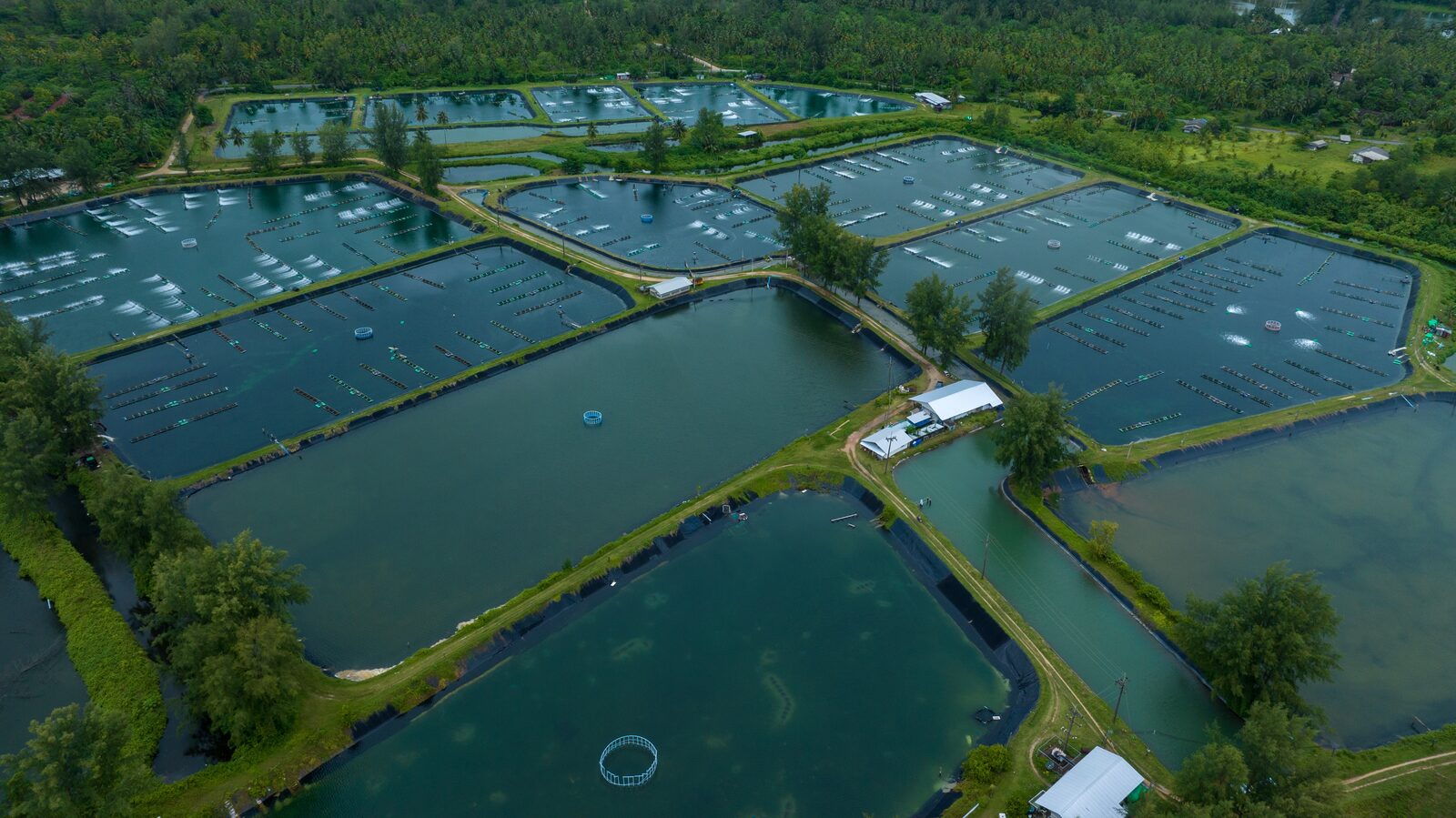
The business
The client is a family-controlled agro-industrial and food group headquartered in Bangkok. It has feed, farm and food divisions; the farm side covers livestock and aquaculture, shrimp and fish among them. The group operates in around 17 countries and exports to more than 40. Nobody was going to question whether it was a qualifying treaty enterprise. The work was in the U.S. structure and in the three people who were going to run the operation.
Why the family went to the United States
For years the group had sold into the United States through importers. Its U.S. customers were mostly restaurant groups and specialty grocers, and they had started asking for stock held in the United States rather than shipped to order, and for the group's own traceability documentation, from post-larvae to harvest, to travel with each consignment. The importer model could give them neither. Thai shrimp has lost bulk-volume share to Ecuador, India and Vietnam on price. Traceability is where Thai product still commands a premium, and the family decided to sell that premium directly.
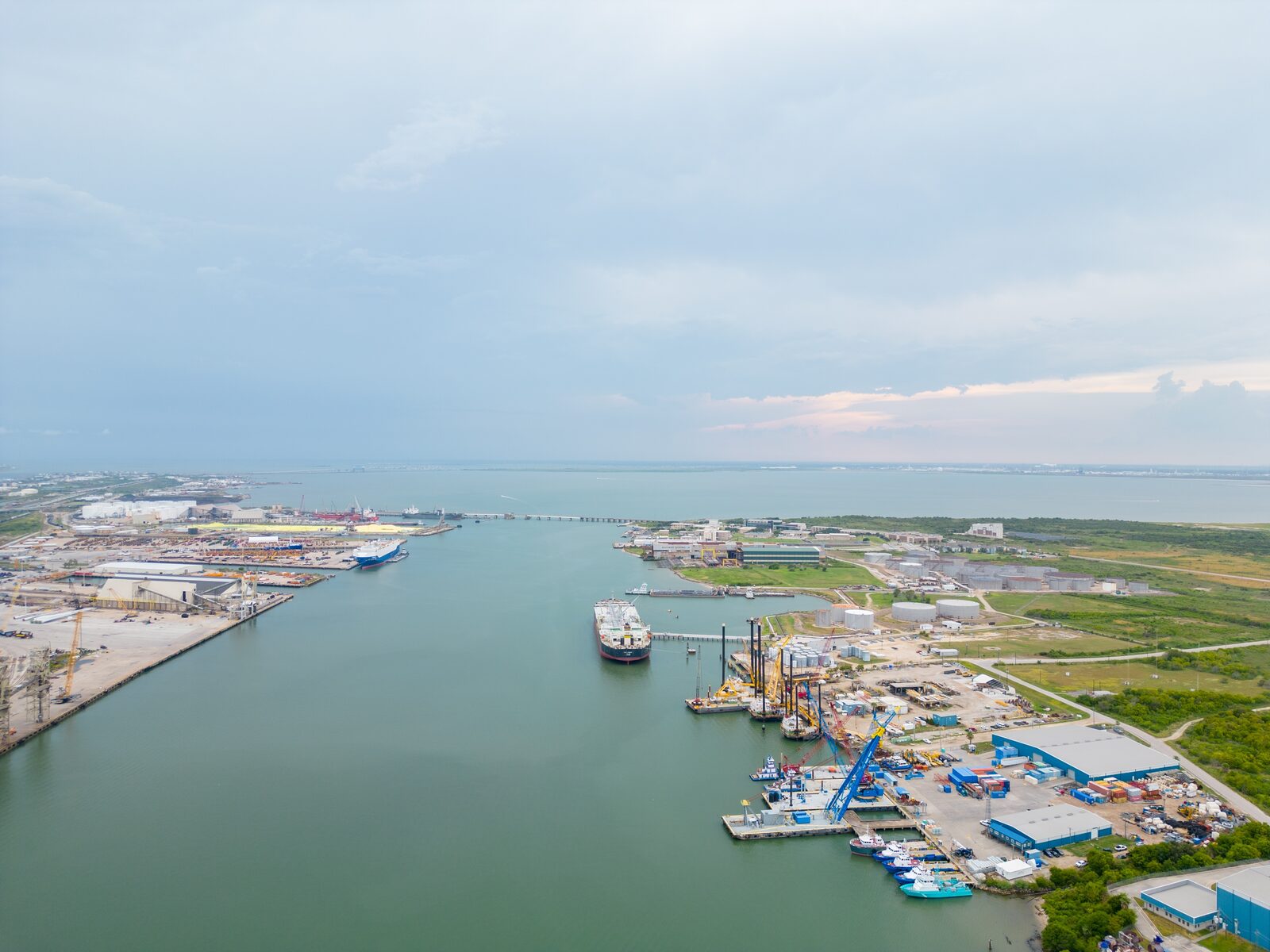
The Galveston frozen storage facility
The U.S. company opened a frozen storage facility in Galveston, Texas. Containers from Thailand land there and the product is held under the group's own traceability protocols until it ships to U.S. buyers, which now takes days rather than weeks. The facility took on local warehouse and logistics staff from the start. That hiring also dealt with the marginality question, which is often the weakest point in a first E-2 filing and was not an issue here.

The visa strategy: one Treaty Investor and two essential employees
We used both E-2 categories in the one matter. The U.S. company was set up so that a member of the controlling family held the qualifying ownership and control interest in it directly. He relocated as General Manager and applied as the E-2 Treaty Investor. Two Sales Managers applied alongside him as E-2 employees under the special-qualifications branch; their job was to build the U.S. customer book and run the commercial side of the network.
The General Manager's file had to establish ownership and control of the U.S. entity and show that the role was a working one. The Sales Managers raised a different question, the one 9 FAM 402.9-7(C) always raises: why did these two particular people need to be in the United States, and why could the company not hire in Texas? The answer was in their histories. Each had spent several years in the group's export division. Each already held the relationships with the U.S. customers the new company was going to supply, and each knew the product specifications and the traceability system that those customers were paying for. A local hire would have had to learn all of that from them.
Outcome
All three E-2 visas were approved through the U.S. Embassy Bangkok E-Visa Unit. The General Manager and both Sales Managers relocated, and the Galveston facility and the distribution network opened on schedule.
Where Thai Applicants Apply
U.S. Embassy Bangkok: the processing post
Thai E-2 applications go to the E-Visa Unit at the U.S. Embassy in Bangkok, which also deals with E-1 Treaty Trader cases. Each applicant completes Form DS-160 and pays the MRV fee, an interview is booked, and the complete E-visa file goes to the Unit ahead of the interview. The Embassy says its review can take up to four weeks and that the documents must be with the Unit at least 15 business days before the interview date. Miss that and the interview moves back by at least three weeks. An appointment can be rescheduled three times; after that the fee is payable again.
Source: U.S. Embassy Bangkok, Treaty Trader and Treaty Investor visas.
U.S. Embassy Bangkok: where Thai E-2 applications are filed
U.S. Embassy Bangkok, E-Visa Unit
95 Wireless Road (Witthayu Road), Lumpini, Pathumwan
Bangkok 10330, Thailand
Telephone: +66 2 205 4000
E-Visa Unit email: [email protected]
Website: Treaty Trader and Treaty Investor visas, U.S. Embassy Bangkok
Map and directions (Google Maps)
Nearest BTS station: Phloen Chit. Applicants attend in person for the interview; the supporting file must reach the Unit at least 15 business days beforehand.
Key authority
- Statute: INA §101(a)(15)(E)(ii), 8 U.S.C. §1101 (treaty investor classification); INA §214, 8 U.S.C. §1184 (admission, period of stay and spouse work authorisation); INA §248, 8 U.S.C. §1258 (change of status)
- Consular regulations: 22 CFR 41.51 (treaty trader and treaty investor visa issuance, including employees)
- Foreign Affairs Manual: 9 FAM 402.9
- Regulations: 8 CFR 214.2(e)
- Reciprocity: U.S. Visa Reciprocity Schedule, Thailand
Benefits
Each admission gives up to two years of E-2 status, renewable for as long as the business qualifies. The spouse may work for any employer. Children under 21 may come too and attend school.
E-2 Visa Application Process for Thai Nationals
- Choose or form the U.S. business. Real, active, commercial. A shelf company with a bank account is none of those.
- Commit the investment. The Embassy wants to see the money spent or irrevocably committed, and at risk, before it issues the visa, which is the part clients find hardest.
- Prepare the business plan and the evidence on source of funds, ownership, control and marginality.
- Complete Form DS-160 for each applicant, dependants included. Our DS-160 guide walks through the form field by field.
- Send the E-2 file to the Bangkok E-Visa Unit at least 15 business days before the interview.
- Attend the Bangkok interview. The officer will want the applicant, not the lawyer, to explain the business, where the money came from and what happens in year one.
- Enter the U.S. and run the business. An E-2 holder is expected to be developing and directing the enterprise that was approved, and the Embassy will ask about that at renewal.
E-2 Employee Visas for Thai Nationals: Executives, Supervisors and Essential Employees
A U.S. business that is at least 50 percent Thai-owned can bring Thai employees to the United States in E-2 status in two capacities. Executives and supervisors qualify on the strength of the position: it has to carry responsibility for the operation or a major part of it. The other category, the employee with special qualifications who is essential to the enterprise, is harder to document and is the one we used for the Sales Managers in the case study. The employee must be Thai in either case, matching the nationality of the treaty enterprise. Thai companies use this provision far more often than the L-1 when they open a U.S. operation, because it does not require a year of prior employment abroad and the U.S. entity does not need to have been trading for a year.
E-2 Visa Thailand Cost and Investment: How Much Do You Need to Invest?
There is no minimum in the regulations. The test is whether the amount is substantial for the particular business and enough to get it trading. A trading or consulting business can qualify on far less than a restaurant or a cold storage facility; our page on finding an E-2 qualifying business goes through the trade-offs. USD 100,000 is the figure most Thai individual applicants have in mind and it is a reasonable one; corporate expansions run to multiples of that.
Some spending is treated with suspicion. Consular officers have been known to discount professional fees and the purchase of a vehicle when totting up the qualifying investment, so it pays to agree with counsel what the money will be spent on before it is spent. On source of funds, dividends, savings and the proceeds of selling a business are all acceptable provided the trail can be documented from the Thai end. Where the investment is the purchase of an existing business, the price can be held in escrow pending visa issuance; our U.K. site explains the mechanics in its note on E-2 escrow, and its source of funds guide applies equally to a Thai file.
How much does the E-2 visa cost for a Thai family?
| Applicants | Number | MRV fee (USD 315 each) | Reciprocity fee | Government total |
|---|---|---|---|---|
| Investor only | 1 | 315 | 0 | USD 315 |
| Investor and spouse | 2 | 630 | 0 | USD 630 |
| Investor, spouse and two children | 4 | 1,260 | 0 | USD 1,260 |
Government fees only. Legal fees, business plan costs and the investment itself are separate; our U.K. site carries a full E-2 visa cost breakdown and the government components are the same for a Thai applicant. A dependant who is not a Thai national may be charged the reciprocity fee of his or her own country. See the E-2 visa cost guide for the full breakdown.
Visa Integrity Fee
H.R. 1, the 2025 budget reconciliation act, created a Visa Integrity Fee for each non-immigrant visa issued, set at not less than USD 250 and subject to annual adjustment. As of mid-2026 the fee is not being collected: DHS has said that implementation needs cross-agency coordination and will be announced in a later publication. It is not included in the table above. Thai applicants should budget for it and check the State Department and Embassy instructions current at the time of filing.
How Long Is an E-2 Visa Valid for a Thai National?
Under the current reciprocity schedule a Thai E-2 visa is issued for six months, multiple entries. British applicants get five years, which is why Thai clients who have read the U.K. material sometimes assume the same. The six months is the life of the visa, meaning the window in which the holder can present at the border. It is not the length of stay. On each admission U.S. Customs and Border Protection grants E-2 status for up to two years, so an investor who enters in month five can still run the business for two years after that.
A Thai E-2 holder has two dates to watch: the visa's six-month validity and the two-year admission stamp. An investor who wants to stay on without travelling files Form I-129 to extend status before the two years run out. An investor who travels after the six-month visa has lapsed needs a new visa from Bangkok before coming back, and the Unit will look at the business again when issuing it. There is no cap on the number of renewals; see our E-2 renewal guide.
Consular Processing versus Change of Status
An applicant outside the United States files Form DS-160 and the E-visa package in Bangkok and enters on the visa. An applicant who is already in the United States in another status, a B-1 visitor who has been setting up the company for example, has a second option: the U.S. company files Form I-129 with USCIS asking for the applicant to be reclassified as E-2, premium processing is available, and on approval the applicant holds E-2 status from that date without leaving the country. The applicant does not, however, hold a visa, and the first trip abroad requires an E-2 visa from a consular post, normally Bangkok for a Thai national, and the Unit examines the case afresh. For that reason we file in Bangkok from the start unless there is a reason to stay put; the choice is discussed in more depth in our note on consular processing versus change of status. Our Form I-129 guide covers the change of status filing.
Can I apply for an E-2 visa from outside Thailand?
E-2 visas are issued only at U.S. embassies and consulates abroad, and applicants normally apply at the post covering their place of residence. A third-country post may accept the case, but many posts restrict E cases to residents and the State Department warns that qualification can be harder to establish away from home. A Thai national living outside Thailand should take advice before filing.
Can an E-2 visa lead to an EB-5 green card?
Not directly, but a good many of our E-2 clients end up with a green card through the EB-5 Immigrant Investor Program, sometimes by growing the same business to the EB-5 threshold. Our Singapore site has an EB-5 guide written for investors in the region. Since USCIS Policy Memorandum PM-602-0199 of 21 May 2026, which directs officers to treat adjustment of status as discretionary relief and to apply heightened scrutiny, we plan the green card stage, and whether it will run through USCIS or through the consulate, at the same time as the E-2 rather than afterwards.
How Long Does an E-2 Visa Application Take?
- Business incorporation and corporate documentation: one to eight weeks
- Business plan preparation: two to four weeks
- E-visa file submission and Embassy review: up to four weeks, with documents due 15 business days before the interview
- Consular interview and visa issuance
The Embassy publishes no end-to-end figure. Two to four months from incorporation to visa is what we plan around for a well-prepared case, but check the Embassy's current guidance and our E-2 visa processing time guide before booking anything.
Can I Bring My Family to the U.S. on an E-2 Visa?
Yes. A spouse and children under 21 may accompany the investor as E-2 derivatives. An E-2 spouse is authorised to work by virtue of that status under INA §214(e)(6); the I-94 annotated E-2S is itself evidence of work authorisation and a separate employment authorisation document is optional. Children may attend school but may not work. Each dependant files a separate Form DS-160 and pays the MRV fee. See USCIS, E-2 Treaty Investors.
Basic Corporate Setup and Choice of Business Entity
The business needs a physical U.S. address, and a lease or a purchase makes a better impression than a virtual office. Most of our Thai clients use a limited liability company, though the choice of entity turns on the owners' tax position and on whatever group sits above the U.S. company. A bank account, an IRS employer identification number and the usual corporate paperwork follow. Our corporate and tax lawyers handle that alongside the immigration work: more on setting up your U.S. business, a guide to starting a U.S. business, and a companion guide on our Singapore site to opening a business in the USA from Southeast Asia.
Contact Davies & Associates: Asia Region
Matters for Thai clients are run from our Singapore office, working with our U.S. offices in New York, Miami, Los Angeles and Houston. The Singapore team publishes its own E-2 visa guide and E-2 visa lawyer pages at usimmigrationadvisor.sg, and you can reach the office through its contact page. Clients who divide their time between Thailand and Britain can also use our London team's site, usimmigrationadvisor.co.uk, and its contact page.
Davies & Associates, Singapore (Immigration Advisory)
160 Robinson Road, #14-04, Singapore Business Federation Centre, Singapore 068914
Telephone: +65 9615 0528
Request a free E-2 assessment → If you are still choosing counsel, our guide to choosing an E-2 visa lawyer sets out the questions to ask.
Frequently Asked Questions: E-2 Visa Thailand
The questions Thai clients ask most. Our general E-2 visa FAQ covers a wider range.
What is an E-2 visa?
An E-2 visa is a U.S. non-immigrant investor visa. It allows a national of a treaty country, and Thailand is one, to enter, live and work in the U.S. by investing in a business there and running it.
Who qualifies for an E-2 visa?
A Thai national who has made a substantial investment, at risk, in a real operating U.S. business, and who will develop and direct that business. Thai applicants file through the U.S. Embassy in Bangkok.
Can Thai nationals apply for the E-2 visa in Bangkok?
Yes. The E-Visa Unit at the U.S. Embassy on Wireless Road handles E-1 and E-2 cases for Thai nationals. It reviews the DS-160 and the supporting file before the interview, and questions about a pending file go to [email protected].
How much investment is needed for an E-2 visa?
There is no fixed minimum. The investment has to be substantial when set against the cost of starting or buying the particular business, and enough for that business to operate. A figure of USD 100,000 or more is common; smaller service businesses have qualified on less.
How long does an E-2 visa last for Thai nationals?
Under the current State Department reciprocity schedule the visa is issued for six months with multiple entries. Each admission on the visa gives up to two years of E-2 status, and the visa can be renewed for as long as the business continues to qualify.
Is there a reciprocity fee for Thai E-2 applicants?
No. The State Department reciprocity schedule for Thailand lists no issuance fee for the E-2, so a Thai applicant pays the MRV application fee and nothing more at the Embassy. The trade-off in the same schedule is the six-month validity of the visa itself.
What happens at the Bangkok E-2 visa interview?
The E-Visa Unit reviews the DS-160 and the supporting file before the interview, so the file needs to be complete when the DS-160 is submitted rather than assembled afterwards. At the interview the officer asks about the business, the investment, where the money came from and how the applicant intends to run the business in the U.S.
Can family members accompany an E-2 visa holder?
Yes. A spouse and children under 21 may come as E-2 derivatives. The spouse is authorised to work by virtue of E-2 status, and children may attend school.
Can I change status to E-2 from inside the U.S.?
Yes, by filing Form I-129 with USCIS. A change of status gives E-2 status but no visa, so an E-2 visa still has to be obtained at a U.S. consular post, normally Bangkok, before re-entering after any trip abroad.
What types of E-2 visas are available?
E-2 Treaty Investor visas for the owner who invests in and directs the business; E-2 employee visas for executives, supervisors and essential employees of a Thai-owned U.S. business, who must themselves be Thai nationals; and E-2 derivative visas for spouses and children.
Is an E-2 visa a path to a Green Card?
Not on its own. It is a non-immigrant visa and the holder has to intend to leave when status ends. A separate immigrant route such as the EB-5 can be pursued later, and often is.
Want legal help with your case? Speak with our E-2 visa lawyers for Thai investors →
In the Media
Davies & Associates in the Media
Davies & Associates lawyers are regularly quoted and featured in international media on U.S. immigration and investment matters.
Page Updates and Revision History
- September 2026: Page created. Treaty basis, reciprocity (six-month multiple-entry visa, no fee) and Bangkok E-Visa Unit timings verified against the State Department and Embassy Bangkok pages of 14 September 2026. Case study added with client permission, name withheld.
- 15 September 2026: Cross-links to the firm's U.K. site (usimmigrationadvisor.co.uk) added on escrow, source of funds, costs and the U.K. treaty comparison.
- 15 September 2026: Wording tightened after editorial review; no change to the substance, the fees or the law stated.
About the Authors
Mark I. Davies, Esq.
Chairman of Davies & Associates; focused on E visa strategy and complex consular filings.
 E-2 Visas for UK Citizens
 E-2 Visas for Italians
 E-2 Visas for Australians
 E-2 Visas for Singaporeans
 E-2 Visas in New York City
 E-2 Visas for Canadians
 E-2 Visas from the UAE
 E-2 Visas for Argentinians
 E-2 Visas for Germans
 E-2 Visas for French
 E-2 Visas for Turkish
 E-2 Visas for Grenadians
 E-2 Visas for Taiwanese

Contact Davies & Associates Offices in Singapore
Check all of our locations around the world.
Looking to acquire an E-2 Visa Thailand Requirements and Process?
We are known for our creative solutions that obtain "impossible" visas. We solve the most complex immigration problems for businesses, investors, individuals, and families.
E-2 Visa Thailand Requirements and Process Immigration lawyer near meSeveral lawyers told me I would not be able to get a TN visa. Two weeks after contacting Davies & Associates I was working in New York, visa in hand.
Individual seeking 'Impossible' TN VisaD&A was very detail-oriented and very thorough in what they did. They worked on my case 24/7 and were very patient in answering all my questions.
E-2 Visa ClientMy case felt complex but D&A managed the whole process carefully and helped me move seamlessly from one stage to the next.
E2 + CBI ClientD&A was my guiding light through the entire EB-5 process.
EB-5 Visa ClientI would definitely be a big advocate for the rest of my life for anyone wanting to explore the Grenada Citizenship by Investment Programme leading to the E-2 visa. The most important thing is a good team behind you. With Davies & Associates, you're in safe hands... you need someone who can support you on the ground and, again, you are well taken care of by D&A. The people are really warm, very helpful and quite open-minded when it comes to business... Not to mention as a passport it's great from a travel perspective... It's just 4 to 5 hours from New York.
Grenada CBI + E2 Visa ClientThe entire process of getting an EB-5 visa is handled in a professional way by Mark Davies and his team. EB-5 is a wonderful option for anyone considering moving to the United States if you have the means. I was hoping to use the H-1B route for my children, but it became unreliable and so I looked to the EB-5 visa instead. It is great for anyone who has the resources. Mark gives you the first meetings himself which gives you great comfort. Both Mark and Sanjay are abundantly available and I even had the pleasure of hosting them at my house.
Parent of 2 EB-5 visa holdersI'm in the process of extending my L-1 visa. I submitted a few questions regarding my case, and he contacted me back almost immediately, both by email and telephone. Unlike other attorneys I met before, he gave me the impression of knowing off the top of his head what kind of visa I have, and what actions had to be taken to extend it. He is very thorough and clear regarding the process and what to expect in terms of timelines and issues that may arise. He is constantly in contact, so you definitely know he's working on your case.
L-1B Visa HolderMark Davies is a joy to work with. His extensive knowledge, speedy response and attentive service took away all my fears of dealing with immigration and visa applications. He is very generous with his time in explaining every step along the way and I have already and will in the future recommend him to anybody who is looking for an immigration lawyer.
E2 Visa for Small Professional Business With International OfficesDavies & Associates assisted us with an immigration emergency involving my brother's fiancée who was outside the United States. They assisted us in a highly professional manner, working with the relevant US embassy, US immigration and the governments of two other countries. As a result of their efforts the individual involved is now working in the United States. While their knowledge of the law is exemplary what really distinguishes this firm and attorney Davies from any other firm we have worked with is their dedication to customer service and their unrivaled level of professionalism.
Complex Fiancée Visa Need Involving Multiple International JurisdictionsSeveral lawyers told me I would not be able to get a TN visa. Two weeks after contacting Davies & Associates I was working in New York, visa in hand. I have recommended this firm to several friends and colleagues, they do an excellent job every time.
Individual Seeking 'Impossible' TN VisaI was qualified as a physician in a foreign country. Being on a J1 visa I was facing having to leave the United States and return to my home country. Davies & Associates secured one of only 30 J1 visa waivers available in my State, allowing me to work for a US hospital and remain in the United States.
Doctor Seeking J1 Visa WaiverI am very satisfied with the services Mark Davies has provided me. He has a very extensive knowledge in immigration laws and has a thorough approach to any case.
U Visa Applicant, A Victim of CrimeLooking to relocate or having trouble with a visa application?
We are known for our creative solutions that obtain "impossible" visas. We solve the most complex immigration problems for business, investors, individuals and families.
Request Free Consultation
New York Office World Trade Center:
1 World Trade Center, Suite 8500, New York, NY 10007
+1 212 537 9196
Map and Driving Directions
New York Office E69th Street:
200 E 69th Street, 2N, New York, NY 10022
+1 212 537 9196
Map and Driving Directions
California Office:
555 Anton Blvd, Suite 150, Costa Mesa, CA 92626
+1 949 620 1811
Map and Driving Directions
Philadelphia Office:
1500 John F Kennedy Blvd, Suite 450, PMB 41, Philadelphia, PA 19102
+1 215 525 1881
Map and Driving Directions
London Office:
69 Old Broad Street, Dashwood House, London EC2M 1QS, United Kingdom
+44 20 3884 1812
Map and Driving Directions
London Office Beaufort Court:
Beaufort Court, Admiral Way, London E14 9XL, United Kingdom
+44 20 3884 1812
Map and Driving Directions
Edinburgh Office:
28 Rutland Square, Edinburgh, Scotland, EH1 2BW
+44 131 392 0686
Map and Driving Directions
Milton Keynes Office:
The Pinnacle, 170 Midsummer Blvd, Milton Keynes MK9 1FE, United Kingdom
+44 7740 000769
Map and Driving Directions
Vietnam Office:
46th Floor, Bitexco Financial Tower, 2 Hai Trieu, Ben Nghe Ward, District 1, Ho Chi Minh City, Vietnam
+84 28 44582309
Map and Driving Directions
India Office:
Enam Sambhav C-20, G Block, Bandra-Kurla Complex, Mumbai 400051, Maharashtra
+91 720 856 4057
Map and Driving Directions
Italy Office:
Via Bonifacio Lupi 29, 50129 Firenze FI, Italy
+39 055 076 3054
Map and Driving Directions
Manila Office:
Unit 107, AIC Burgundy Empire Tower, ADB Ave. cor Garnet and Sapphire Streets, Ortigas Center, Pasig City 1605, Metro Manila, Philippines
+63 2 7215 7878
Map and Driving Directions
Sydney Office:
Level 12, 210 George Street, Sydney NSW 2000, Australia
+61 2 9156 1032
Map and Driving Directions
Perth Office:
Davies & Associates LLC, Level 1, 12 St Georges Terrace, Perth WA 6000, Australia
+61 2 9156 1032
Map and Driving Directions
Singapore Office:
160 Robinson Road, #14-04, Singapore Business Federation Centre, Singapore 068914
+65-9615-0528
Map and Driving Directions
Looking for an Immigration attorney?
Immigration lawyer near meList of US Embassies, Consulates and USCIS
List of Italian Embassies, Consulates and USCIS
Copyright ©2026 by Davies & Associates LLC.