










Mark I. Davies, Esq., J.D., University of Pennsylvania Law School, licensed by the SRA (SRA ID: 384468) in the UK, and a member of The Law Society of England & Wales, MBA, Wharton School of Business. Named a Top 25 EB-5 Immigration Attorney by EB5 Investors Magazine. Ranked Band 1 for E-2 visas in Singapore by Global Citizenship Services (2026). Licensed in the USA. Georgia State Bar member. AILA member.
E-2 Visa Lawyers for Thai Investors: Bangkok Embassy Filings
Partner-led E-2 representation for Thai investors and Thai companies filing through the U.S. Embassy in Bangkok.
Want the rules first? Read our E-2 visa guide for Thai nationals, then come back here for how we run the case.
Want the rules first? Read our E-2 visa guide for Thai nationals, then come back here for how we run the case.
We act in E-2 cases filed through the U.S. Embassy in Bangkok, for Thai nationals investing in a U.S. business and for Thai companies moving a general manager or other key staff into a new U.S. operation. Thai matters are run from our Singapore office with our U.S. offices in New York, Miami, Los Angeles and Houston, and with our London E-2 team for clients who also have interests in Britain. For the rules, start with our E-2 Treaty Investor visa guide and its Thailand chapter.
I qualified as a chartered accountant (ICAEW) before I qualified as a lawyer, and I am admitted in the United States and in England and Wales. That combination is the reason a good deal of our Thai E-2 work comes from family groups: the source-of-funds file for a group with a dozen companies and a history of inter-company loans is an accounting exercise before it is a legal one. The firm acts for Thai entrepreneurs, family businesses and corporate groups in E-2 Treaty Investor and E-2 employee applications through the Embassy in Bangkok.
Award-Winning E-2 Lawyer
Global Citizenship Services ranks Davies & Associates as a Band 1 E-2 visa law firm in Singapore, the office from which our Thai matters are run, and among the top three E-2 visa law firms in London, Paris and New York. This independent 2026 recognition reflects our experience advising treaty investors and entrepreneurs across Asia, Europe and the United States.
We are also proud to have been recognised as a Global Top 25 Investment Visa Law Firm for seven years by EB5 Investors Magazine.
Under our Firm Charter a senior partner is responsible for the structure and presentation of every E-2 application, whoever the client is. Each case is prepared against 9 FAM 402.9 and against the document and scheduling rules the U.S. Embassy Bangkok E-Visa Unit publishes.
In the Media
Davies & Associates in the Media
Davies & Associates lawyers are regularly quoted and featured in international media on U.S. immigration and investment matters.
What Sets Our Thailand E-2 Practice Apart
Three things, in practice. Source-of-funds work on Thai group accounts, inter-company flows and dividend histories is done by lawyers with financial training, because that is where Thai cases most often go wrong. We have run matters in which a family member applies as Treaty Investor while employees apply under the E-2 employee rules at the same time; the case study below is one. And the Thai side of the file is handled by our Singapore E-2 team in Bangkok office hours, while formation, leases, employment and tax on the American side sit with our U.S. offices. Clients with a foot in both Thailand and Britain can reach the London office through the U.K. site's contact page; its E-2 guide for British citizens shows how the same treaty rules read from the U.K. end.
Davies & Associates Thailand E-2 Team: Key Facts
| Service | E-2 Treaty Investor and E-2 employee visa representation |
| Clients | Thai entrepreneurs, family businesses, corporate groups and their employees |
| Filing post | U.S. Embassy Bangkok, E-Visa Unit |
| Regional office | Singapore, 160 Robinson Road |
| Lead attorney | Mark I. Davies, Esq. |
| Experience | Over 15 years advising E-2 treaty investors and EB-5 immigrant investors |
Current E-2 Rules and Updates for Thai Applicants
- Visa validity. Under the current reciprocity schedule Thai E-2 visas are issued for six months with multiple entries. Each admission gives up to two years of status, so travel and visa renewal have to be planned separately from the period of stay.
- Reciprocity fee. None for Thai nationals. The MRV fee of USD 315 is paid with each applicant's Form DS-160.
- Visa Integrity Fee. H.R. 1 created this fee at not less than USD 250 per visa issued, dependants included. It is not yet being collected, but applicants should allow for it.
- Adjustment of status. USCIS memorandum PM-602-0199 of 21 May 2026 directs officers to treat adjustment of status as discretionary relief and to apply heightened scrutiny. This bears on the later green card stage, not on the E-2 filing itself.
How the Bangkok E-Visa Unit Processes E-2 Cases
The Unit reads the Form DS-160 and the whole supporting file before the interview, and the Embassy says that can take up to four weeks. The documents have to be with the Unit at least 15 business days before the interview date; a late file moves the interview back by at least three weeks, and after three reschedules the MRV fee is payable again. The Embassy does not publish a start-to-finish figure. In our experience a well-prepared case runs two to four months from incorporation to visa; our E-2 processing time guide and E-2 process guide set out each stage.
| Stage | Timing |
|---|---|
| Company formation and corporate documents | 1 to 8 weeks |
| Business plan and evidence | 2 to 4 weeks |
| E-Visa Unit document review | Up to 4 weeks (Embassy figure) |
| Document deadline | 15 business days before the interview (Embassy rule) |
| Interview and visa issuance | Subject to appointment availability |
U.S. Embassy Bangkok: where Thai E-2 applications are filed
U.S. Embassy Bangkok, E-Visa Unit
95 Wireless Road (Witthayu Road), Lumpini, Pathumwan
Bangkok 10330, Thailand
Telephone: +66 2 205 4000
E-Visa Unit email: [email protected]
Website: Treaty Trader and Treaty Investor visas, U.S. Embassy Bangkok
Map and directions (Google Maps)
Nearest BTS station: Phloen Chit. Applicants attend in person for the interview; the supporting file must reach the Unit at least 15 business days beforehand.
Our E-2 Client Charter
Lawyers who have held the status themselves
I have held U.S. non-immigrant status myself and have advised treaty investors for more than fifteen years. There is not much the E-Visa Unit can ask that we have not prepared a client for before.
The filing and the transaction are the same job
The investment structure, the U.S. entity, the lease, the employment contracts and the Thai group's tax position all affect whether the visa is granted, and they also decide what the investor is left holding if it is not. We take on the transaction as well as the filing for that reason.
Direct access
Clients deal with the lawyers running the case.
How Our E-2 Lawyers Assist Thai Clients
The work starts with the investment itself: what it consists of, how the money gets from Thailand to the U.S. company, how it is placed at risk without being lost if the visa is refused, and how a family group's ownership is presented so that the treaty nationality and control tests are met. From there we build the evidence that the business is real. For a cold-storage facility that is leases, equipment and payroll; for a consultancy it takes more thought, because there is less to photograph.
The file that goes to Bangkok consists of a cover letter, the business plan, a source-of-funds narrative, the corporate documents and translations, arranged in the order the E-Visa Unit expects, with each applicant's Form DS-160 checked against it before submission. For E-2 employees we add job descriptions, organisation charts and the evidence of company-specific knowledge that distinguishes an executive, supervisor or essential employee (9 FAM 402.9-7(B) and (C), 22 CFR 41.51(b)) from a role that could be filled in Texas. The employee must be a Thai national. Before the interview each applicant is taken through the business, the investment and his or her own role until it can be explained without notes. Entity formation, EIN registration, leases and employment documents on the U.S. side are handled by our corporate and tax lawyers; see starting a U.S. business and our corporate services page.
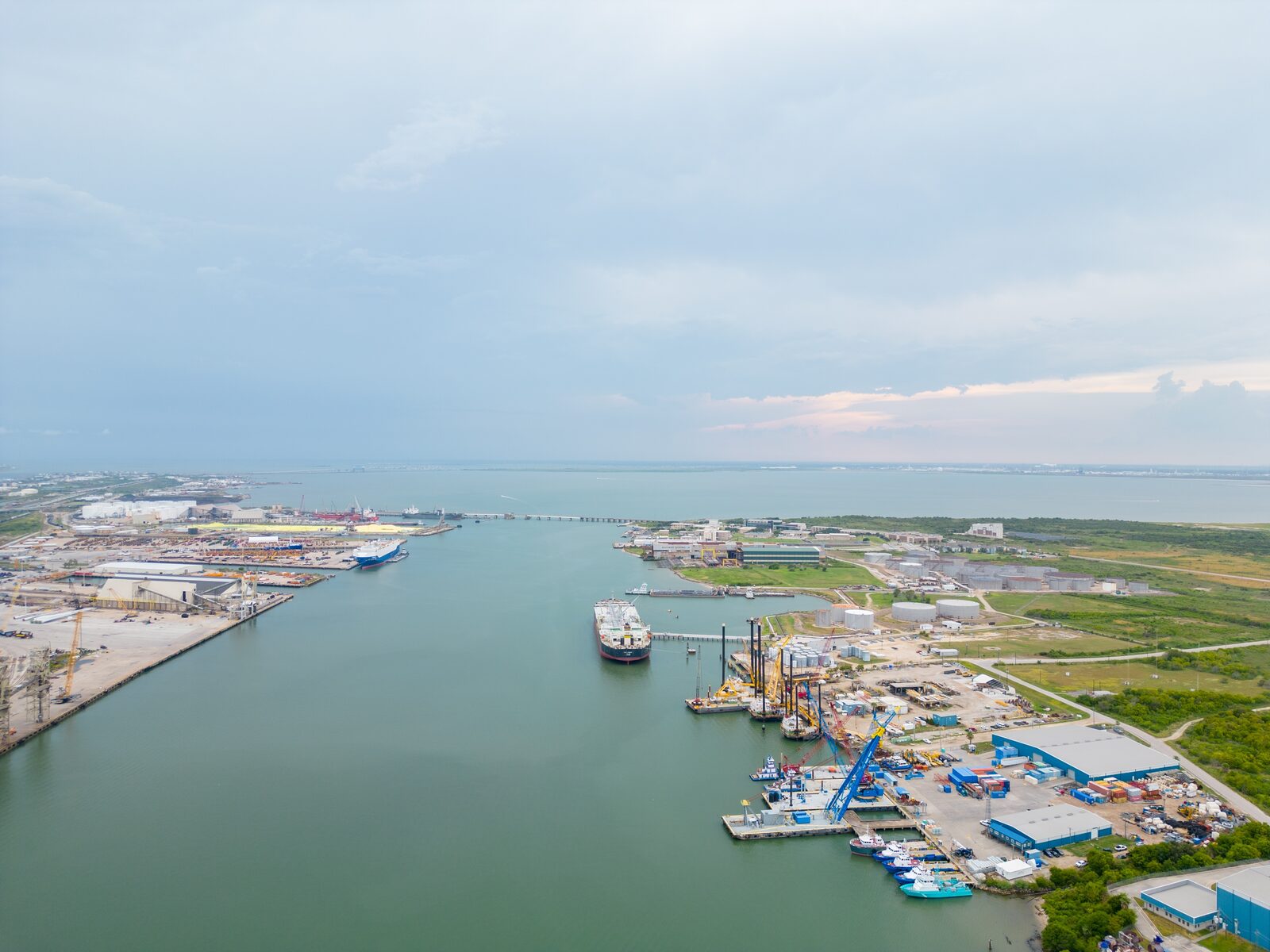
E-2 Case Study: Thai Agribusiness Family, U.S. Distribution Network, Galveston Frozen Storage
Client name withheld at the client's request. Company background is taken from the group's own published materials, with its permission.
Strategic lead
A Bangkok-headquartered, family-controlled agro-industrial group with aquaculture among its farm businesses decided to stop selling into the United States through importers and to hold its own traceable inventory there, in a frozen storage facility at Galveston, Texas. Qualifying as a treaty enterprise was not in question for a group of that size. Staffing was. The family wanted one of its own members in charge and two experienced sales managers from the Thai business with him.
The visa strategy
We used both E-2 categories in the same matter. The U.S. company was structured so that the family member held the qualifying ownership and control interest directly; he relocated as General Manager and applied as the E-2 Treaty Investor. The two Sales Managers applied as E-2 employees under the special-qualifications branch of 9 FAM 402.9-7(C), which meant showing why those two people had to be in the United States and why the company could not hire locally. Each had several years in the group's export division, held the relationships with the U.S. customers the new company would serve, and knew the product specifications and the traceability system those customers were buying.
Outcome
All three E-2 visas were approved through the U.S. Embassy Bangkok E-Visa Unit. The Galveston facility and the distribution network opened on schedule, with local warehouse and logistics staff on the payroll.
Read the full case study, including why the family chose the United States and Galveston →
Why Thai Investors Choose the E-2 Visa
Because it has no fixed minimum investment, unlike the EB-5, and no requirement for a year of qualifying employment abroad before the transfer, unlike the L-1A. It is open to an individual and equally to a Thai-owned company that wants to move its own Thai staff. It can be renewed for as long as the business qualifies (8 CFR 214.2(e)), and the spouse may work under INA §214(e)(6). For a Thai company opening a first U.S. operation it is usually the quickest category we can offer, though the six-month visa means the renewal cycle has to be managed.
What Businesses Qualify for an E-2 Visa?
Any real, operating, for-profit business can qualify. The sectors below are the ones in which our Thai clients have most often had an edge. The investment ranges come from our own files and are illustrative; there is no threshold in the law; the substantiality test is set out in 9 FAM 402.9-6(D) and 8 CFR 214.2(e)(14).
| Business type | Typical investment (USD) | Why Thai investors succeed |
|---|---|---|
| Food import, distribution and cold storage | 150,000 to 500,000 | Thai food safety and traceability systems support premium U.S. market entry, as in the case study above |
| Restaurants and hospitality | 150,000 to 350,000 | Thai cuisine and hospitality brands are well established with U.S. consumers |
| Manufacturing and light industry | 150,000 to 400,000 | Thailand's manufacturing base in automotive parts, electronics and textiles transfers to U.S. operations |
| Technology consulting and digital services | 75,000 to 150,000 | Scalable, low overhead, location-independent |
| Wellness, spa and beauty services | 80,000 to 180,000 | Strong U.S. consumer demand for Thai wellness expertise |
How our lawyers help investors find and qualify an E-2 business →
E-2 Extensions, Travel and Substantive Change
| Visa validity | Six months, multiple entries (current reciprocity schedule for Thailand) |
| Stay per entry | Up to two years of E-2 status (INA §214(a); 8 CFR 214.2(e)) |
| Extensions | Unlimited while the business qualifies (INA §214, 8 CFR 214.2(e)), by Form I-129 from within the U.S. (filed before status expires) or by a new visa in Bangkok |
| Substantive change | A change in ownership, business activity or structure must be reported and may need a new filing |
Because the Thai visa is short, we plan the renewal cycle with the first filing so that travel and status do not fall out of step. E-2 renewals and extensions →
Common Pitfalls for Thai Applicants and How to Avoid Them
Operating on a B-1/B-2 visa
Thailand is not in the Visa Waiver Program, so Thai nationals visit on B-1/B-2 visas. A B-1 visitor may look at a business, sign a lease and open a bank account, and may not run the business. Taking orders or paying staff before the E-2 is granted is one of the quicker ways to lose an otherwise good case.
Source of funds from a Thai family group
Money that has moved through several group companies, or that comes from a parent, needs a documented chain: Thai bank statements, audited accounts, dividend resolutions, gift deeds. Assemble them before the transfer. Reconstructing them afterwards is possible but slower and the Unit can tell the difference. The documentary standard is the one set out in our U.K. site's E-2 source of funds guide. Where the investment is a business purchase, the price can sit in escrow conditional on the visa; see our note on E-2 escrow.
Thai tax residence
Thailand's rules on foreign-sourced income and the U.S. rules on residence both reach an investor who spends most of the year in the United States. Take advice on both sides before relocating.
Marginality, and active management
A business that will only ever support the investor's family is marginal (9 FAM 402.9-6(E), 8 CFR 214.2(e)(15)); the file has to show capacity to employ U.S. workers or to earn significant income within five years. Separately, the investor must actually be running the business rather than owning shares in it, which means titles, signing authority and day-to-day involvement all have to be evidenced.
Applying from Within the United States
A Thai national who is already in the United States in another status, a B-1 visitor who has set up the company for instance, can change status to E-2 without leaving under INA §248 and 8 CFR 214.2(e). The U.S. company files Form I-129 with USCIS asking for the applicant to be classified as E-2, premium processing can be requested, and on approval the applicant holds E-2 status from that date. He or she does not hold a visa. The next trip abroad needs an E-2 visa from a consular post, normally Bangkok, before re-entry, and that means a Form DS-160 and the case being examined again. We therefore usually file in Bangkok from the start unless there is a good reason to change status first. See our Form I-129 guide and change of status versus consular processing.
E-2 Visa to a U.S. Green Card, and What the May 2026 USCIS Memo Means for Thai Investors
The E-2 is a non-immigrant visa and does not itself lead to permanent residence. A good many Thai investors move later to the EB-5 Immigrant Investor Program, sometimes by growing the same business to the EB-5 threshold; our Singapore site carries an EB-5 guide written for investors in the region. USCIS memorandum PM-602-0199 of 21 May 2026 directs officers to treat adjustment of status as discretionary relief and to apply heightened scrutiny. My own view is that consular processing of the immigrant visa in Bangkok is now the steadier route for most Thai E-2 holders, and that the green card plan should be settled at the same time as the E-2.
Thailand Treaty Note
Thai nationals qualify for the E-2 classification created by INA §101(a)(15)(E)(ii) under the Treaty of Amity and Economic Relations between the United States and the Kingdom of Thailand, signed on 29 May 1966 and in force since 8 June 1968; Thailand is listed among the E-2 treaty countries. The treaty supports both the E-1 Treaty Trader and the E-2 Treaty Investor classifications. Unlike the U.S. and U.K. treaty, it imposes no residency condition on applicants. The U.S. enterprise must be at least 50 percent owned by Thai nationals who are not U.S. lawful permanent residents (9 FAM 402.9-4(B)), and E-2 employees must themselves be Thai nationals. Visa validity for Thai nationals is governed by the State Department reciprocity schedule for Thailand.
E-2 Visa Bangkok Costs: Government Fees and Professional Fees
Government fees
| Fee | USD | Notes |
|---|---|---|
| MRV application fee | 315 | Per applicant, dependants included |
| Reciprocity fee | 0 | Thai nationals, E category |
| Visa Integrity Fee | Not yet collected | Statutory minimum USD 250 per visa issued, subject to adjustment; implementation pending |
| USCIS Form I-129 (change of status only) | Per current USCIS fee schedule | Not needed for consular processing |
Professional fees
Our fees for E-2 matters are fixed in advance and depend on the number of applicants and the complexity of the investment structure. Business plan preparation and U.S. entity formation are quoted separately. For a worked example of how the government, legal and investment components add up, our U.K. site's E-2 visa costs guide is the fullest treatment we publish. See the E-2 visa cost guide →
When the E-2 May Not Be the Right Route
We turn E-2 enquiries away in four situations.
- The investor wants permanent residence now: look at the EB-5.
- A Thai company with an existing U.S. affiliate wants to transfer a manager who has worked abroad for a year: the L-1A may suit better (see the L-1 guide on our Singapore site).
- The U.S. business will be majority-owned by non-Thai partners: the treaty nationality test fails.
- The investor cannot place the funds at risk before the visa is issued.
Frequently Asked Questions: E-2 Visa Lawyer Bangkok
For the substantive rules see the E-2 requirements page and our general E-2 FAQ; if you are comparing firms, our guide to choosing an E-2 visa lawyer is written for that.
Do I need an E-2 visa lawyer to apply in Bangkok?
No. Investors instruct counsel because the result usually turns on how the investment is structured, how the business is evidenced and how the file is presented to the E-Visa Unit, and rarely on the forms themselves.
Why choose a firm with an Asia office rather than a U.S.-only firm?
Thai source-of-funds documents, Thai corporate records and Thai tax filings are easier to work with for lawyers who see them every week. Our Singapore office runs Thai matters in the same time zone and works with our U.S. offices on the American side of the case.
Am I likely to qualify for an E-2 visa?
If you are a Thai national with a real U.S. business, money at risk in it and control of it, probably. How the file is put together matters a great deal, and every decision is discretionary.
What is a substantial investment for an E-2 visa filed in Bangkok?
There is no fixed minimum. The sum must be proportionate to the cost of the business and show a real commitment. Smaller service businesses can qualify on less than USD 100,000; a facility-based business needs more.
How long does the Bangkok E-Visa Unit take?
The Embassy says that review takes up to four weeks and that documents must arrive at least 15 business days before the interview. It publishes no end-to-end figure. Two to four months from incorporation to visa is a fair planning assumption for a well-prepared case.
How long is an E-2 visa valid for Thai nationals?
Six months with multiple entries under the current reciprocity schedule. Each admission gives up to two years of E-2 status, and the visa can be renewed for as long as the business qualifies.
Can a Thai company send its own managers to the U.S. on E-2 visas?
Yes. Where the U.S. business is at least 50 percent Thai-owned, Thai executives, supervisors and employees with essential skills can qualify for E-2 employee visas. A family member who holds the qualifying ownership interest may file as the Treaty Investor in the same matter.
What are the most common reasons E-2 applications are refused?
Thin evidence that the business is real and operating, funds not yet committed or not traceable, projections that do not meet the marginality test, and an applicant who cannot explain the business at interview.
How does the U.S. Embassy in Bangkok assess E-2 applications?
The officer applies 9 FAM 402.9 and 8 CFR 214.2(e): whether the business is real, whether the investment is substantial and at risk, whether the applicant is in a position to develop and direct it, and whether the business is more than marginal.
What do your E-2 lawyers actually do?
Assess the business, structure the investment, coordinate U.S. company formation, prepare the business plan and the evidence, assemble and file the E-visa package, and prepare each applicant for interview.
Who will work on my E-2 application?
A senior partner. Qualified attorneys do the legal work and support staff handle the documents, but the strategy and the presentation of the case sit with a partner.
Can you review my business before I invest?
Yes. A pre-investment review tells you whether the business and the proposed investment structure will meet the E-2 standards before any money is committed.
What documents do I need to get started?
Proof of Thai nationality, source-of-funds records, evidence of the capital commitment, U.S. company documents and a business plan. The full list depends on the business.
Is USD 100,000 enough for an E-2 visa?
Sometimes. It depends on what the business costs to start and on the strength of the structure and the documentation. A trading or consulting business may qualify on less; a facility-based business will need more.
Can you help with E-2 renewals and extensions?
Yes. A renewal needs evidence that the business is trading and still meets the treaty requirements, which is why we keep the file current from the first filing onwards.
Contact Davies & Associates: Thailand and Asia Region
Davies & Associates, Singapore (Immigration Advisory)
160 Robinson Road, #14-04, Singapore Business Federation Centre, Singapore 068914
Telephone: +65 9615 0528
Consultations by video or telephone for clients in Bangkok and across Thailand, and in person in Singapore and at our U.S. offices. The Singapore office can also be reached through usimmigrationadvisor.sg.
Page Updates and Revision History
- September 2026: Page created. Reciprocity (six-month multiple-entry visa, no fee) and Bangkok E-Visa Unit timings verified against the State Department and Embassy Bangkok pages of 14 September 2026. Case study added with client permission, name withheld.
- 15 September 2026: Cross-links to the firm's U.K. site (usimmigrationadvisor.co.uk) added on source of funds, escrow, costs and the London team.
About the Authors
Mark I. Davies, Esq.
Chairman of Davies & Associates; focused on E visa strategy and complex consular filings.
 E-2 Visas for UK Citizens
 E-2 Visas for Italians
 E-2 Visas for Australians
 E-2 Visas for Singaporeans
 E-2 Visas in New York City
 E-2 Visas for Canadians
 E-2 Visas from the UAE
 E-2 Visas for Argentinians
 E-2 Visas for Germans
 E-2 Visas for French
 E-2 Visas for Turkish
 E-2 Visas for Grenadians
 E-2 Visas for Taiwanese

Contact Davies & Associates Offices in Singapore
Check all of our locations around the world.
Looking to acquire an E-2 Visa for Thai Nationals?
We are known for our creative solutions that obtain "impossible" visas. We solve the most complex immigration problems for businesses, investors, individuals, and families.
E-2 Visa for Thai Nationals Immigration lawyer near meSeveral lawyers told me I would not be able to get a TN visa. Two weeks after contacting Davies & Associates I was working in New York, visa in hand.
Individual seeking 'Impossible' TN VisaD&A was very detail-oriented and very thorough in what they did. They worked on my case 24/7 and were very patient in answering all my questions.
E-2 Visa ClientMy case felt complex but D&A managed the whole process carefully and helped me move seamlessly from one stage to the next.
E2 + CBI ClientD&A was my guiding light through the entire EB-5 process.
EB-5 Visa ClientI would definitely be a big advocate for the rest of my life for anyone wanting to explore the Grenada Citizenship by Investment Programme leading to the E-2 visa. The most important thing is a good team behind you. With Davies & Associates, you're in safe hands... you need someone who can support you on the ground and, again, you are well taken care of by D&A. The people are really warm, very helpful and quite open-minded when it comes to business... Not to mention as a passport it's great from a travel perspective... It's just 4 to 5 hours from New York.
Grenada CBI + E2 Visa ClientThe entire process of getting an EB-5 visa is handled in a professional way by Mark Davies and his team. EB-5 is a wonderful option for anyone considering moving to the United States if you have the means. I was hoping to use the H-1B route for my children, but it became unreliable and so I looked to the EB-5 visa instead. It is great for anyone who has the resources. Mark gives you the first meetings himself which gives you great comfort. Both Mark and Sanjay are abundantly available and I even had the pleasure of hosting them at my house.
Parent of 2 EB-5 visa holdersI'm in the process of extending my L-1 visa. I submitted a few questions regarding my case, and he contacted me back almost immediately, both by email and telephone. Unlike other attorneys I met before, he gave me the impression of knowing off the top of his head what kind of visa I have, and what actions had to be taken to extend it. He is very thorough and clear regarding the process and what to expect in terms of timelines and issues that may arise. He is constantly in contact, so you definitely know he's working on your case.
L-1B Visa HolderMark Davies is a joy to work with. His extensive knowledge, speedy response and attentive service took away all my fears of dealing with immigration and visa applications. He is very generous with his time in explaining every step along the way and I have already and will in the future recommend him to anybody who is looking for an immigration lawyer.
E2 Visa for Small Professional Business With International OfficesDavies & Associates assisted us with an immigration emergency involving my brother's fiancée who was outside the United States. They assisted us in a highly professional manner, working with the relevant US embassy, US immigration and the governments of two other countries. As a result of their efforts the individual involved is now working in the United States. While their knowledge of the law is exemplary what really distinguishes this firm and attorney Davies from any other firm we have worked with is their dedication to customer service and their unrivaled level of professionalism.
Complex Fiancée Visa Need Involving Multiple International JurisdictionsSeveral lawyers told me I would not be able to get a TN visa. Two weeks after contacting Davies & Associates I was working in New York, visa in hand. I have recommended this firm to several friends and colleagues, they do an excellent job every time.
Individual Seeking 'Impossible' TN VisaI was qualified as a physician in a foreign country. Being on a J1 visa I was facing having to leave the United States and return to my home country. Davies & Associates secured one of only 30 J1 visa waivers available in my State, allowing me to work for a US hospital and remain in the United States.
Doctor Seeking J1 Visa WaiverI am very satisfied with the services Mark Davies has provided me. He has a very extensive knowledge in immigration laws and has a thorough approach to any case.
U Visa Applicant, A Victim of CrimeLooking to relocate or having trouble with a visa application?
We are known for our creative solutions that obtain "impossible" visas. We solve the most complex immigration problems for business, investors, individuals and families.
Request Free Consultation
New York Office World Trade Center:
1 World Trade Center, Suite 8500, New York, NY 10007
+1 212 537 9196
Map and Driving Directions
New York Office E69th Street:
200 E 69th Street, 2N, New York, NY 10022
+1 212 537 9196
Map and Driving Directions
California Office:
555 Anton Blvd, Suite 150, Costa Mesa, CA 92626
+1 949 620 1811
Map and Driving Directions
Philadelphia Office:
1500 John F Kennedy Blvd, Suite 450, PMB 41, Philadelphia, PA 19102
+1 215 525 1881
Map and Driving Directions
London Office:
69 Old Broad Street, Dashwood House, London EC2M 1QS, United Kingdom
+44 20 3884 1812
Map and Driving Directions
London Office Beaufort Court:
Beaufort Court, Admiral Way, London E14 9XL, United Kingdom
+44 20 3884 1812
Map and Driving Directions
Edinburgh Office:
28 Rutland Square, Edinburgh, Scotland, EH1 2BW
+44 131 392 0686
Map and Driving Directions
Milton Keynes Office:
The Pinnacle, 170 Midsummer Blvd, Milton Keynes MK9 1FE, United Kingdom
+44 7740 000769
Map and Driving Directions
Vietnam Office:
46th Floor, Bitexco Financial Tower, 2 Hai Trieu, Ben Nghe Ward, District 1, Ho Chi Minh City, Vietnam
+84 28 44582309
Map and Driving Directions
India Office:
Enam Sambhav C-20, G Block, Bandra-Kurla Complex, Mumbai 400051, Maharashtra
+91 720 856 4057
Map and Driving Directions
Italy Office:
Via Bonifacio Lupi 29, 50129 Firenze FI, Italy
+39 055 076 3054
Map and Driving Directions
Manila Office:
Unit 107, AIC Burgundy Empire Tower, ADB Ave. cor Garnet and Sapphire Streets, Ortigas Center, Pasig City 1605, Metro Manila, Philippines
+63 2 7215 7878
Map and Driving Directions
Sydney Office:
Level 12, 210 George Street, Sydney NSW 2000, Australia
+61 2 9156 1032
Map and Driving Directions
Perth Office:
Davies & Associates LLC, Level 1, 12 St Georges Terrace, Perth WA 6000, Australia
+61 2 9156 1032
Map and Driving Directions
Singapore Office:
160 Robinson Road, #14-04, Singapore Business Federation Centre, Singapore 068914
+65-9615-0528
Map and Driving Directions
Looking for an Immigration attorney?
Immigration lawyer near meList of US Embassies, Consulates and USCIS
List of Italian Embassies, Consulates and USCIS
Copyright ©2026 by Davies & Associates LLC.