









Mark I. Davies, Esq., J.D., University of Pennsylvania Law School, licensed by the SRA (SRA ID: 384468) in the UK, and a member of The Law Society of England & Wales, MBA, Wharton School of Business. Top 10 Investment Visa Lawyer. Licensed in the USA. Georgia State Bar member. AILA member.
Who This Surat EB-5 Page Is For
EB-5 for Surat Investors — In Brief
- Who it is for: Surat diamond merchants, textile manufacturers and exporters, and Gujarat business families seeking U.S. permanent residence — including parents planning for children's U.S. education and L-1 visa holders considering direct EB-5.
- Minimum investment: $800,000 in a Targeted Employment Area or $1,050,000 elsewhere, with creation of at least 10 full-time U.S. jobs.
- The hardest part for Surat cases: not the money — it is documenting a lawful, fully traceable source of funds, which is more complex for diamond and textile wealth.
- How we help: we build the source-of-funds record, coordinate RBI/FEMA-compliant transfers, prepare the immigrant petition (Form I-526E for a regional center investment, Form I-526 for a direct investment), and plan timing around visa backlogs and child age-out.
Reviewed by Sukanya Raman, Esq., Managing Attorney, Davies & Associates (India). Last reviewed: May 2026.
On this pageSource of fundsDiamond industry fundsRBI and FEMARegional center vs directChild age-out (CSPA)FAQsગુજરાતીમાં જુઓ
Explore this guide (all sections)
- ► Why Surat Investors Consider EB-5
- ► Source of Funds for Surat Applicants
- ► RBI and FEMA Considerations
- ► Diamond Industry Source of Funds
- ► Documents Surat Investors Should Prepare
- ► Regional Center vs Direct EB-5
- ► Case Study: Surat Diamond Merchant (Direct EB-5)
- ► The EB-5 Process
- ► Consular Processing in Mumbai
- ► EB-5 Child Age-Out and CSPA Protection
- ► L-1 to EB-5 Transition
- ► How We Help
- ► Official References
- ► FAQs: EB-5 Visa Lawyer in Surat
Illustrative past matter
From a Surat diamond workshop to a US jewellery chain
A Surat diamond merchant opened a speciality store in New York on an L-1A, grew it to a chain, then filed a direct EB-5 petition in which valued jewellery and diamond inventory counted toward the capital. Read the full case study →
Details modified to preserve confidentiality. Every EB-5 case depends on its own facts. Past results do not guarantee a similar outcome.
Award-Winning EB-5 Lawyers
We are privileged to have been named one of the top three E-2 visa law firms in London, Paris and New York by Global Citizenship Services. This independent recognition reflects our experience advising investors and entrepreneurs worldwide, including families from Surat and Gujarat.
We are also proud to have been recognised as a Global Top 25 Investment Visa Law Firm for seven years by EB5 Investors Magazine.
In the Media
D&A are a Leading EB-5 Authority for Indian and International Media
Davies & Associates lawyers are regularly quoted and featured in Indian and international media on EB-5 and U.S. immigration.
Surat has produced some of Gujarat's most successful business families. The city's diamond and textile industries have created significant wealth, and many of these families now have business interests, relatives, or investment goals in the United States. For those seeking permanent U.S. residency, the EB-5 investor visa offers a direct path, but only if the case is built correctly from the start.
The EB-5 program requires a minimum investment of $800,000 in a Targeted Employment Area (TEA) or $1,050,000 in a non-TEA project, along with the creation of at least 10 full-time jobs for U.S. workers (see our breakdown of EB-5 costs and fees). For Surat applicants, the legal challenge is not the investment amount itself. It is proving the lawful source of those funds to the satisfaction of USCIS adjudicators, particularly when the wealth originates from industries like diamond trading and textile manufacturing where financial structures can be complex.
📜 EB-5 Guide for Indian Investors
📜 EB-5 Costs and Fees
Why Surat Investors Consider EB-5
The motivations for Surat-based investors to pursue U.S. permanent residency are varied, but several themes recur. Children's education is often a primary driver. Many Surat families want their children to attend U.S. universities and have the option to remain in the country afterward. Permanent residence avoids dependence on future H-1B lottery selection, although the green card process itself has its own timing and eligibility considerations.
Business expansion is another common reason. Surat's diamond traders and textile exporters frequently do business with U.S. buyers, and having a permanent U.S. presence simplifies everything from banking relationships to lease negotiations. Some investors have already operated in the U.S. on L-1 or B-1/B-2 visas and want to formalize their status.
Quality of life, healthcare access, and long-term family planning also play a role. The Gujarati community in the United States is large and well established, particularly in New Jersey, the greater New York area, and parts of Texas and California. For many Surat families, the U.S. is not an unfamiliar destination but a place where they already have deep connections.
Source of Funds for Surat Applicants
Source of funds is the single most critical element of any EB-5 petition, and for Surat applicants it is often the most complex. Under 8 CFR §204.6, the investor must demonstrate that the capital was obtained through lawful means. The USCIS Policy Manual, Volume 6, Part G provides detailed guidance on how adjudicators evaluate this evidence.
Common sources of funds for Surat investors include:
- Business profits: Accumulated earnings from diamond trading, textile manufacturing, or other commercial operations
- Property sales: Proceeds from the sale of residential or commercial real estate in Surat, Mumbai, or elsewhere in India
- Family wealth: Gifts or inheritance from family members, which must be documented with supporting evidence of the donor's own source of funds
- Savings and investments: Bank deposits, mutual funds, fixed deposits, or other financial instruments accumulated over time
- Loans: Secured loans against personal assets, provided the borrower's own assets serve as collateral
Each of these sources requires a complete documentary trail. The capital invested in an EB-5 enterprise does not have to be cash. Under 8 CFR §204.6(e), “capital” also includes equipment, inventory, and other tangible property contributed to the new commercial enterprise. For a diamond or jewellery business, this can be significant, but tangible-property contributions must be properly valued and fully documented so that USCIS can confirm both the value and the lawful origin of the assets.
The Capital Must Be “At Risk”
Whatever form the capital takes, it must be genuinely placed “at risk” in the enterprise. EB-5 capital cannot carry a guaranteed return, and it cannot simply be parked in a protected account. USCIS looks for evidence that the investor's capital is actually deployed into the business and exposed to the chance of gain or loss for the purpose of creating jobs. A separate point worth understanding is that selecting a strong regional center project does not, by itself, resolve source-of-funds issues — USCIS still independently reviews the investor's personal lawful source and path of capital.
Before transferring EB-5 funds, speak with an attorney about how the source and path of your capital will be documented — this is the part of the case that most often determines the outcome. Discuss source-of-funds planning →
RBI and FEMA Considerations
Moving investment capital from India to the United States is subject to the regulatory framework of the Reserve Bank of India (RBI) and the Foreign Exchange Management Act (FEMA). These rules directly affect how Surat investors structure their EB-5 investments.
Liberalised Remittance Scheme (LRS)
Under the LRS, Indian residents may remit up to USD 250,000 per person per financial year for permissible capital account transactions, including investment in foreign securities and real estate (see the RBI Liberalised Remittance Scheme FAQ). For EB-5 purposes, this means that a single individual may need more than one financial year to transfer the full investment amount. Family members can each use their own LRS quota, but each remitter must independently demonstrate compliance.
Tax Collected at Source (TCS)
Outward LRS remittances above a specified threshold are subject to Tax Collected at Source (TCS). Both the TCS rate and the threshold at which it applies have changed in recent years and differ depending on the purpose of the remittance, so investors should confirm the current figures with their authorized dealer bank or Indian tax counsel before planning a transfer. TCS is generally adjustable against the remitter's income tax liability, but it affects cash-flow planning and the timing of the investment.
Overseas Direct Investment (ODI)
Where the EB-5 investment involves establishing or acquiring an interest in a foreign entity (as opposed to a passive regional center investment), the transaction may fall under FEMA's ODI regulations. This requires compliance with RBI reporting requirements and, in some cases, prior approval. Proper structuring at this stage avoids complications later.
USCIS does not adjudicate compliance with Indian law, but it does look for evidence that funds were transferred through legitimate banking channels. Any irregularity in the transfer documentation can lead to a request for evidence or, in serious cases, a denial.
Please note: Indian tax, RBI, and FEMA rules — including LRS limits, TCS, and ODI requirements — change periodically and depend on the specific facts of each remittance. The current position should always be confirmed with Indian tax counsel or an authorized dealer bank. This page provides general information and is not Indian tax or regulatory advice.
Diamond Industry Source of Funds
Surat's diamond industry presents unique source of funds challenges for EB-5 purposes. The diamond trade has historically involved complex supply chains with multiple intermediaries, international transactions in various currencies, and business practices that may not always align with the documentation standards USCIS expects.
Common issues include:
- Multi-layered transactions: A rough diamond may pass through several entities before it is cut, polished, and sold. Tracing the profit from a specific transaction back through the chain requires detailed records
- Family partnerships: Many diamond businesses in Surat are structured as Hindu Undivided Families (HUFs) or partnership firms with multiple family members. Documenting individual ownership shares and profit distributions requires careful analysis of partnership deeds and tax returns
- Cash components: While the diamond trade has moved significantly toward formal banking channels in recent years, historical cash transactions can create gaps in the documentary trail that must be addressed
- International trade accounts: Diamond companies that buy rough stones from international suppliers and sell polished diamonds to U.S. buyers maintain accounts in multiple jurisdictions, each of which must be reconciled
None of these issues are disqualifying. But they require experienced legal handling to present the source of funds narrative in a way that USCIS adjudicators can follow and accept.
Documents Surat Investors Should Prepare
A well-organized documentary record is what turns a complex source-of-funds story into an approvable petition. While every case is different, Surat-based EB-5 applicants — particularly those in the diamond and textile trades — should generally expect to gather:
- Income tax returns for the investor and, where relevant, the family business, covering several years
- Audited financial statements and annual accounts of the business
- GST records and registrations evidencing business turnover and tax compliance
- Partnership deeds and, where applicable, Hindu Undivided Family (HUF) records showing ownership shares and profit distribution
- Chartered accountant (CA) letters and certificates reconciling income, capital accounts, and the path of funds
- Bank statements tracing income, accumulation, and the transfer of investment capital
- Sale deeds for any property sold to fund the investment
- Gift deeds and donor source-of-funds evidence where family wealth is used
- Diamond or jewellery inventory valuation reports where tangible property is contributed as capital
- Export invoices and foreign buyer contracts evidencing trade income
- Loan and security documentation where the investment is funded by secured borrowing
Not every case needs every document, and some cases need additional records. We review each investor's situation and build a document plan before the petition is drafted. For Surat diamond and textile families, the legal strategy is often to organize these records into a clear source-and-path-of-funds chronology before the petition (Form I-526E or Form I-526) is drafted.
Regional Center vs Direct EB-5
Surat investors have two main options for structuring their EB-5 investment:
| Factor | Regional Center | Direct Investment |
|---|---|---|
| Investment Amount | $800,000 (TEA) or $1,050,000 | $800,000 (TEA) or $1,050,000 |
| Job Creation | Indirect and induced jobs count (economic modeling) | Must create 10 direct full-time W-2 jobs |
| Investor Involvement | Passive investor; limited control over operations | Active management or policy-making role |
| Business Risk | Capital at risk in a pooled investment | Capital at risk in a business the investor controls |
| Best For | Investors who prefer a hands-off approach | Entrepreneurs who want to operate a U.S. business |
Many Surat investors choose the regional center route because it does not require day-to-day management of a U.S. business. However, Surat entrepreneurs who want to build and run their own U.S. company, particularly those already operating in the U.S. market through an L-1 visa, often prefer direct EB-5, where they control the enterprise and its growth. The case study below illustrates exactly this direct EB-5 path.
⚠ Regional Center Grandfathering Deadline — September 30, 2026
The EB-5 Regional Center Program is currently authorized through September 30, 2027. However, under the EB-5 Reform and Integrity Act of 2022, regional center petitions (Form I-526E) filed on or before September 30, 2026 receive statutory “grandfathering” protection — meaning USCIS must continue to adjudicate them even if the Regional Center Program later lapses or is not reauthorized. Petitions filed after that date do not have this protection. Surat investors considering a regional center EB-5 investment should factor this deadline into their timing. Grandfathering does not change eligibility rules, guarantee approval, or remove visa backlogs.
Direct EB-5 is different. The grandfathering deadline is tied to the Regional Center Program. A direct EB-5 case — where the investor capitalizes and operates their own U.S. business, like the diamond-jewellery case study below — does not depend on regional center reauthorization, so this particular September 2026 deadline is not a constraint on the direct route. Direct EB-5 still has its own timing considerations, including visa backlogs and child age-out, discussed later on this page.
See our EB-5 updates page for the latest program and Visa Bulletin developments →
Regardless of the route chosen, the source of funds requirements under 8 CFR §204.6 are identical. The investment must be at risk, and the capital must be shown to have been lawfully obtained.
Case Study: A Surat Diamond Merchant's Direct EB-5 Journey
From a Surat Diamond Workshop to a U.S. Jewellery Chain
Background: A Surat-based diamond merchant with a family jewellery workshop wanted to build a retail jewellery business in the United States serving the Indian-American community.
First step – L-1A visa: The client opened a speciality Indian jewellery store in New York's diamond district, contributing jewellery inventory and capital to the new U.S. business, and obtained an L-1A intracompany transfer visa as the executive establishing and managing the U.S. operation.
Growth: The client grew the business into a chain of speciality Indian jewellery stores. At three stores, the U.S. company employed eight workers.
Direct EB-5 filing: With the U.S. company established and operating, the client filed a direct EB-5 petition. The qualifying EB-5 capital included a substantial contribution of jewellery and diamond inventory to the U.S. enterprise — a contribution well above the EB-5 capital threshold — which is a recognised form of capital under 8 CFR §204.6(e). The petition was supported by a business plan projecting growth to 13 employees and four stores within two years. For direct EB-5 cases, the business plan must connect the investment to credible job creation evidence, not merely describe future growth.
Result: By the time USCIS issued a Request for Evidence, the business had already grown beyond the projections in the plan — five stores and 22 U.S. employees, well above the 10-job EB-5 requirement. The case was approved following the response to the RFE.
Why it worked: The direct EB-5 route suited an entrepreneur who wanted to control and operate the U.S. business. Properly valued and documented inventory contributions counted toward the EB-5 capital, and actual job creation that exceeded the business plan gave USCIS strong evidence at the RFE stage.
Case studies describe past matters and are provided for illustration only. Certain details may be modified to preserve client confidentiality. Every EB-5 case depends on its own facts, evidence, and the law in effect at the time of filing. Past results do not guarantee a similar outcome.
The EB-5 Process
The EB-5 process for Surat applicants follows a structured sequence:
- Source of funds preparation: Gather and organize all documentation proving the lawful origin and path of the investment capital
- Project selection and due diligence: Evaluate regional center projects or identify a direct investment opportunity, reviewing offering documents, job creation methodology, and financial projections
- Investment and transfer: Transfer the investment capital to the U.S. project or business entity through proper banking channels, in compliance with RBI/FEMA requirements
- Immigrant petition filing: File Form I-526E (regional center investment) or Form I-526 (direct investment) with USCIS, accompanied by all source of funds documentation and evidence of the qualifying investment
- USCIS adjudication: USCIS reviews the petition and may issue a request for evidence if additional documentation is needed
- National Visa Center: After petition approval, the case is transferred to NVC for immigrant visa processing
- Consular interview: Attend the immigrant visa interview at the U.S. Consulate in Mumbai
- Conditional residency: Enter the U.S. as a conditional permanent resident (two-year green card)
- I-829 petition: File to remove conditions and receive the permanent (ten-year) green card
Consular Processing in Mumbai
After petition approval and NVC processing, Surat-based applicants attend their immigrant visa interview at the U.S. Consulate General in Mumbai. This is the final stage before receiving the EB-5 immigrant visa.
The consular stage involves:
- Medical examination: Applicants must complete a medical exam with a consulate-approved panel physician before the interview date
- Document preparation: All original documents, translations, civil documents (birth certificates, marriage certificates, police clearances), and financial records must be organized and available
- Visa interview: The consular officer reviews the approved petition and the applicant's admissibility under U.S. immigration law. The officer may ask about the source of funds, the investment, and the applicant's plans in the United States
- Administrative processing: In some cases, the consular officer may place the case in administrative processing for additional review. Under the Foreign Affairs Manual (9 FAM 502.5), the officer has independent authority to assess the case at this stage
Preparation for the Mumbai consular interview should begin well before the scheduled date. Surat applicants should allow time for travel to Mumbai and organizing original documentation that may need to be retrieved from banks, chartered accountants, or government offices.
EB-5 Child Age-Out and CSPA Protection
For many Surat families, securing a future for their children is the main reason to pursue an EB-5 green card. That makes the question of child age-out one of the most important — and most overlooked — planning issues in an Indian EB-5 case.
U.S. immigration law generally requires a derivative child to be unmarried and under 21 to immigrate alongside a parent on the parent's EB-5 petition. If a child turns 21 before permanent residence is obtained, the child may “age out” and lose eligibility as a dependent. For Indian applicants, this risk is real, because EB-5 visa availability for India can be backlogged, and a long wait between filing and visa availability is exactly what pushes a child toward and past the age-21 line.
The Child Status Protection Act (CSPA) exists to soften this. In broad terms, CSPA allows the time an EB-5 petition was pending to be subtracted from the child's biological age, producing a lower “CSPA age” for immigration purposes. A child who is over 21 in real life may still qualify as a dependent if the CSPA calculation brings their adjusted age under 21. CSPA also generally requires the child to take a qualifying step to seek permanent residence within one year of visa availability.
CSPA is helpful, but it does not eliminate age-out risk in heavily backlogged categories, and the calculation depends on dates that are themselves a matter of legal interpretation. Families with children in their late teens should plan early and review the timing carefully.
📈 EB-5 Age-Out Calculator
Use our EB-5 age-out (CSPA) calculator as a planning estimate →
The calculator provides an estimate only. A child's actual CSPA position depends on the correct visa-availability date and case-specific facts, and should be confirmed with an EB-5 attorney.
L-1 to EB-5 Transition
Many Surat business owners first enter the United States on an L-1 intracompany transfer visa before deciding to pursue permanent residency. The transition from L-1 to EB-5 is a well-established path, but it requires coordination between the two immigration strategies.
Key considerations include:
- Timing: The EB-5 petition can be filed while the applicant is on L-1 status. However, the investment must independently satisfy EB-5 requirements and cannot simply be the same capital used to capitalize the L-1 company
- Source of funds overlap: If funds used for the EB-5 investment originated from the same business that supported the L-1, the documentation must clearly distinguish between business operating capital and personal investment capital
- Maintaining status: While the EB-5 petition is pending, the applicant must maintain valid L-1 status or otherwise have lawful presence in the United States
- Direct investment consideration: Some L-1 holders may qualify for direct EB-5 investment through their existing U.S. business, provided it meets the investment threshold and job creation requirements
📜 L-1 Visa for Surat Businesses
How We Help
Our approach with Surat-based EB-5 clients is structured around the specific challenges that Gujarat investors face:
- Source of funds analysis: We conduct a detailed review of the investor's financial history, identifying the path of funds from their origin through to the investment. For diamond and textile industry clients, this often involves working with the investor's chartered accountant to reconstruct the documentary trail
- RBI/FEMA compliance: We coordinate with Indian banking and legal professionals to ensure that all fund transfers comply with LRS limits, TCS requirements, and ODI regulations where applicable
- Project due diligence: We review regional center projects or direct investment opportunities against the requirements of 8 CFR §204.6, including job creation methodology, capital structure, and developer track record
- Petition preparation: We prepare and file the Form I-526E or Form I-526 petition with comprehensive source of funds documentation, investment evidence, and supporting materials
- Family and age-out planning: We review the timing of the case against each child's age and CSPA position, so that families understand age-out risk before they file
- Consular preparation: We prepare clients for the Mumbai consular interview, including document organization and interview guidance
- Conditions removal: We handle the I-829 petition to remove conditions on the green card after the two-year conditional residency period
🔗 EB-5 Lawyers
Official References
The legal and regulatory points on this page are drawn from primary U.S. government and Indian regulatory sources. Investors should review the current versions, as EB-5 visa availability, USCIS processing, and Indian remittance rules can change.
- USCIS — EB-5 Immigrant Investor Program
- USCIS Policy Manual, Volume 6, Part G (Immigrant Investors)
- 8 CFR §204.6 — Petitions for employment creation immigrants
- U.S. Department of State — Visa Bulletin
- Reserve Bank of India — Liberalised Remittance Scheme (LRS) FAQ
Last reviewed: May 2026. Updated to add Surat source-of-funds documentation guidance, regional center grandfathering deadline information, and current EB-5 visa availability references. Visa availability and petition-form wording updated September 2026 to reflect the September 2026 Visa Bulletin. EB-5 visa availability, USCIS processing times, the Regional Center Program's status, and Indian remittance rules (LRS, TCS, FEMA) can change. Indian tax, RBI, and FEMA questions should be confirmed with Indian counsel or an authorized dealer bank. This page is general information and not legal advice for any specific case.
Planning an EB-5 investment from Surat?
Speak with an EB-5 attorney before transferring funds or selecting a project. Early advice on source-of-funds documentation, RBI/FEMA-compliant remittances, and timing — including child age-out — can prevent costly problems later.
FAQs: EB-5 Visa Lawyer in Surat
What is the minimum investment for an EB-5 visa from Surat?
The minimum investment is $800,000 for projects in a Targeted Employment Area (TEA) or $1,050,000 for non-TEA projects. These amounts are set by U.S. regulation under 8 CFR §204.6 and apply regardless of the investor's country of origin. Most Surat investors pursue TEA-qualifying projects to take advantage of the lower threshold.
Can diamond or jewellery inventory count as EB-5 investment capital?
Yes. Under 8 CFR §204.6(e), EB-5 “capital” is defined to include not only cash and cash equivalents but also equipment, inventory, and other tangible property contributed to the new commercial enterprise. For a diamond or jewellery business, an inventory contribution can form part or all of the qualifying capital. The inventory must be properly valued and its lawful source documented so that USCIS can verify both the value and the origin of the assets.
How do I prove source of funds from the diamond business?
Source of funds from diamond trading requires detailed documentation of the business's financial history. This typically includes audited financial statements, income tax returns, partnership deeds (where applicable), bank statements showing business income, and records of specific transactions that generated the capital being invested. USCIS expects to see a clear trail under the standards in USCIS Policy Manual Volume 6, Part G. Where the business has operated partly in cash historically, additional documentation and explanation may be needed.
Can I use the RBI Liberalised Remittance Scheme to send EB-5 funds?
Yes. The LRS allows Indian residents to remit up to USD 250,000 per person per financial year for permissible capital account transactions. For an $800,000 TEA investment, this means multiple family members may need to use their individual LRS quotas, or the investor may need to plan remittances across more than one financial year. Each remittance must be properly documented with the authorized dealer bank, and Tax Collected at Source (TCS) may apply — the current rate and threshold should be confirmed with an authorized dealer bank or Indian tax counsel.
What FEMA approvals do I need for EB-5 investment?
The FEMA requirements depend on the structure of the investment. A passive regional center investment may be processed under the LRS route. A direct EB-5 investment that involves establishing or acquiring an interest in a foreign company may require compliance with FEMA's Overseas Direct Investment (ODI) regulations, including reporting to the RBI through the authorized dealer bank. In either case, the funds must be transferred through proper banking channels.
Can I apply for EB-5 while on an L-1 visa in the United States?
Yes. L-1 visa holders can file an EB-5 petition (Form I-526E for a regional center investment, Form I-526 for a direct investment) and, if eligible, file for adjustment of status (Form I-485) while remaining in the United States. This can be advantageous because it avoids consular processing and allows the applicant to receive an Employment Authorization Document (EAD) and Advance Parole while the green card application is pending. However, the EB-5 investment must independently satisfy all requirements under 8 CFR §204.6.
Can my existing U.S. L-1 business become a direct EB-5 business?
In some cases, yes. An L-1 holder who already operates a U.S. business may be able to use that business as the basis for a direct EB-5 petition, provided the investment independently meets the EB-5 capital threshold and the business creates the required 10 full-time U.S. jobs. The capital used for EB-5 must be distinct from, and additional to, what was used simply to capitalize the L-1 company, and the source of that capital must be separately documented. The case study on this page is an example of this L-1 to direct EB-5 path.
What is the September 30, 2026 EB-5 regional center grandfathering deadline?
Under the EB-5 Reform and Integrity Act of 2022, regional center petitions (Form I-526E) filed on or before September 30, 2026 receive statutory “grandfathering” protection — meaning USCIS must continue to adjudicate them even if the Regional Center Program later lapses or is not reauthorized. The Regional Center Program itself is currently authorized through September 30, 2027, so the grandfathering filing cutoff falls a year before the program's authorization ends. This deadline applies to the regional center route. A direct EB-5 case, where the investor capitalizes and runs their own U.S. business, does not depend on regional center reauthorization and is not subject to this particular deadline. We track program developments on our EB-5 updates page.
How is source of funds documented for an HUF or family partnership?
Many Surat diamond and textile businesses are held through Hindu Undivided Families (HUFs) or partnership firms with several family members. Where EB-5 capital comes from such a structure, the documentation must show the investor's own ownership share and the profits or capital properly attributable to them. This typically means partnership deeds or HUF records, the firm's audited accounts and tax returns, capital-account statements, and chartered accountant certificates reconciling the investor's share. The goal is to demonstrate that the funds invested are the investor's lawfully obtained capital, not simply funds drawn from a business owned by others.
Can my child age out before we get an EB-5 green card?
It is possible. A derivative child generally must be unmarried and under 21 to immigrate on a parent's EB-5 petition. Because EB-5 visa availability for India can be backlogged, a long wait between filing and visa availability can push a child toward age 21. The Child Status Protection Act (CSPA) helps by allowing the petition's pending time to be subtracted from the child's age, which can keep the child eligible. CSPA does not remove all risk, so families with teenage children should review timing early. You can use our EB-5 age-out calculator as a planning estimate and then confirm the position with an attorney.
How long does the EB-5 process take for Indian applicants?
Processing times vary depending on USCIS workload and the complexity of the case. Indian nationals currently face visa availability backlogs in the EB-5 category, which can add additional wait time after petition approval before an immigrant visa number becomes available. Current processing timelines can be reviewed at: EB-5 visa processing times. Visa availability is set each month by the U.S. Department of State Visa Bulletin, and in the September 2026 Visa Bulletin the unreserved (non-set-aside) EB-5 category for India is listed as unavailable for final action, while the rural, high-unemployment and infrastructure set-aside categories remain current. Visa numbers for the new fiscal year become available from October 1, 2026, but future movement is not guaranteed. The EB-5 Reform and Integrity Act of 2022 created separate set-aside categories for rural and high-unemployment TEA projects, which have their own visa queues and may have different availability than the unreserved category — though availability in any category can change from month to month. We track these developments on our EB-5 updates page.
Should I choose a regional center or direct EB-5 investment?
That depends on your goals, resources, and appetite for business management. Regional center investments are passive and allow indirect job creation counting through economic modeling. Direct investments require active management but give the investor control over the business. Many Surat investors choose regional center projects for simplicity, while entrepreneurs who want to build and run a U.S. business — for example, a jewellery or trading company — may find direct EB-5 more aligned with their goals. Both routes must satisfy the requirements of 8 CFR §204.6.
Where is the EB-5 visa interview for Surat applicants?
Surat does not have a U.S. consulate. EB-5 immigrant visa interviews for Surat-based applicants are conducted at the U.S. Consulate General in Mumbai. The consular officer will review the approved petition, supporting documents, and the applicant's admissibility under U.S. immigration law, following the procedures set out in the Foreign Affairs Manual (9 FAM 502.5).
Can family gifts be used as source of funds for EB-5?
Yes, but the documentation requirements are substantial. USCIS requires evidence not only of the gift itself (gift deed, bank transfer records) but also of the donor's source of funds. The donor must demonstrate that they obtained the gifted funds through lawful means. For Surat families where wealth has been accumulated across generations in the diamond or textile business, this can involve documenting the financial history of the donating family member in considerable detail.
What is the EB-5 set-aside category and does it help Indian investors?
The EB-5 Reform and Integrity Act of 2022 created visa set-asides for investments in rural areas (20% of visas), high-unemployment TEA projects (10%), and government infrastructure projects (2%). These set-aside categories have their own visa queues, which may have different availability than the unreserved EB-5 category — but availability in any category can change from month to month, so a set-aside investment does not guarantee faster processing. Current movement is published in the Department of State Visa Bulletin.
How does the textile business source of funds differ from diamond trading?
Textile manufacturing in Surat tends to generate more conventional documentation than diamond trading. Most textile businesses maintain regular invoicing, GST records, and bank-mediated payment flows. However, the sector also involves complex supply chains with multiple intermediaries, commission agents, and seasonal fluctuations. The source of funds analysis must trace profits from the textile business through to the investor's personal accounts, accounting for business reinvestment, partner distributions, and tax payments along the way.
What happens if USCIS issues a Request for Evidence on my EB-5 petition?
A Request for Evidence (RFE) is not a denial. It means USCIS needs additional documentation or clarification on a specific aspect of the petition. For Surat applicants, RFEs commonly relate to source of funds tracing, particularly where the documentation does not clearly show the path from income generation to investment. We respond to RFEs with targeted evidence and explanatory memoranda that address the specific questions raised by the adjudicator.
Page revision history
- 4 September 2026: Links added to the Form I-526, Form I-829 and Form I-485 guides.
- 3 September 2026: Article schema with author and contributor added; last updated date refreshed.
- 4 September 2026: Petition form wording corrected (Form I-526 for direct cases), India visa availability updated to the September 2026 Visa Bulletin, Article schema corrected and WebPage node added.
- 4 September 2026: Page rebuilt from the design review: hero offer line and actions, In Brief moved to the top, section chips with a collapsible contents list, case-study card, awards and media panels, team and contact sidebar cards, links to eb5visaindia.com, mobile contact bar, enquiry form preset to USA and EB-5. Body text unchanged.
- 4 September 2026: Hero image replaced with a licensed photograph of the Surat Tapti riverfront (Shutterstock 1110293309).
About the Authors
Mark I. Davies, Esq.
Chairman of Davies & Associates; focused on E visa strategy and complex consular filings.
Awards

Contact Davies & Associates Offices in India
Check all of our locations around the world.
Company location
India Office
Enam Sambhav C-20, G Block, Bandra-Kurla Complex, Mumbai 400051, Maharashtra
Map and Driving Directions
New Delhi Office
Map and Driving Directions
Bangalore Office
Regus UB City, Level 15, Concorde Tower, UB City, 1 Vittal Mallya Road, Bangalore 560001, India
Map and Driving Directions
Telephone number
New Delhi Office
+91 720 856 4057
Bangalore Office
+91 720 856 4057
Contact us by email

Your EB-5 team for Surat
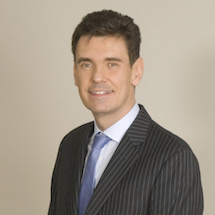
Mark I. Davies, Esq.
Managing Partner. Ga. Bar 283816, SRA 384468
Managing Partner. Ga. Bar 283816, SRA 384468

Sukanya Raman, Esq.
Managing Attorney, India (Mumbai, BKC)
Managing Attorney, India (Mumbai, BKC)
Speak with an EB-5 lawyer
Consultations by video or in person at our Mumbai office (BKC).
India: +91 720 856 4057
Book a consultation EB-5 for Indian Investors
EB-5 Lawyer for Indians
EB-5 Lawyer Guide
L-1 Visa Lawyer in Surat
EB-5 for Indian Investors
EB-5 Lawyer for Indians
EB-5 Lawyer Guide
L-1 Visa Lawyer in Surat
On eb5visaindia.com

Looking to acquire an EB5 Visa?
We are known for our creative solutions that obtain "impossible" visas. We solve the most complex immigration problems for businesses, investors, individuals, and families.
EB5 Visa Immigration lawyer near meSeveral lawyers told me I would not be able to get a TN visa. Two weeks after contacting Davies & Associates I was working in New York, visa in hand.
Individual seeking 'Impossible' TN VisaD&A was very detail-oriented and very thorough in what they did. They worked on my case 24/7 and were very patient in answering all my questions.
E-2 Visa ClientMy case felt complex but D&A managed the whole process carefully and helped me move seamlessly from one stage to the next.
E2 + CBI ClientD&A was my guiding light through the entire EB-5 process.
EB-5 Visa ClientI would definitely be a big advocate for the rest of my life for anyone wanting to explore the Grenada Citizenship by Investment Programme leading to the E-2 visa. The most important thing is a good team behind you. With Davies & Associates, you're in safe hands... you need someone who can support you on the ground and, again, you are well taken care of by D&A. The people are really warm, very helpful and quite open-minded when it comes to business... Not to mention as a passport it's great from a travel perspective... It's just 4 to 5 hours from New York.
Grenada CBI + E2 Visa ClientThe entire process of getting an EB-5 visa is handled in a professional way by Mark Davies and his team. EB-5 is a wonderful option for anyone considering moving to the United States if you have the means. I was hoping to use the H-1B route for my children, but it became unreliable and so I looked to the EB-5 visa instead. It is great for anyone who has the resources. Mark gives you the first meetings himself which gives you great comfort. Both Mark and Sanjay are abundantly available and I even had the pleasure of hosting them at my house.
Parent of 2 EB-5 visa holdersI'm in the process of extending my L-1 visa. I submitted a few questions regarding my case, and he contacted me back almost immediately, both by email and telephone. Unlike other attorneys I met before, he gave me the impression of knowing off the top of his head what kind of visa I have, and what actions had to be taken to extend it. He is very thorough and clear regarding the process and what to expect in terms of timelines and issues that may arise. He is constantly in contact, so you definitely know he's working on your case.
L-1B Visa HolderMark Davies is a joy to work with. His extensive knowledge, speedy response and attentive service took away all my fears of dealing with immigration and visa applications. He is very generous with his time in explaining every step along the way and I have already and will in the future recommend him to anybody who is looking for an immigration lawyer.
E2 Visa for Small Professional Business With International OfficesDavies & Associates assisted us with an immigration emergency involving my brother's fiancée who was outside the United States. They assisted us in a highly professional manner, working with the relevant US embassy, US immigration and the governments of two other countries. As a result of their efforts the individual involved is now working in the United States. While their knowledge of the law is exemplary what really distinguishes this firm and attorney Davies from any other firm we have worked with is their dedication to customer service and their unrivaled level of professionalism.
Complex Fiancée Visa Need Involving Multiple International JurisdictionsSeveral lawyers told me I would not be able to get a TN visa. Two weeks after contacting Davies & Associates I was working in New York, visa in hand. I have recommended this firm to several friends and colleagues, they do an excellent job every time.
Individual Seeking 'Impossible' TN VisaI was qualified as a physician in a foreign country. Being on a J1 visa I was facing having to leave the United States and return to my home country. Davies & Associates secured one of only 30 J1 visa waivers available in my State, allowing me to work for a US hospital and remain in the United States.
Doctor Seeking J1 Visa WaiverI am very satisfied with the services Mark Davies has provided me. He has a very extensive knowledge in immigration laws and has a thorough approach to any case.
U Visa Applicant, A Victim of CrimeLooking to relocate or having trouble with a visa application?
We are known for our creative solutions that obtain "impossible" visas. We solve the most complex immigration problems for business, investors, individuals and families.
Request Free Consultation
New York Office World Trade Center:
1 World Trade Center, Suite 8500, New York, NY 10007
+1 212 537 9196
Map and Driving Directions
New York Office E69th Street:
200 E 69th Street, 2N, New York, NY 10022
+1 212 537 9196
Map and Driving Directions
California Office:
555 Anton Blvd, Suite 150, Costa Mesa, CA 92626
+1 949 620 1811
Map and Driving Directions
Philadelphia Office:
1500 John F Kennedy Blvd, Suite 450, PMB 41, Philadelphia, PA 19102
+1 215 525 1881
Map and Driving Directions
London Office:
69 Old Broad Street, Dashwood House, London EC2M 1QS, United Kingdom
+44 20 3884 1812
Map and Driving Directions
London Office Beaufort Court:
Beaufort Court, Admiral Way, London E14 9XL, United Kingdom
+44 20 3884 1812
Map and Driving Directions
Edinburgh Office:
28 Rutland Square, Edinburgh, Scotland, EH1 2BW
+44 (20) 38841812
Map and Driving Directions
Milton Keynes Office:
The Pinnacle, 170 Midsummer Blvd, Milton Keynes MK9 1FE, United Kingdom
+44 7740 000769
Map and Driving Directions
Glasgow Office:
+44 131 392 0686
Map and Driving Directions
Vietnam Office:
46th Floor, Bitexco Financial Tower, 2 Hai Trieu, Ben Nghe Ward, District 1, Ho Chi Minh City, Vietnam
+84 28 44582309
Map and Driving Directions
India Office:
Enam Sambhav C-20, G Block, Bandra-Kurla Complex, Mumbai 400051, Maharashtra
+91 720 856 4057
Map and Driving Directions
Italy Office:
Via Bonifacio Lupi 29, 50129 Firenze FI, Italy
+39 055 076 3054
Map and Driving Directions
Manila Office:
Unit 107, AIC Burgundy Empire Tower, ADB Ave. cor Garnet and Sapphire Streets, Ortigas Center, Pasig City 1605, Metro Manila, Philippines
+63 2 7215 7878
Map and Driving Directions
Sydney Office:
Level 12, 210 George Street, Sydney NSW 2000, Australia
+61 2 9156 1032
Map and Driving Directions
Perth Office:
Davies & Associates LLC, Level 1, 12 St Georges Terrace, Perth WA 6000, Australia
+61 2 9156 1032
Map and Driving Directions
Singapore Office:
160 Robinson Road, #14-04, Singapore Business Federation Centre, Singapore 068914
+65-9615-0528
Map and Driving Directions
Looking for an Immigration attorney?
Immigration lawyer near meList of US Embassies, Consulates and USCIS
List of Italian Embassies, Consulates and USCIS
Copyright ©2026 by Davies & Associates LLC.